When public solar roofs turn into a flexible and collective regional resource
Austrian rural municipalities are pooling solar electricity across public buildings - without building a new organisation from scratch.
 Community energy
About

For many towns, installing solar panels is no longer the hard part. The harder question comes afterwards: how can locally generated electricity be used where and when it brings the greatest value? A school may export surplus power during the holidays while a nearby swimming pool or pumping station still buys electricity from the market.
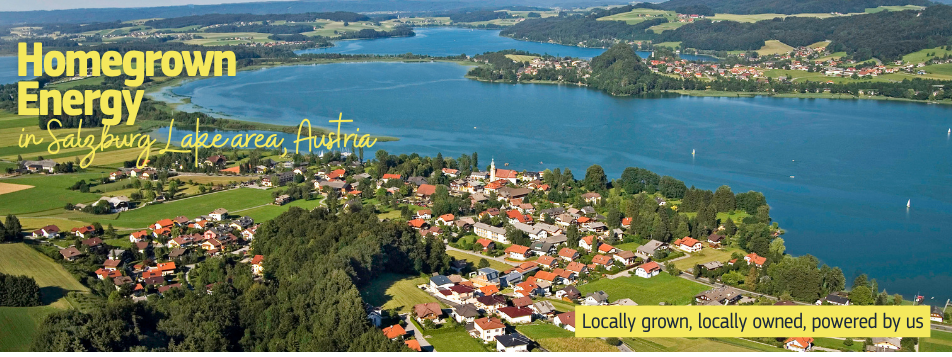
The eleven municipalities of Salzburger Seenland, a region of 44,000 people in Austria’s Salzburg Lake District, decided that municipal boundaries should not stand in the way. Through EEG Salzburger Seenland, an energy community run entirely by local authorities, they are turning separate solar installations into a flexible regional resource.
Start with an institution people already trust
The municipalities had been adding photovoltaic systems to public buildings since the early 2010s, but they could not use the output in buildings without panels. They wanted to consume more locally and cut costs without creating a new legal entity, governance system and administration.
The answer was already around the table: For more than 30 years, the towns had cooperated through the Regionalverband Salzburger Seenland, their regional association of local councils. Because it already managed shared services such as waste and public transport, it could become the energy community’s central vehicle too.
A feasibility study began in 2022. Two years later, the community started with 30 metering points across all eleven towns. Each municipality appointed a contact person. The mayors approve decisions such as electricity tariffs in their regular association meetings, while the existing association’s accounting team handles the energy community’s billing. A potentially new layer of bureaucracy was folded into a familiar way of working.
Surplus power going to a neighbour
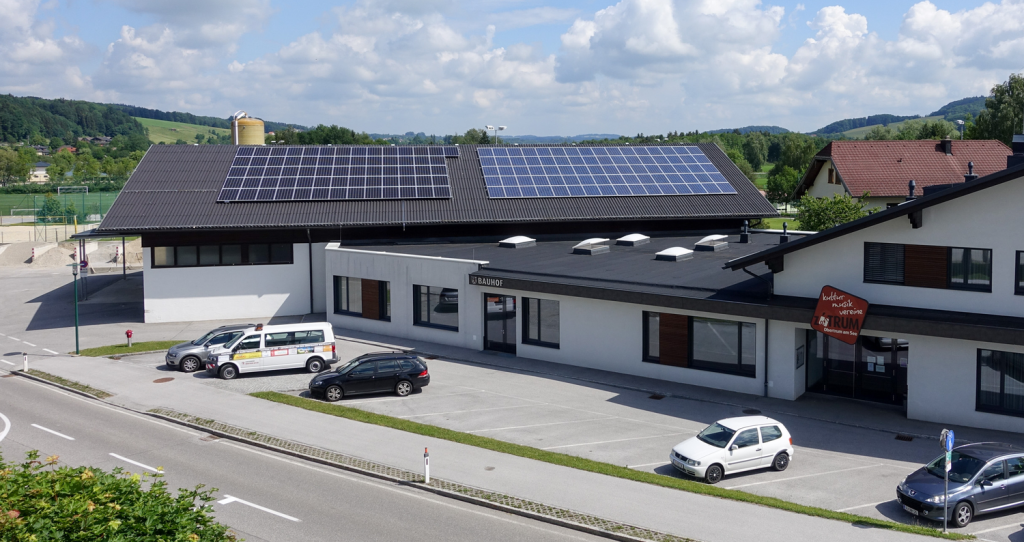
Together, the municipalities have installed 1.2 MWp of solar capacity, producing around 700 MWh in a year. Each town firstself-consumes as much of its own electricity as possible. Surplus power then enters the community and is allocated dynamically to other public buildings in the same or another town. The producer is paid according to tariffs agreed jointly by all participating towns; power that no member needs is fed into the grid.
The mix of buildings matters. Schools, town halls, kindergartens, swimming pools, retirement homes and pumping stations use electricity at different times. Some towns are also adding batteries and electric-vehicle charging points to shift demand.
By April 2026 the scheme
- connected 29 public solar installations
- with 106 public buildings and
- had reached 40% self-sufficiency.
In 2025, participants saved around 5 cts/kWh consumed within the community through lower grid costs and charges – savings for the public budget. The number of metering points and the volume shared continue to grow.

Find the full Salzburger Seenland case study and more inspiring examples on the Homegrown Energy Campaign website.
This information campaign is ran by Energy Cities together with the EU Covenant of Mayors. Each month, we bring new stories and fresh angles on how local municipal teams manage to overcome concrete obstacles to create hyper-local, community-anchored energy services that create long-term benefits for the area.