Tackling energy poverty through community energy: Verona’s vision for a one-stop shop
 Community energy
The saying goes, love is enough to keep us warm. Yet even Verona, the setting of Shakespeare’s Romeo and Juliet and one of Europe’s most romanticised cities, is looking for a more practical solution.
According to the Italian Observatory on Energy Poverty (OIPE), the share of households affected by energy poverty in Veneto, the region in which Verona is located, increased from 4.5% in 2020 to 6.5% in 2024. And Verona is not alone in facing this challenge. Across the EU, energy poverty rose sharply in the wake of the COVID-19 pandemic and the energy crisis triggered by Russia’s invasion of Ukraine. Despite recent improvements, 8.8% of the EU population was still unable to keep their homes adequately warm in 2025, compared to 6.9% in 2021.
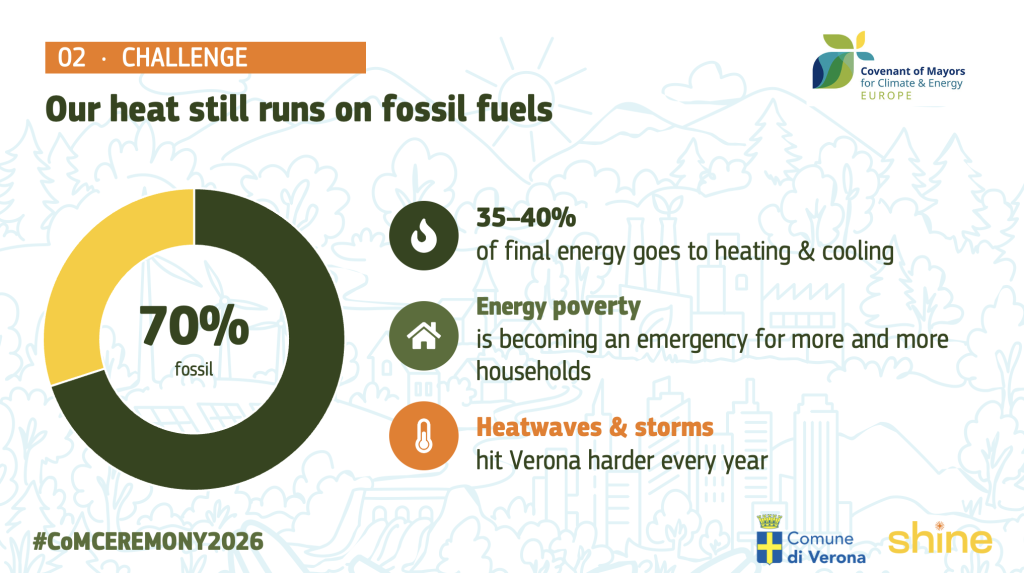
According to the city’s estimates, heating and cooling account for 35–40% of Verona’s final energy consumption, with 70% of that energy still coming from fossil fuels. As another heating season begins, Verona is looking for energy solutions that are not only practical but also clean, inclusive and affordable. And the city has already recognised the potential of energy communities to deliver on these fronts.
A century-long legacy of collective energy action
Verona draws inspiration from Lucense 1923, a local energy community building on the legacy of La Lucense, a hydroelectric company established in 1923 by 26 families from Lugo, a small mountain village in the municipality of Grezzana, to produce energy for their local community.
A century later, in 2023, the renewable energy community (CER) Lucense 1923 was established in Grezzana. Today, it offers an energy-sharing model that brings together citizens and local businesses, with the support of local authorities.
The model enables households to participate in renewable energy sharing without having to install their own solar panels. By allocating part of the incentives generated through energy sharing to local social projects, Lucense also seeks to extend the benefits of community energy beyond its members.
Building on this experience, Verona wants to enable more communities to follow a similar path. But first, it needs to help residents overcome the barriers to participation.
Breaking down the barriers
Many households and small businesses in Verona lack suitable rooftops, financial resources or the expertise to bring their renewable energy projects to life. Others want to take action but do not know where to start.
To help overcome these barriers, the city is developing a one-stop shop through the SHINE project, co-funded by the EU LIFE programme. The one-stop shop will provide energy advice, guidance on establishing energy communities and priority support for vulnerable households.
What makes Verona’s one-stop shop particularly interesting is its mobility. Hosted in local community centres, the service will travel across the city’s eight districts, bringing support closer to residents.
Through this initiative, the city hopes to help residents reduce their energy bills and transition to clean energy, encourage the establishment of new energy communities and alleviate energy poverty through shared energy and targeted support.
Bringing local stakeholders together
In March 2026, Verona brought together eight local organisations, including energy cooperatives, energy communities, social associations and technical experts, to map its local energy ecosystem.
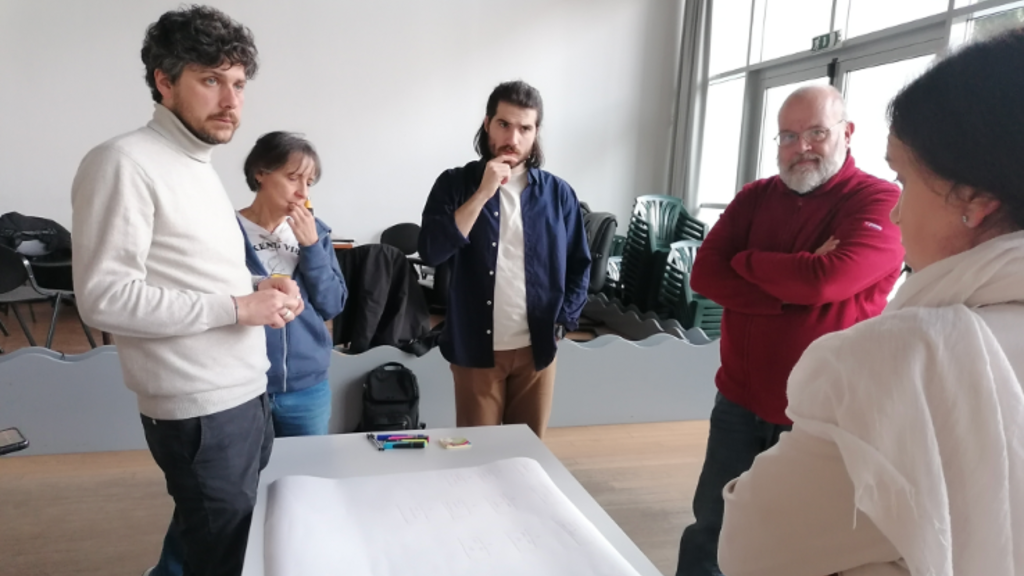
This process laid the foundations for its Just Energy Transition (JET) Team, a multi-stakeholder group steering the development of the one-stop shop, which has since been joined by Caritas and local trade associations. The involvement of social organisations is particularly relevant to the city’s ambition to tackle energy poverty, helping bridge the gap between energy services and vulnerable households.
By the end of 2026, the city aims to develop a prototype, prioritising areas where energy poverty is most prevalent. The first service point is expected to open in 2027, with the city aiming to secure long-term funding from local foundations by 2028.
From local action to a more inclusive energy future
Tackling energy poverty requires more than making clean energy available. It also means creating the conditions for those who could benefit from it the most to take an active role in the energy transition. Through its one-stop shop in the making, Verona is exploring how cities can help create these conditions by bringing support closer to residents and local actors.
As winter brings energy affordability into focus across Europe, Verona’s approach offers inspiration for other cities seeking clean, inclusive and long-term responses to energy poverty.
Is your city or region looking to enable community energy? Explore SHINE’s collection of tools and resources for local and regional authorities.