Lund’s smart micro-grid: routing energy smartly for more local flexibility
Lund wants to treat the energy grid like the internet to reduce energy consumption, while providing local energy flexibility
 Local governance
 Fossil-free cities
 Community energy
About

As electrification accelerates across Europe, cities face a pressing question: how can they reduce energy consumption and increase local production while providing local energy flexibility? In Sweden, the City of Lund is testing a different answer, one that treats the energy grid like the internet.
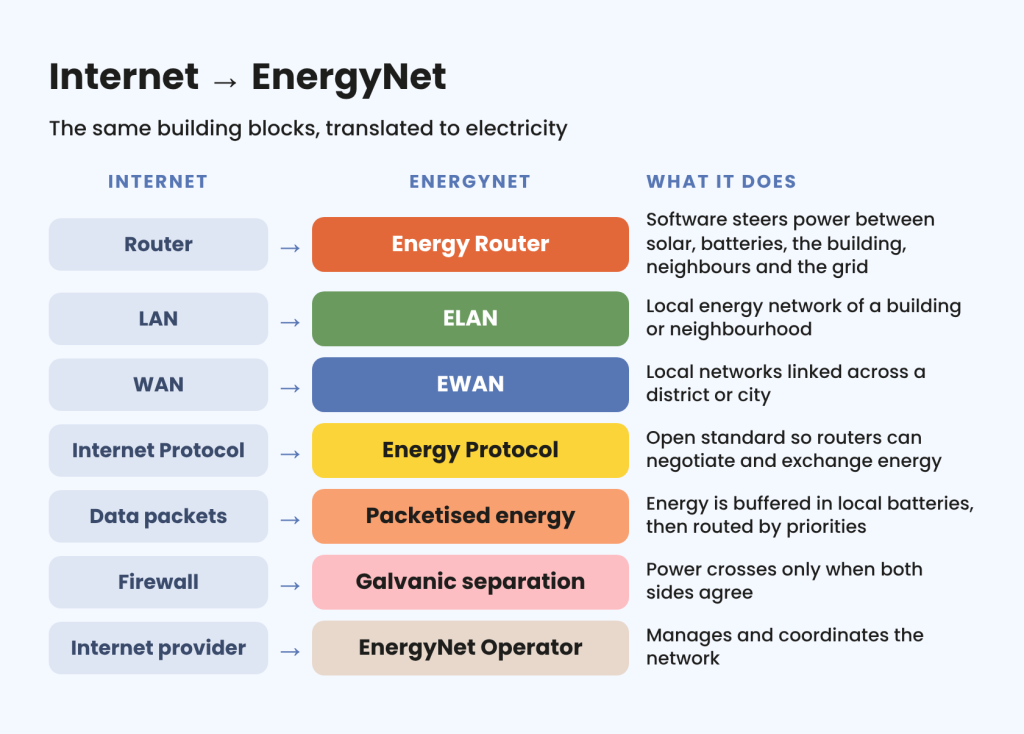
The EnergyNet project is a complementary micro-grid following the decentralised architecture of the internet. Under the city-business partnership ‘CoAction Lund’, the initiative is led by the private company ViaEuropa which is working alongside municipal housing provider LKF to digitise the city’s local energy system while lowering costs overall.
A coalition to face the biggest challenges of the City
In 2022, rather than working alone, the city set up a climate coalition that included businesses as essential partners.
The coalition evolved into a system demonstrator, aiming to create and test new systemic approaches across three sectors: mobility, buildings as well as energy. For each topic, a working space, called ‘arena’, was created. EnergyNet is one of several projects stemming from the ‘Energy Arena’.
Sharing electricity, the way the internet shares data
Each building produces its own solar power and stores it in batteries. Connected to the micro-grid via a router, electricity goes where it is needed first: the building, the battery, the neighbour or the main grid.
The router provides tenants access to the conventional energy grid, while batteries protect them from power shortages and offer local flexibility to the conventional grid.
In short, EnergyNet works like a LAN-network in homes and offices, where computers connect to the internet through a Wi-Fi router. When the internet fails, people can still access a device like their printer through the local network.
Through self-consumption paired with battery storage, ViaEuropa expects that 60% less electricity will need to be purchased. Tenants only pay for consumed electricity and are exempt from grid fees.
Two lessons for other municipalities
- Start with buildings owned by municipal companies
- Micro-grids with digital control are easier to build in when transforming existing or building new neighbourhoods : digging for cables can be expensive and limited by physical or architectural constraints.
Lund demonstrates how climate collaboration with local partners can push electrification to the next level. Joining forces through micro-grids and energy protocols can lower consumption, boost homegrown energy and make grids more resilient.
Find the full Lund case study and more inspiring examples on the Homegrown Energy Campaign website.
This information campaign is ran by Energy Cities together with the EU Covenant of Mayors. Each month, we bring new stories and fresh angles on how local municipal teams manage to overcome concrete obstacles to create hyper-local, community-anchored energy services that create long-term benefits for the area.
