#MadeForFuture: EU funding to finance biodiversity preservation in Heidelberg
How Heidelberg is implementing EU priorities on the ground, and why it needs EU funding to continue
 Local governance
 Fair economies
Across Europe, cities and regions turn EU investment into real solutions, from cleaner energy and mobility to resilient infrastructure and urban design. The #MadeForFuture Campaign shows why having a strong local and regional approach to the next MFF is essential to keep delivering for citizens.
The Fund for Rural Development to enhance biodiversity
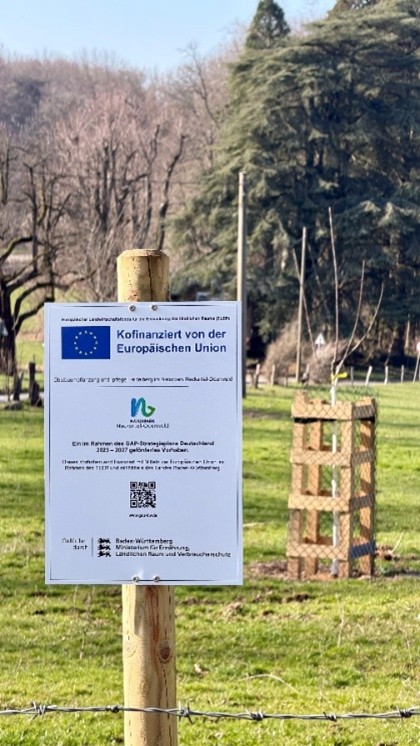
In December 2025, the Office for the Environment replanted a total of 30 young trees of various apple and pear types on municipal land, substituting older fruit trees that were gradually dying out on these areas. In addition to enhancing the landscape, this also strengthens ecological resilience, as structurally rich tree populations are more resistant to climate change and pests.
Mixed orchards are among the most species-rich habitats in Central Europe and provide a home for numerous animal and plant species. The objective of the measure is to preserve and promote this biological diversity of native flora and fauna. By implementing the project, the Office for the Environment is also making an important contribution to preserving the genetic diversity of fruit varieties and the cultural heritage of orchard meadows.
To finance the project, the Municipality of Heidelberg used funding provided by the European Agricultural Fund for Rural Development (EARDF) to promote greater biodiversity at the local level.
In the next programming period of the EU budget (2028-2034), the EARDF will be absorbed by the National and Regional Partnership Plans, and substituted by a rural target (with a 10% rural target), greatly reducing the amount at disposal for local authorities.
A necessary funding to help in the long-term preservation efforts
This happens while the EU funding helped the municipality and region of Heidelberg in the long-term preservation efforts of orchard meadows. It has supported Heidelberg in its efforts to maintain, care for, and further develop its urban orchard meadows.
This benefits both nature and people, strengthening biodiversity, quality of life, and regional identity. It thus creates sustainable added value for the entire urban community by enabling people to experience biodiversity in their immediate living environment. In this way, nature conservation work and environmental education are successfully implemented.
A stabilizing effect in a period of critical financial situation for municipalities
EU subsidies have a stabilising and motivating effect at the local level. In view of the critical state of municipal finances and the restructuring of EU funding, it is important for municipalities that funds go to areas where policies are being implemented and bring the EU closer to its goals, such as sustainable urban development, climate protection, and social participation.