Food is a collective security matter
The French expert Stéphane Linou explains how food systems have been an overlooked policy area for too long, even though they are very much interlinked with other areas, including geopolitics.
 Food systems
About

Over time, food has been confined to kitchens, recipe books, and gastronomic salons. Yet it constantly escapes these boundaries. It slips under doors, enters town halls, hospitals, defence councils, and it reaches civil protection, internal security, and national security alike.
We interviewed Stéphane Linou, a French expert on sustainable food systems, a local authority trainer and auditor at the IHEDN (Institute for Advanced Studies in National Defence), to explore the invisible link between what we eat and our collective security.
Having been a departmental and municipal elected official himself, for the past twenty-five years he has tried to draw attention to an obvious but forgotten truth: food cannot be taken for granted. His work consists of making different worlds speak to each other, as they still ignore one another: agriculture, food systems, risk management, defence, local authorities, and civil society.

How did you start working on food with municipalities?
I began working with municipalities because I saw things from the inside when I was a local elected official myself. I heard reassuring statements like “this cannot happen,” while behind the curtain, vulnerabilities were steadily increasing.
As a volunteer firefighter, I also intervened during the AZF industrial disaster in Toulouse (2001). That day, amid sirens, dust, shockwaves, and human bodies, I learned that a modern society without a culture of risk can become fragile far faster than it imagines.
Since the 2004 French law on the modernisation of civil security, progress has been made in addressing major risks. But food supply disruption has remained an invisible risk – an unspoken presence in the room.
My work emerged from there, from a simple and brutal question: when everything is disrupted, does a territory still hold together? And if it does, how?
Do you feel that food is not at the top of the political agenda?
The first thing I tell local authorities is simple: stop treating food as an optional policy area. Food is not an “add-on”—it is a vital organ. A municipality can withstand many disruptions for some time, but it cannot do so for long if supermarket shelves are empty, kitchens fall silent, and stomachs begin to growl.
Where does what we eat actually come from? Through which pipelines, roads, algorithms, cold chains, trucks, fuels, ports, and distant dependencies does it travel? And what happens when there is a disruption?
Public policies have long focused on water systems, energy systems, transport systems, and healthcare systems. But food has often remained in a blind spot, as if it were self-evident and therefore not a subject of policy.
Yet we urgently need to “repair” what I call food infrastructures: farmland, water, producers, processing tools, kitchens, storage capacities, the relationships between actors, skills and know-how, and all the forms of solidarity that allow a territory to keep transforming life into meals.
You have developed interesting programmes. Can you share examples of successful and replicable local food initiatives?
Let’s start with the practical food-system experiments called the “Locavore and Low-Carbon Challenges” (Défis Locavores et Bas Carbone®). The idea is that a territory is invited to design, produce, and serve a fully local, seasonal, affordable, low-carbon meal based on what can realistically be sourced and transformed within a defined local area. To date, 118 challenges have been completed.
Their strength is that they bring ideas down from abstraction and place them on a table. We no longer talk about territory – we taste it. We no longer discuss resilience in theory- we cook it. Dishes begin to speak. Carrots speak to elected officials, lentils question supply chains, bread asks where the mills are, and cooks reach out to producers. The plate stops being a container and becomes a map, a diagnostic tool, sometimes even a radiography of a territory. The challenge shows what the territory can produce, transform, cook, connect, and fairly remunerate.
The second example is the food supply disruption stress-test workshops (ateliers de stress test de rupture d’approvisionnement alimentaire®). Here we bring reality into the room with heavy boots. We simulate a serious disruption: logistics blockage, fuel shortage, cyberattack, and so on. We observe what happens: Who knows what? Who decides? Who depends on whom? Who collapses first? Who improvises? Who cooperates?
Resilience is not a word written in a council document—it is the ability to continue feeding people when “normality” removes its mask and reveals its skeleton.
What are the main levers for universal access to healthy, sustainable and affordable food?
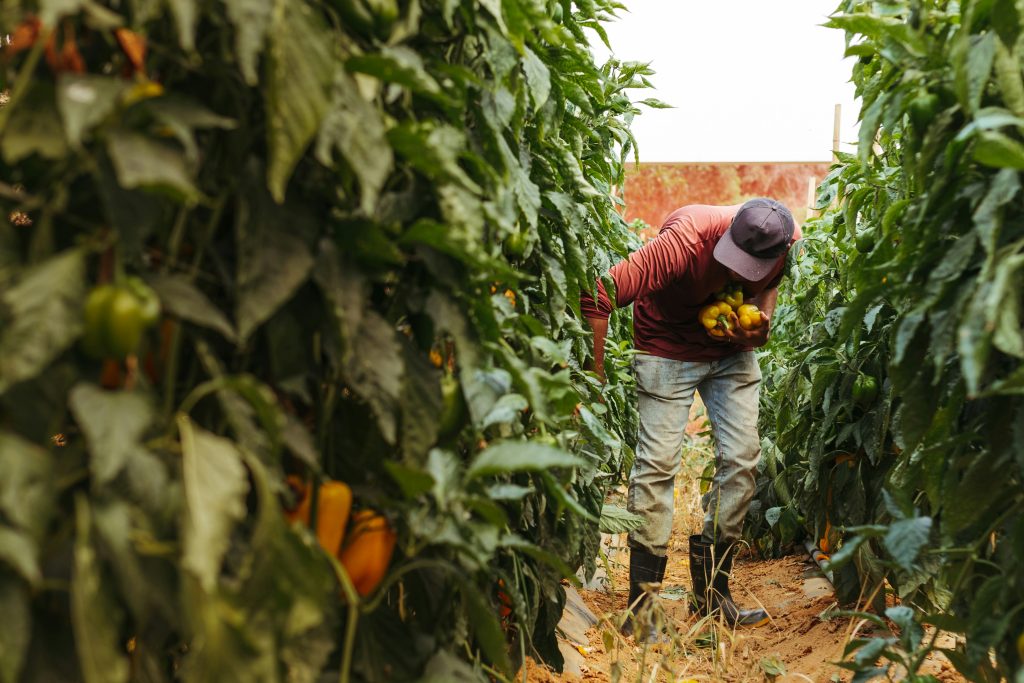
First, we must abandon a popular illusion: what does “cheap food” actually hide? Behind artificially low prices lie polluted ecosystems, chronic diseases, farmers under pressure, strategic dependencies, and increasingly delocalised food infrastructures. We will never build a dignified food system on the back of impoverished farmers.
The levers are already known. First, public procurement: school canteens, hospitals, care homes, collective catering. These are spaces where the public sector can stop talking about the common good and actually serve it at the table.
Second, support for agroecology, because it gradually detoxifies food systems from synthetic inputs and reconnects them with soils, living ecosystems, and the silent workforce of earthworms.
Finally, we must relearn how to cook raw ingredients, rebuild local processing, storage, and distribution tools, and stop treating food access as administrative charity – when it should be a full territorial policy.
How can local policies better integrate food sovereignty and ecological transition?
First, by understanding that food sovereignty is not autarky. I am not talking about a territory that barricades itself. I am talking about a territory self-conscious and resilient enough to withstand turbulence without dissolving.
To achieve this, we must break out of silos. Today we still carve reality into administrative slices, as if water, agriculture, health, urban planning, economy, civil security, and solidarity could be neatly separated. A field speaks to a school, a blocked road affects a supermarket, imported fertilisers connect directly to geopolitics. As long as we manage these issues in separate compartments, we miss the essential.
We must therefore protect food-producing land as we protect a lung, support agroecology as a form of reconstruction, relocalise part of production and processing, reduce critical dependencies, and strengthen Territorial Food Projects so they become not only development tools but also crisis preparedness systems.
Are EU frameworks like Farm to Fork and the CAP sufficient, or do we need new rules?
The Farm to Fork strategy is a step in the right direction. It is like finally unfolding a map that had been hidden under layers of habit. It acknowledges the need to move the European food system toward sustainability, food security, fair farmer income, environmental responsibility, and resilience to crises.
The European Commission’s more recent Vision for Agriculture and Food confirms that the work is still ongoing, but several pieces of the puzzle are still missing.
That is not enough. The EU contingency plan published in 2021 rightly highlights that resilience depends on diversification of supply, complementarity between short and long supply chains, and reducing critical dependencies on inputs, energy, transport, and concentrated imports. In other words, relocalising part of food capacity is not a romantic idea—it is a matter of security, social stability, and collective continuity.
Recent global developments confirm this. In March 2026, the FAO food price index rose again. Energy costs are increasing, conflicts are multiplying, fertiliser prices are rising. Food is once again what it should never have stopped being: a geopolitical object.
We must therefore go further: dependency diagnostics, protection of food-producing land, reduced imported inputs, strategic public procurement, territorial relocalisation, smart reserves, and a clear doctrine of food resilience.
Feeding a population in normal times is one thing. Ensuring it can still be fed during crises is another. The gap between the two is the difference between apparent abundance and real robustness.
Curious to learn more about food systems? Sign up for our thematic bulletin!