How Bristol City Leap is using private finance to empower citizens
The story behind the EUR 1.7 millions fund for community energy projects
 Community energy
About

As Europe swelters through another record-breaking heatwave, cities are once again under pressure to keep people safe, energy affordable and essential services running. While the headlines focus on strained power grids and soaring demand for electricity, some municipalities have been quietly building local solutions for years. Bristol is one of them. Through its Community Energy Fund, the city has channeled private investment into neighbourhood-led projects.
A public-private partnership contributing to long-term social goals
This week’s heatwave has reminded Europeans just how closely our energy systems, public health and local resilience are connected. From schools closing to electricity networks coming under pressure, local governments are often the first to respond. But resilience is not built during a crisis—it starts long before.
Eager to attract private sector investment and expertise to decarbonise its energy system while increasing community action, Bristol City Council decided to create a Community Energy Fund in 2023 as part of the public-private partnership ‘Bristol City Leap‘.
Bristol City Leap is a 20-years partnership with two companies, Vattenfall and Ameresco, which started in 2022. Private partners provide a fixed contribution of £750,000 (approx. €860,000) each for the first period of five years. This social investment was built directly into the tender specifications to select the private partners. In exchange, Vattenfall and Ameresco sit on the panel for grantee selection, together with locally grounded partner organisations such as the Centre for Sustainable Energy and the Bristol Energy Network.
A fund that boosts an already dynamic local ecosystem
Who benefits from the fund? Bristol community groups, charities, faith groups, schools and local voluntary organisations based in the City of Bristol area (postal code eligibility) are eligible to apply.
Candidates for the Bristol Community Energy Fund are being assessed,on the basis of their ability to reduce emissions or improve energy efficiency, the community benefit and feasibility of their project. Candidates get additional points if they collaborate with other community groups and pay specific attention to under-represented groups.
The funding structure is designed to scale with the project’s maturity:
- Grants: Available for testing ideas and development, varying from small micro-grants up to a maximum of £50,000 (approx. €57,300). These do not need to be repaid.
- Loans: For projects requiring larger capital investment beyond the grant limit, applicants can access a repayable zero-interest loan covering 100% of the capital costs. This ensures that while the initial risk is low for innovators, significant projects remain financially sustainable for the long term.
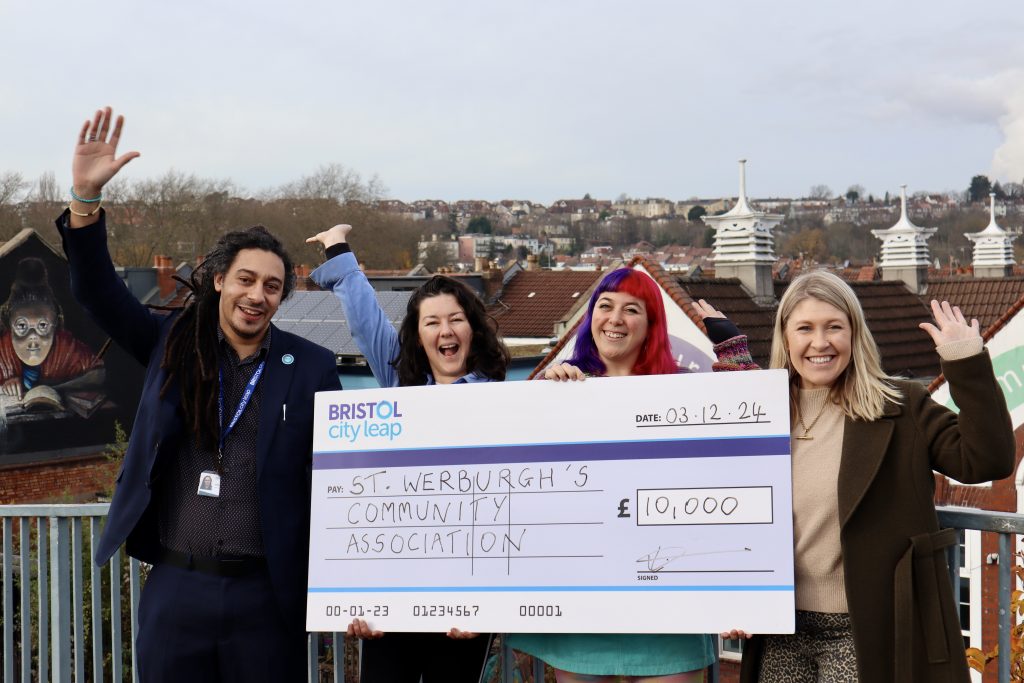
By early 2026, 43 local projects had received funding, with more than £600,000 (approx. €693,000) distributed across four funding rounds. The projects focused on low-carbon heat, shared solar plants, and education and empowerment.
Three lessons from Bristol for cities ready to back community energy financially
1. Make private investment work for your communities
A well-designed partnership can do more than finance infrastructure – it can also bring funding to citizen-led energy projects over a longer period of time
2. Build the fund with your community, not just for it
Co-design the fund with local organisations and co-decide which projects should receive support. This builds trust and ensures thatmoney goes where it’s needed.
3. Think beyond one-off grants
Design a fund that can grow over time. By combining grants for early-stage ideas with repayable finance for mature projects, you can help community energy initiatives flourish for years to come.

Find the detailed case study and other tips to nurture your local garden on the Homegrown Energy Campaign site.
This information campaign is ran together with the EU Covenant of Mayors. Each month, we bring new stories and fresh angles on how local municipal teams manage to overcome concrete obstacles to create hyper-local, community-anchored energy services that create long-term benefits for the area.