Surviving heatwaves, designing liveable cities
Summer 2026 is the coolest summer of the ones to come. Cities must get ready.
 Food systems
About

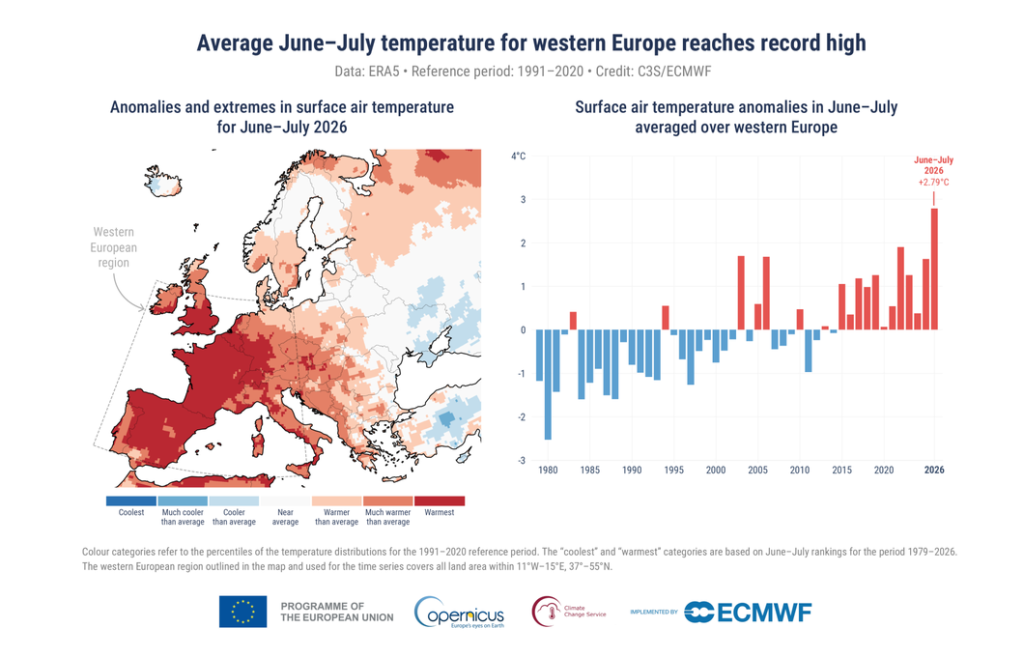
Summer 2026 gave Europe yet another very stark reminder that climate change is disrupting life in our cities. June was the hottest on record in western Europe, with temperatures 3.06°C above the 1991–2020 average. July followed as the second hottest month on record, and August kept the heat going.
And heat is not just uncomfortable. It can be deadly.
Extreme heat is Europe’s deadliest weather-related hazard, accounting for around 95% of deaths linked to weather and climate extremes. This summer, France experienced five heatwaves, including one as early as late May, with more than 7,300 heat-related deaths recorded, according to Santé publique France. Spain recorded nearly 5,400 deaths linked to extreme heat, while Germany saw around 14,000 heat-related deaths in 2026, according to the Robert Koch Institute.
Cities are particularly exposed. Concrete, asphalt and dark surfaces absorb and store heat, while buildings can trap it. Paired with lack of vegetation, shade and water, and you get the “urban heat island” effect: cities literally making the heat worse. And as Europe warms twice as fast as the global average and heatwaves become more frequent, more persistant, European cities are on the frontline, grappling with the ever more devastating impact. As summers get hotter, cities are faced to deal with a public health crisis, deepening social inequalities, damage to infrastructure and economic disruption, all at once.
Cities cool down
In response, cities are no longer only asking “How do we cool the city?”, but are also posing the urgent question: “How do we make sure people can safely live, work, walk and play here when it’s 40°C?”
Across Europe, cities are experimenting with nature-based solutions, from green corridors and parks to trees and mini-forests. In Metz, France, La Forêt des Ponts is transforming a former military wasteland into an urban forest designed to provide residents with four islands of coolness.
Cities are also using smart urban design such as climate shelters and heat-resilient buildings. Valencia, Spain, for example, is developing a network of climate shelters alongside adaptive planning and community engagement to better protect residents from rising temperatures.
Communities are at the heart of the cities’ adaptation actions. In Turin, Italy, an interactive heat-health tool maps heat risks across the city, helping identify vulnerable areas and guide local action.
But cooling a city is not only about planting trees or installing fountains. It is a planning issue. Cities need to know where heat is hitting hardest, who is most exposed and how people are coping. In Nantes, France, a survey of 1,300 residents following the 2022 heatwave examined its impact on health and daily life. By combining social and spatial data, the study helped identify vulnerable groups and their coping strategies, providing a basis for more targeted solutions.
Grenoble offers another example of how this can become a proper public policy. Until recently, Grenoble-Alpes Métropole had no dedicated department or policy focused on urban overheating, although initiatives such as its canopy plan were already underway. The city is now using new tools to strengthen its urban climatology expertise and has created an interdepartmental group bringing together the services concerned with urban overheating.
To know more about Grenoble’s strategy, listen to the full episode: How to turn a city into a cool place and exchange live with a city representative on 6 October at the “How cities design cooler public spaces?” webinar. The city of Athens, Greece, will also present its innovative approaches to improve thermal comfort and build resilience in public space.

Europe needs to back cities up
Cities are on the frontline of climate adaptation. But they cannot finance and implement this transition alone. If adaptation is local, the conditions for adaptation need to be European.
Although adapting to extreme weather events may be expensive, the cost of doing nothing is rising. A recent study showed that extreme heat could cost Europe’s economies €180 billion this year, representing approximately 1% of GDP. Extreme heat puts particular strain on local budgets, as they mobilise local public services, emergency response and infrastructure repair. For territories to adapt, they need long-term, predictable funding for climate adaptation, rather than asking cities to scramble for short-term project money every time the thermometer breaks another record.
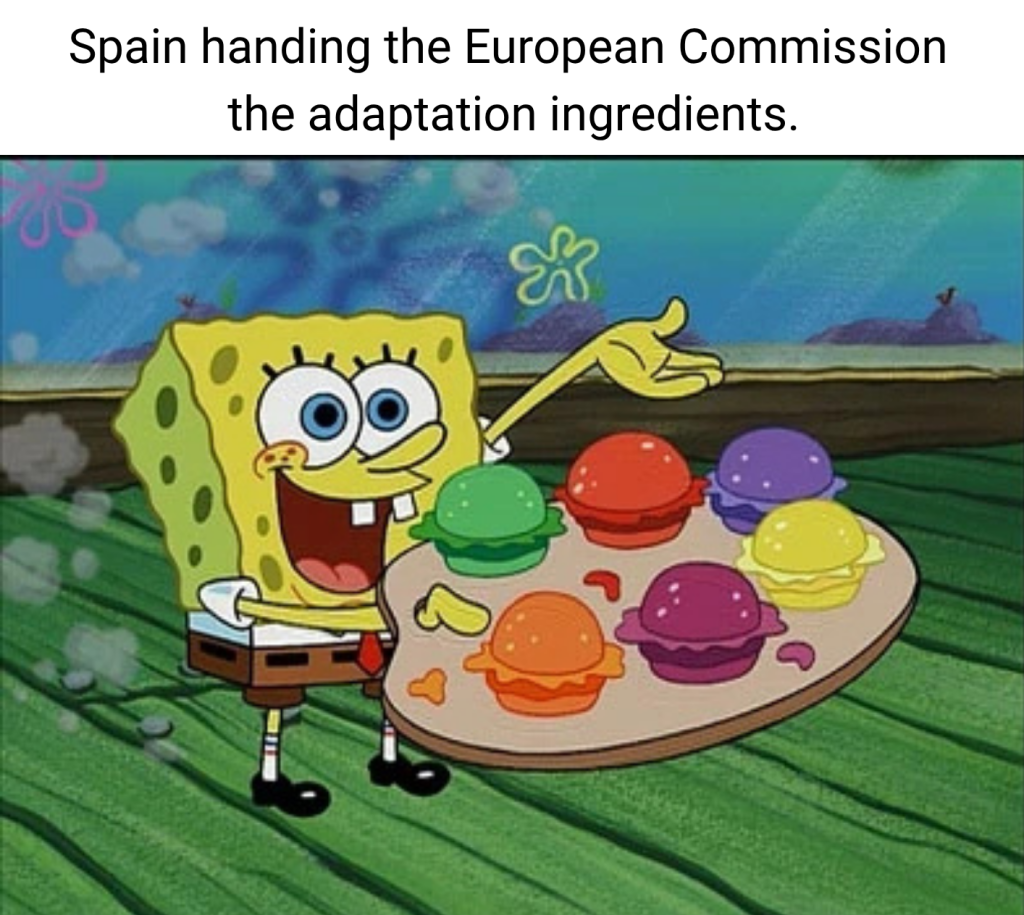
There are already proposals pointing in this direction. On 4 September, Spain called for a dedicated European Climate Adaptation Fund, backed by new resources. Its proposal includes exploring European debt instruments and a climate-resilience levy on the profits of oil and gas companies. Spain also called for climate-risk assessments every five years and for these risks to be systematically integrated into infrastructure, investment and policy planning.
These are the kinds of proposals we need to take seriously.
And they are gaining some traction. We were glad to hear from Ursula Von der Leyen’s State of the EU address that addressing extreme heat is a top priority for Europe. Her proposal to identify the 100 most vulnerable territories as part of the Commission’s upcoming Resilience Framework points in the right direction, to “give us a whole-of-society approach – all the way through to the local level where adaptation matters most”.
Because adaptation cannot remain the responsibility of individual cities, piecing together individual projects and short-term funding while the climate keeps changing. Europe needs to create the conditions for cities to plan ahead, invest at scale and protect their residents.
We can no longer treat adaptation as an optional extra.
The choice is no longer between doing something and doing nothing. Increasingly, it is between planning for heat, or paying a much higher price when the heat arrives.