EU Peers
Building the European community of practice for One-Stop Shops delivering home energy renovations
About
Energy Cities staff involved

Jana Cicmanova
Communication

Thibaut Maraquin
Project Management & Overall Coordination
Funding program
LIFE programme
Duration
2026 - 2029
Coordinator
Partners
FILAO LABS, GREEN BUILDING COUNCIL-ESPANA, DRUŠTVO ZA OBLIKOVANJE ODRŽIVOG RAZVOJA (DOOR), LATVIAN BUILDING ENERGY EFFICIENCY FACILITY (LABEEF), AGENZIA NAZIONALE PER LE NUOVE TECNOLOGIE, L'ENERGIA E LO SVILUPPO ECONOMICO SOSTENIBILE, EKO SKLAD, SLOVENSKI OKOLJSKI JAVNI SKLAD (EKO), FEDERATION EUROPEENNE DES AGENCES ET DES REGIONS POUR L'ENERGIE ET L'ENVIRONNEMENT, ENERGIAKLUB SZAKPOLITIKAI INTEZET ES MODSZERTANI KOZPONT EGYESULET, SOUTH EAST ENERGY AGENCY (SEEA), ENERGY CITIES, KRAJOWA AGENCJA POSZANOWANIA ENERGII S.A.(KAPE), BUILDWISE, EKOLOGICHNO SDRUZHENIE (ZA ZEMIATA)Website
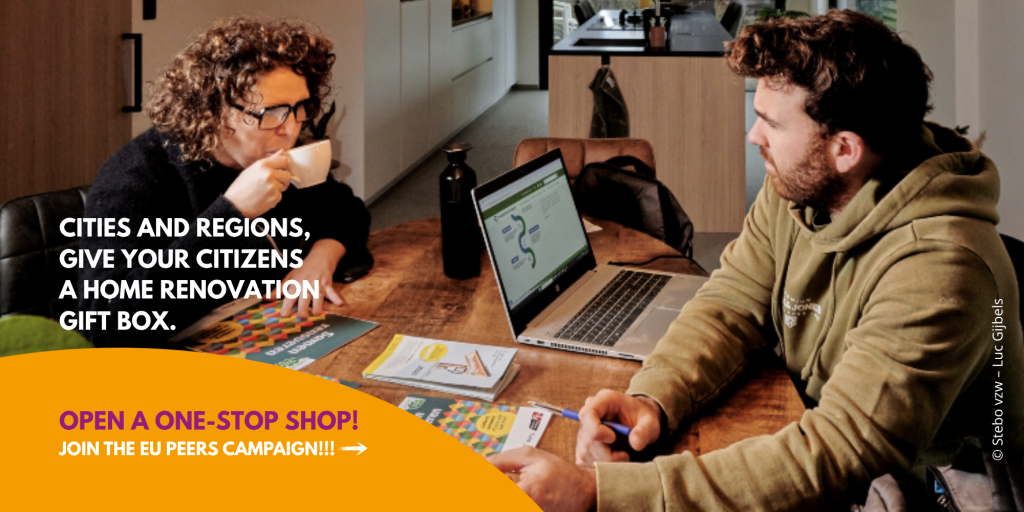
Cities and regions,
give your citizens a home renovation gift box.
Open a one-stop shop!
Why do one-stop shops matter for Europe’s climate and housing future?
Europe’s buildings account for 40% of its energy consumption. Around three quarters of the building stock remain energy-inefficient. Millions of households face rising energy costs, poor indoor air quality and homes that overheat in summer or lose heat in winter. Renovating these buildings is essential.
Yet renovation rates hover at just 1% per year, far below what is needed. Mainly because for most homeowners, renovating a home means navigating a maze of contractors, subsidies, technical decisions and paperwork, all at once, often alone. The process is fragmented, intimidating and easy to abandon.
This is where one-stop shops for home energy renovations come in. By bundling renovation support under one roof and building bridges with existing local actors, they reduce the complexity homeowners face. On average, 16% of the homeowners who receive advice from a one-stop shop go on to renovate, and the EU’s Joint Research Centre estimates they could deliver around 100,000 renovation projects a year.
The question is no longer whether we need one-stop shops but how best to support them.
European policy is now catching up. The recast Energy Performance of Buildings Directive (2024/1275), whose transposition deadline fell at the end of May 2026, as well as the Energy Efficiency Directive (2023/1791) require Member States to deploy one-stop shops.
Member States shall establish at least one one-stop shop for the energy performance of buildings per 80 000 inhabitants or one per region or in a location that can be reached within less than 90 minutes of average travel time (for more details, refer to Article 18 of the Energy Performance of Buildings Directive).
Opening a local one-stop shop is your political win!
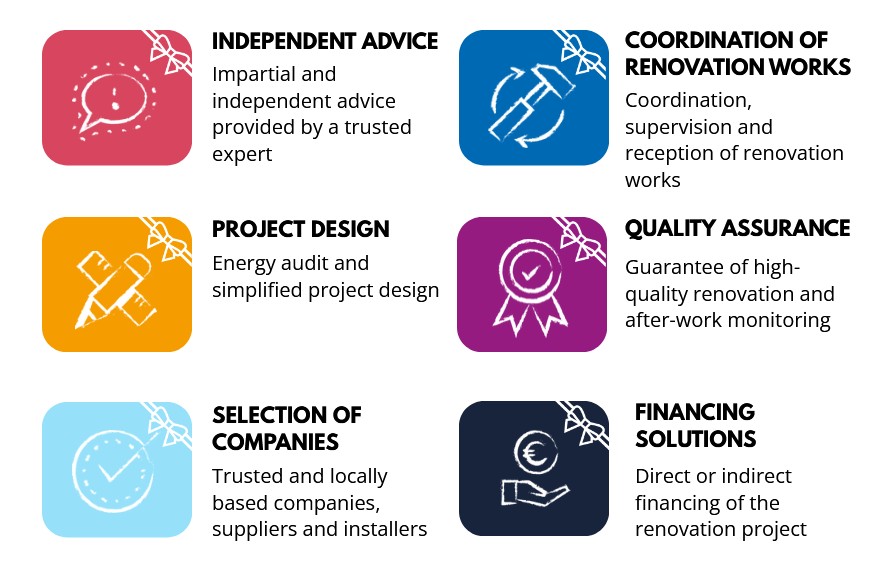
Local one-stop shops for home energy renovations are a gift box cities and regions can offer to their citizens. They provide a large palette of services – from the initial advice, energy audit and project design, through the selection of companies and financing solutions to the coordination of renovation works and monitoring. A complex and risky project becomes simple, safe and accessible to all homeowners.
More than that, one-stop shops generate investments that boost local economy and create local jobs. The Buildings Performance Institute Europe estimates that for every €1 million invested in energy renovation of buildings, an average of 18 local and long-term jobs are created in the EU. One-stop shops themselves employ staff – at its creation in 2018, Oktave one-stop shop (France) employed 1 person, in 2025 it employed some 62 full-time equivalents.
Last but not least, they contribute to local, national and European climate goals. For example, they help Member States to increase the average energy performance of the national residential building stock by 20-22% by 2035 (binding target), focusing on the renovation of the worst-performing buildings.
Why should cities and regions feel concerned?
Homeowners perceive cities and regions as trusted partners. Public authorities are involved in nearly 74% of surveyed one-stop shops; confirming the central role of the public sector in enabling these services. Physical proximity and human contact with energy renovation advisors are fundamental for renovations to move forward. 49.1% of one-stop shops operate at regional level, covering territories spanning multiple municipalities. 24.6% focus on the local level and 10.5% operate nationally. (Source: 2024 EU Peers Survey).

“Our 15 years-long experience shows that the stability of one-stop shop services is key. Energy renovation works, once initiated, are difficult and time-consuming to organise. They involve many actors, public and private. One-stop shops create an environment of trust and proximity. They bring the public administration closer to citizens.“
Still not convinced?
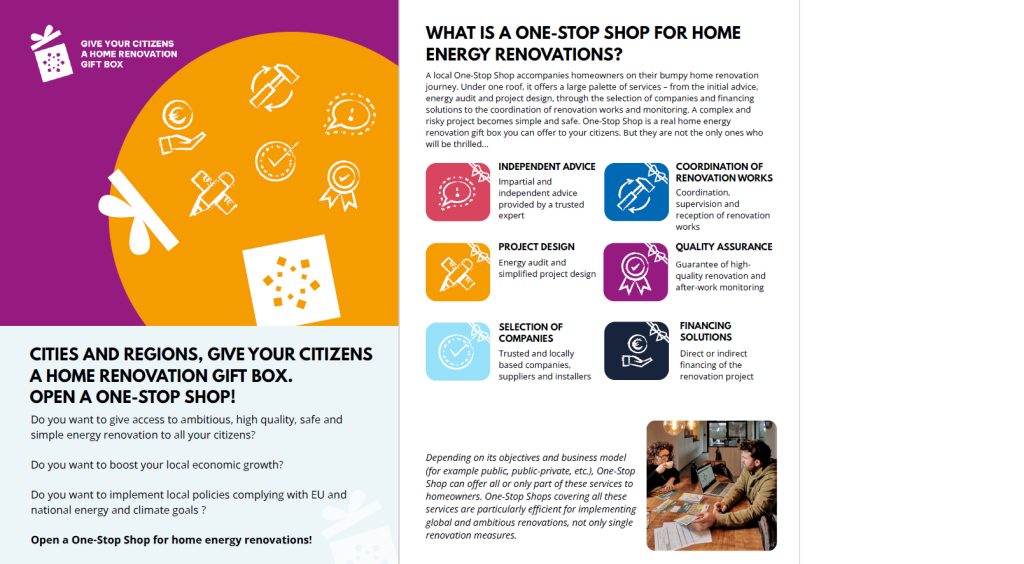
Explore the 3 reasons to open a One-stop shop for home energy renovations and convince your municipal or regional council to move forward. All arguments, facts and figures are summarised in EU Peers campaign leaflets and postcards (available in 10 EU languages). You just need to print them and hand them out.
Get inspired by cities and regions who already have a one-stop shop
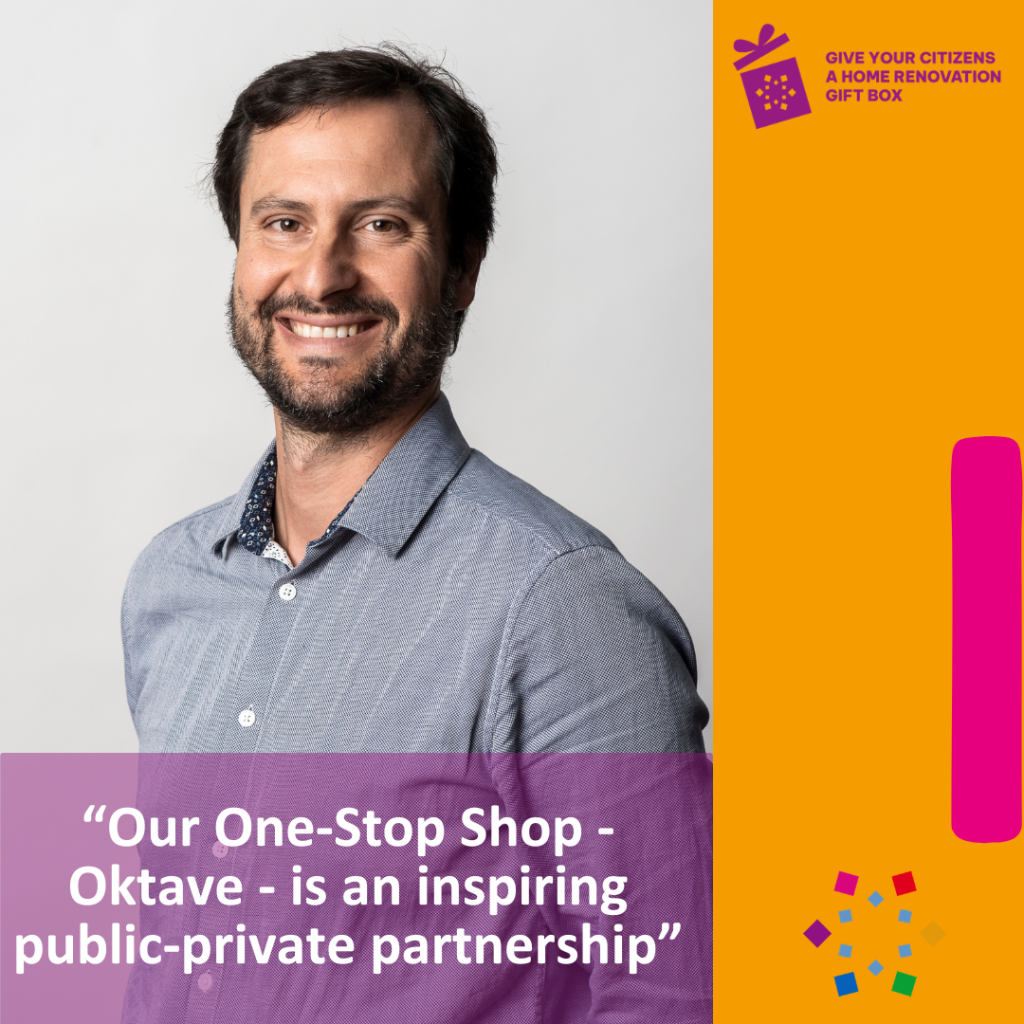
Gabriel Quentin, Partnership Manger at one-stop shop Oktave (Grand Est Region in France) will tell you how they are fixing homes through an inspiring public-private partnership
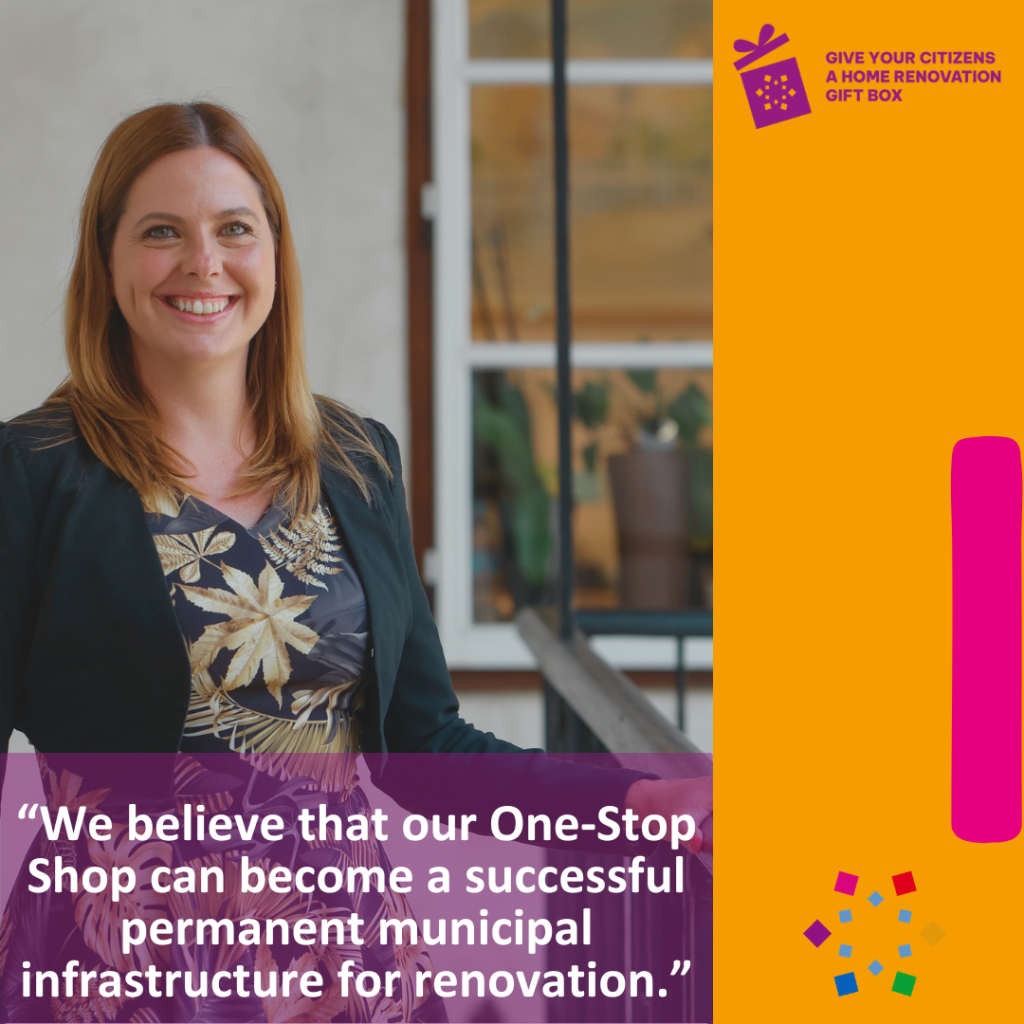
Petra Šeme, Head of the Energy Management Office in the City of Ljubljana (Slovenia) will tell you why she believes that their one-stop shop can become a successful permanent municipal infrastructure for renovations.
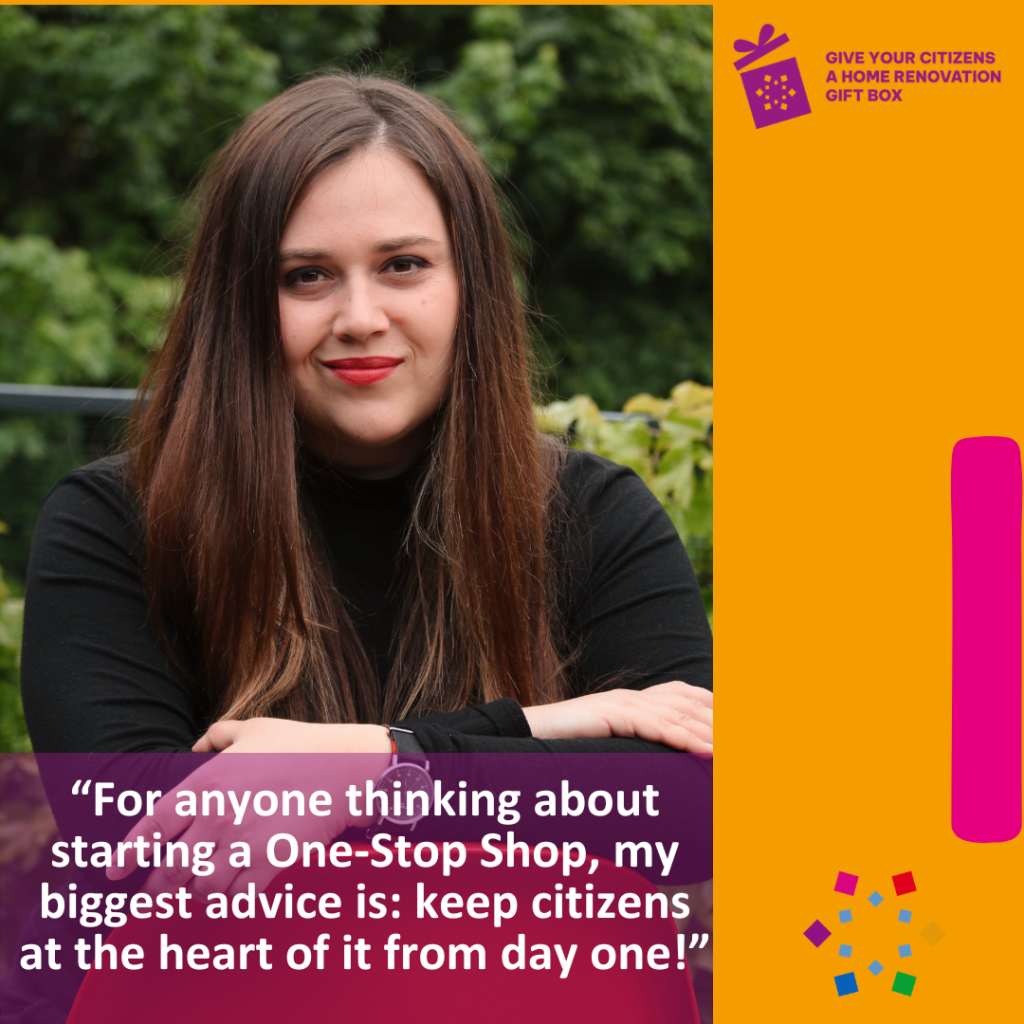
Martina Nemčić, Programme Manager at KLIK Energy Cooperative and at the one-stop shop of the city of Križevci (Croatia) gives you one advice: “For anyone thinking about starting a one-stop shop, my biggest advice is: keep citizens at the heart of it from day one!”
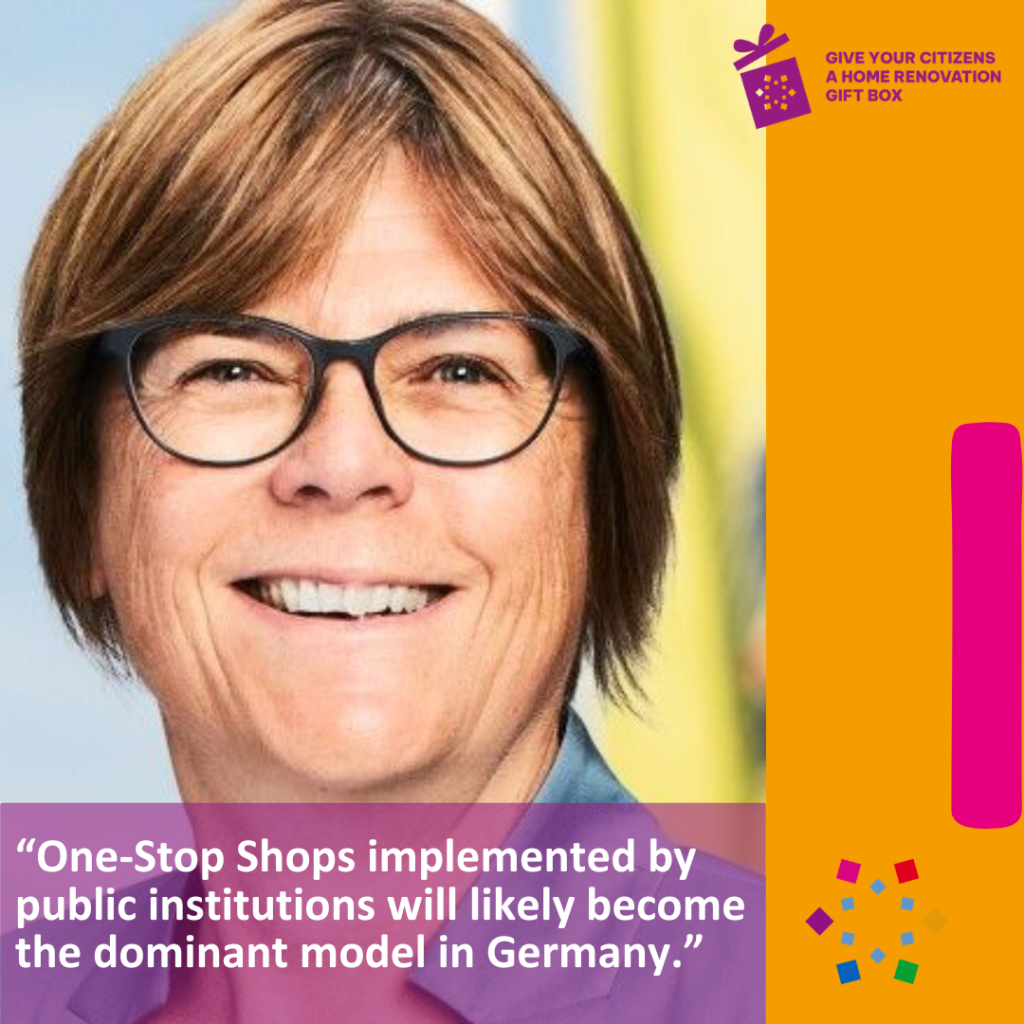
Simone Raskob, Head of Department for Environment, Transport, and Sports in the city of Essen (Germany) expects that one-stop shops implemented by public institutions will likely become the dominant model in Germany.
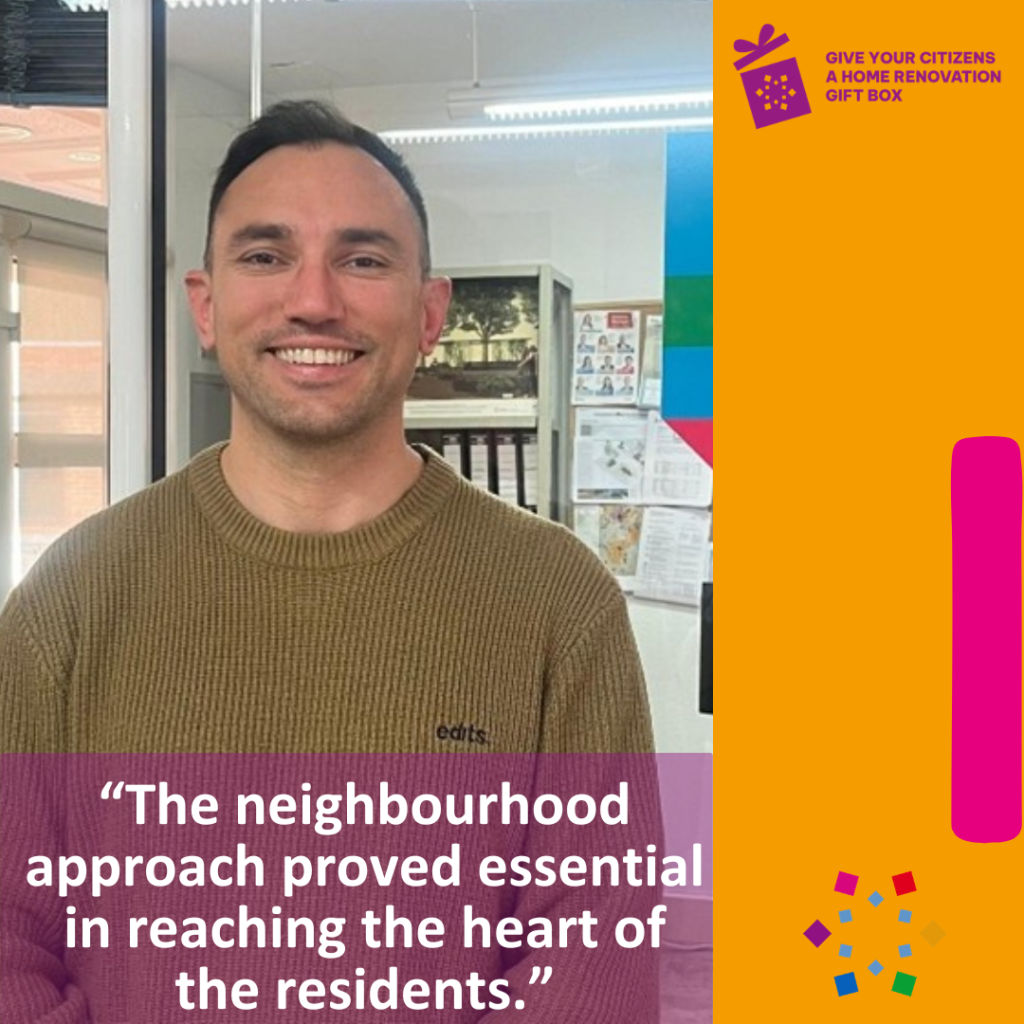
Discover more in the interview with Pablo Hayali, Healthy Homes Department Coordinator and Social Worker at Getafe Municipal Land and Housing Company (EMSV Getafe)
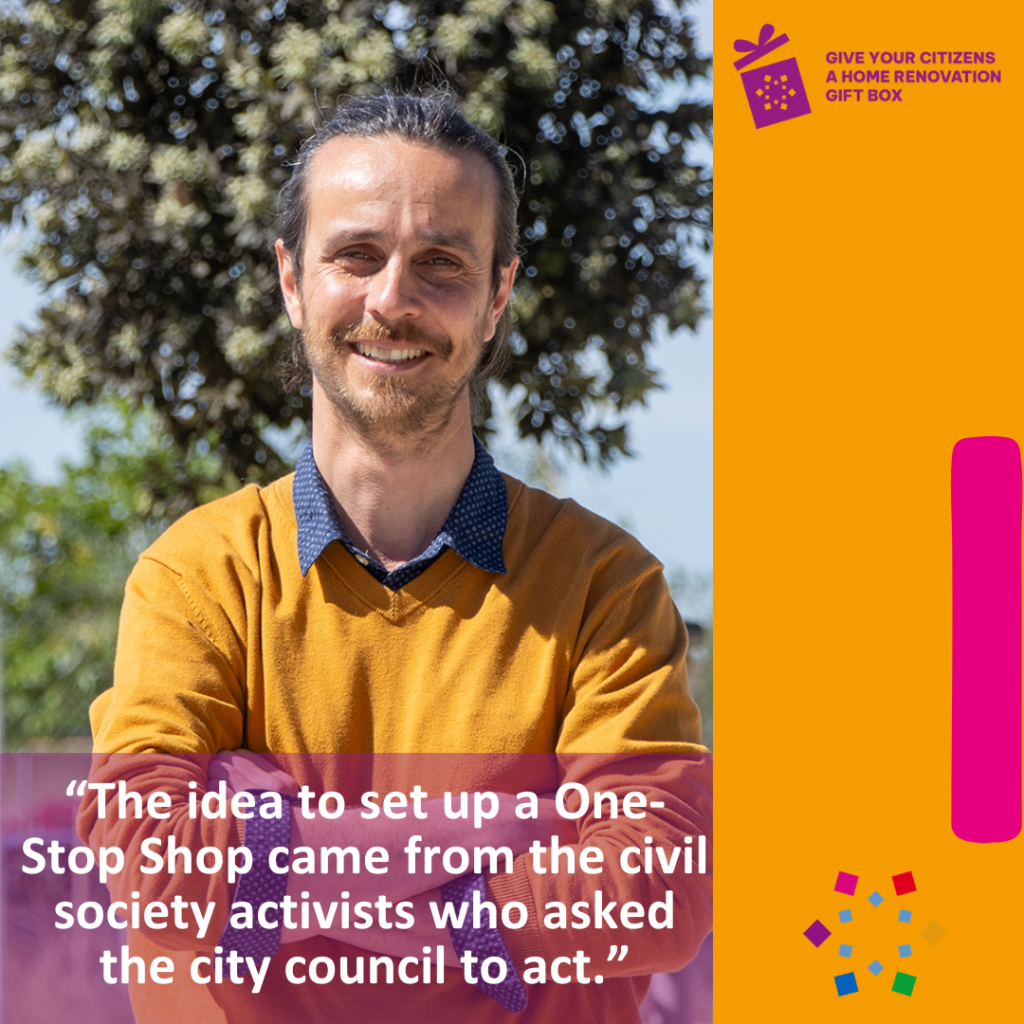
Read the interview with Corentin Girard, Energy Area Coordinator at Valencia Climate and Energy Foundation who was in charge of designing and opening the first three municipal energy offices in Valencia and is supervising the One-Stop Shop service.
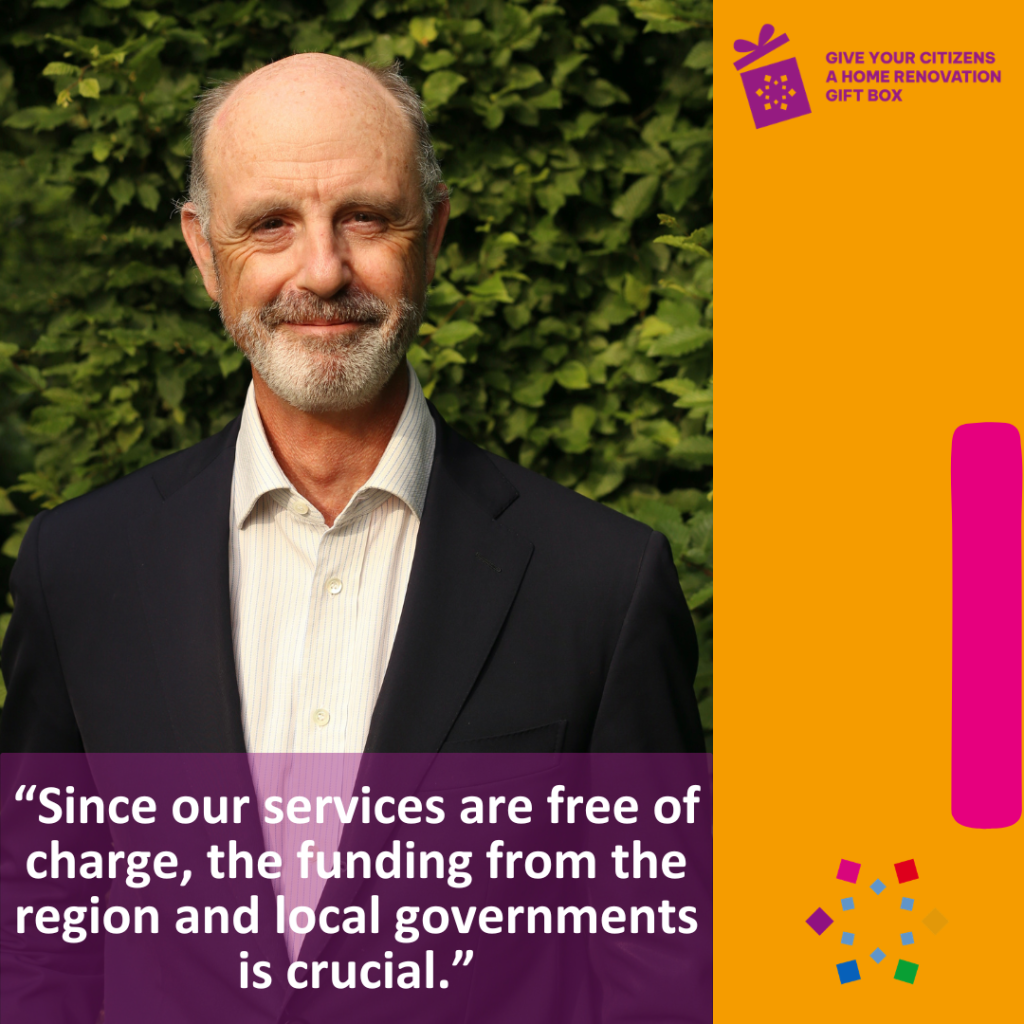
Didier van Severen, General Manager of Homegrade – the One-Stop Shop of the Brussels-Capital Region shares his experience with running a 100% public regional One-Stop Shop.
Get started, EU Peers Community is there to help you!
Now you are convinced that you need a one-stop shop but you don’t know how to start and where to get advice? Do not worry, you are not alone!
This is where EU Peers initiative comes in: a European community of practice dedicated to connecting, strengthening and scaling one-stop shops spread across the continent.
Cities and regions can join the community as service providers or supporters of their local one-stop shops. They get direct access to:
- Community platforms: from September 2026, the Community will be organised through 12 platforms (national or regional) in Italy, Spain, France, Hungary, Croatia, Slovenia, Bulgaria, Poland, Belgium, Ireland, Germany, the Baltics plus a transnational platform open to all European countries. They form the central hub for the one-stop shops movement in Europe.
- Knowledge Hub: a growing multilingual repository of more than hundred reports, guides, case studies and practical tools for practitioners. For example, you can check this guidebook Energy Cities contributed to: ‘How to create a local support and financing service dedicated to home energy renovation? The example of Third-Party Financing companies in France’.
- Community intranet: members connect through a members-only intranet, where they can exchange resources, ask questions and collaborate across borders and languages.
- Capacity building events: Learning Labs (21 sessions conducted between 2024-2026), one-stop shop site visits across Europe, short online ‘Who is Who’ sessions, seasonal on-demand thematic events and much more to come. Check the topics the community has explored so far here.
Although the concept is quite new – 2 out of 3 One Stop Shops were created post-covid after 2020 – the number of one-stop shops has been growing and the EU directives will accelerate the process. The EU Peers Community now has more than 600 members. Join them, benefit from their experience and share yours.
Join the EU PEERS community!
Start building or improving your one-stop shop now!
The project runs from 1 September 2026 to 31 August 2029 under Grant Agreement No. 101295054 (LIFE25-CET-EU Peers II). It builds directly on EU Peers, which ran from September 2023 to August 2026. Project website: www.eu-peers.eu
Co-funded by the European Union. Views and opinions expressed are however those of the author(s) only and do not necessarily reflect those of the European Union or CINEA. Neither the European Union nor the granting authority can be held responsible for them.