Bringing together stakeholders, citizens, and institutional partners: the key to success of two projects in Athens!
The transition towards climate neutrality requires more than technology
 Local governance
 Fair economies
About

Perhaps this comes from the thousands of years of history, philosophy and etymology in Greece and more particularly in Athens, or from the various economic and climatic crises experienced in recent years. The fact is that bringing people together is becoming an undeniable factor of success, at least this is what these two projects in Athens demonstrate.
One was able to bring about fifteen actors to the table to define a single vision, and the other placed the inhabitants at the heart of a project to renovate a building.
Do you know what Sympraxis means?
Sympraxis is a word derived from Ancient Greek meaning “working together in practice”.
Giorgos Sachinis, Director of Strategy and Innovation at EYDAP (the Athens water board) illustrates this concept in few words: “Water problems cannot be solved by a single institution” and “we must turn users into partners”!
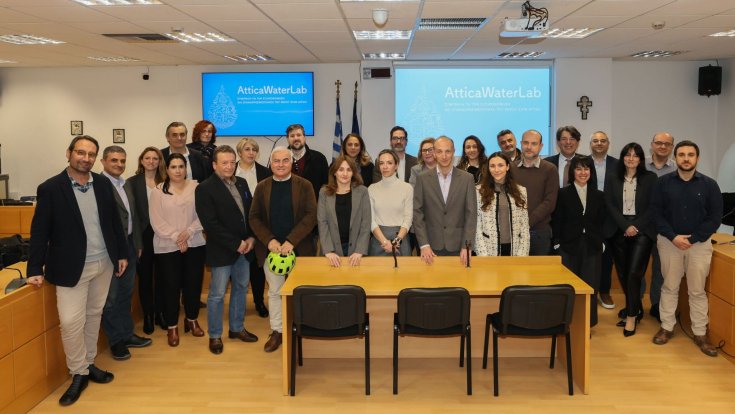
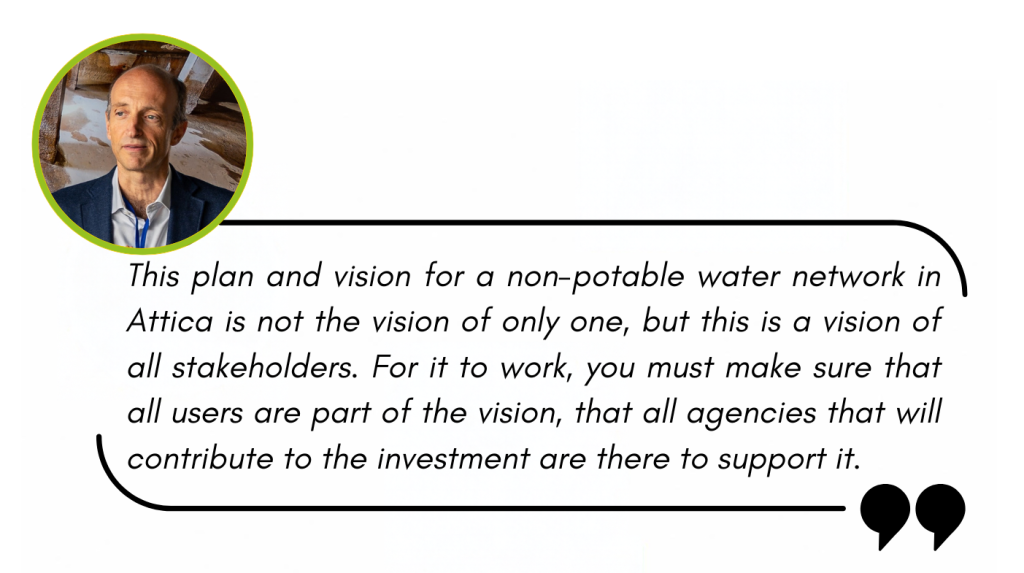
With the region’s water resources under severe pressure, the Attica Water Lab was established to bring together diverse stakeholders, including public authorities, industry, associations, water and sewerage services, universities and civil society. This is what Sympraxis means!
The task of the Lab is to deliver practical results in water reuse and the conservation of drinking water in Athens by supporting the drafting of the Water Reuse Master Plan and its roll-out in the complex and challenging environment of the Attica basin.
Main objectives and innovation
The Living Lab aims to support the development and implementation of the Water Reuse Master Plan in the complex Attica basin.
Its main innovation lies in co-design and co-management. The plan for a non-potable water network is not developed by one institution alone; instead, it represents a shared vision created and implemented collaboratively by all stakeholders.
Residents at the heart of the Tavros project!
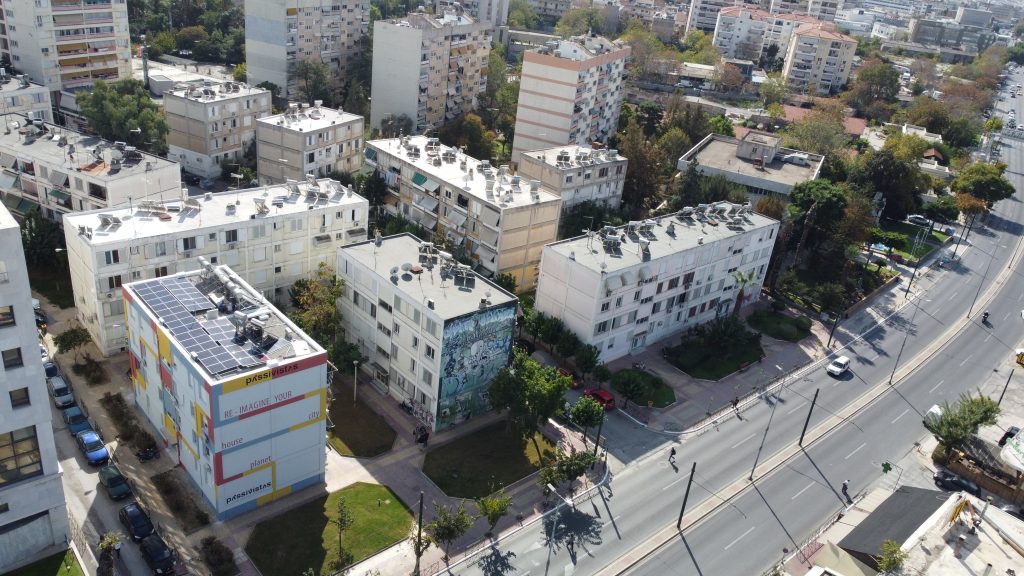
The Tavros Project is an exemplary deep renovation of a typical 1960s refugee apartment building of approximately 750 m², retrofitted to the Passive House standard. The renovation was carried out by Passivistas, a volunteer group of young engineers, and the Hellenic Passive House Institute (HPHI), in collaboration with the Municipality of Moschato–Tavros and Greenpeace Greece.
The aim was to reduce heating and cooling demand by up to 90%, achieve excellent indoor comfort, and reach energy independence through a small photovoltaic system that is expected to deliver a positive energy balance, effectively eliminating the residents’ electricity bills.
But not only! This project has involved residents, businesses, policy-makers and local organisations from the very outset.
Innovative solutions and affordable price
The building’s energy self-sufficiency rests on two pillars: a radical reduction in energy demand through Passive House design, and covering the now minimal consumption with renewable energy. Eight solar water heaters and a 17 kWp photovoltaic system have been installed on the roof, while a BIPV (building-integrated photovoltaic) system on the south façade significantly increases energy generation. Energy production is expected to be double the building’s consumption, which in the future could also allow electric vehicle charging or income generation through net billing.
All these technologies and materials ensure that vulnerable households have access to high-quality, energy-efficient housing, as well as stable energy prices and virtually zero energy bills for residents.
Door-to-door visits and a mockup
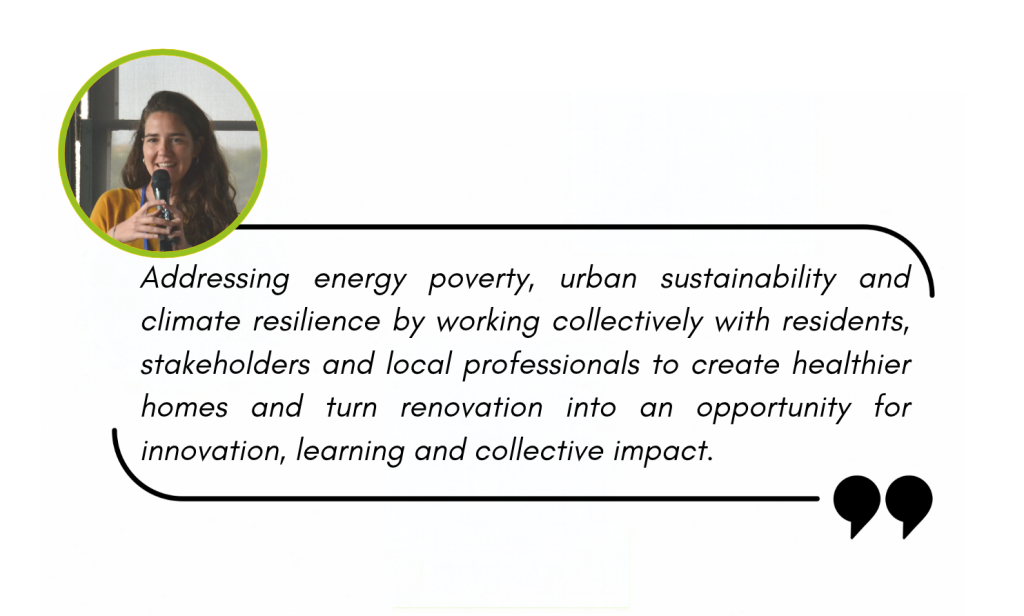
For Ilektra Mancini, architect, one of the key elements at the outset was a mockup and the door-to-door approach. These two factors were essential for explaining the project to residents, the impact of this renovation on their homes and their lives, and their role in bringing this living laboratory to life.
A showcase for the future
The Tavros Project building also operates as a “living lab”, where research, education and practice meet. Monitoring of conditions before and after the renovation provides valuable data on energy consumption, air quality and thermal comfort. The building also serves as a training site: more than 100 professionals and students have been trained on site in Passive House techniques, helping to spread knowledge and build a new generation of experts in energy-efficient renovation. For five years, until 2030, the building will remain open as a space for knowledge and experience sharing with professionals, students and the local community.
Athens intends to implement a replication plan in the neighbourhood, using the building as a model for sustainable urban transition.
Imagine if the 250 buildings in the neighbourhood could benefit from such duplicability?
Thousands of households could enjoy better living conditions and lower energy costs.
Both projects demonstrate that the transition towards climate neutrality requires more than technology: it depends on collaboration, citizen participation, shared responsibility and solutions that improve people’s quality of life.
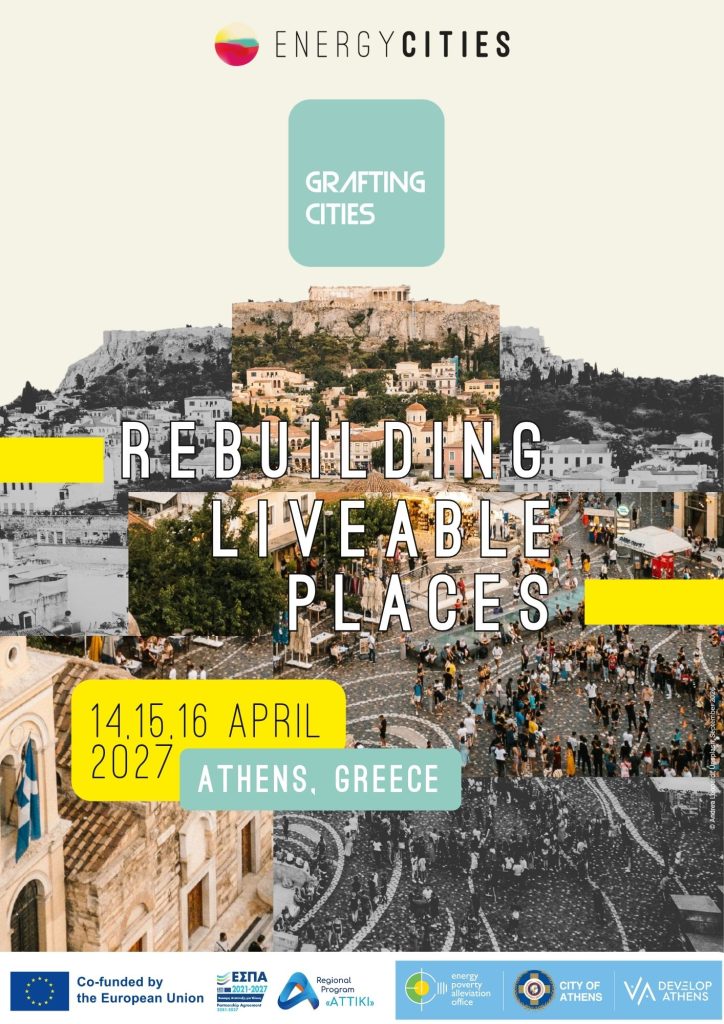
“Rebuilding liveable places“ will be the theme of the Energy Cities next annual forum which will be held in April … in Athens, the circle is complete!
To find out more information on these two projects, visit the EUREKA website to discover other good practices from all the cities and sign up for our newsletter!
Featured member cities

