How to turn a city into a “cool” place: Grenoble’s fight against urban heat islands
Interview with Mariam Emelien, Urban Planning Service at Grenoble Alpes Metropole
 Fossil-free cities
 Fair economies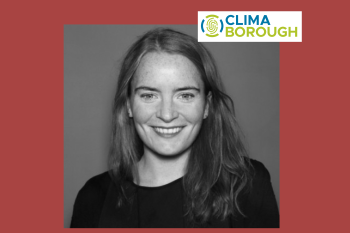

About
Name
Mariam Emelien
Position
Urban Planner
Date
29/06/2026
Location
Grenoble Alpes Metropole, France
Website
Podcast



Heat peaks have become the new normal in many of our cities. On hot days, residents have to find places to stay cool – if there are any. Municipal administrations have to adapt to this new situation by designing – or ideally co-designing, public spaces that cater the needs of the most vulnerable populations. In Grenoble, France, a team of urban planners and other experts have been working on interventions, some small-scale, some much bigger.
Mariam Emelien is part of that team and in this episode she shared with me how they progress on that topic. Our conversation took us to some of Grenoble’s hotspots where greening and shadow sails already provide fresher air, also thanks to the city’s canopy plan. You’ll also hear from Mariam that defining heat strategies that are accepted internally and by the local community is not that easy. Enjoy the chilly conversation!
Mariam explains that, until a few years ago, Grenobles Alpes Métropole did not have a department, nor did it have a public policy directly addressing urban overheating. However, they had initiatives already in place, such as the canopy plan. This plan drafted in 2022 sets objectives for canopy coverage of roughly around 30% in 2030 and 40% in 2050 to refresh the city.
Three key components with which Grenoble’s increasing its heat resilience:
- Upskilling, esp. linked to urban climatology
- Adopting a new governance; e.g. through the creation of an inter-departmental group, where all of the representatives of departments which are concerned by urban overheating can meet regularly
- Use new tools and ways to collect new data
Mariam nicely connects science and practice. She told us that we need to be careful about how we tackle the issue, testing things and adapting our practices along the way. Before we do any changes in public space whether with natural or built features, there is a lot to do about changing the mindsets. Learn from Grenoble and so many other cities that are looking for ways to become cooler places.

This episode was made possible thanks to the CLIMABOROUGH project, co-funded by the European Union and CINEA. It has the ambition to bridge the gap between design and implementation of urban innovations, particularly in the face of climatic change and its consequential needs for adaptation and mitigation.