Heating Brussels Capital Region beyond gas
Vincent Vandernoot on Brussels’ new clean heat project in the city’s Northern District
 Fossil-free cities
About

Across Europe, cities are working to replace fossil gas with cleaner heating systems. This shift makes our heating independent from external markets and less vulnerable to price shocks. In the Brussels-Capital Region, this transition is being driven by a long-term vision to decarbonise heating and cooling while ensuring that no one is left behind.
One of the flagship projects helping to turn that vision into reality is the Be.SHARE Project, an innovative district heating and cooling network in the Brussels North District. Financed by the European Commission through the European Urban Initiative, this pilot project combines renewable energy sources, technical innovation, and community participation to make the district’s heating cleaner, more affordable, and more secure.
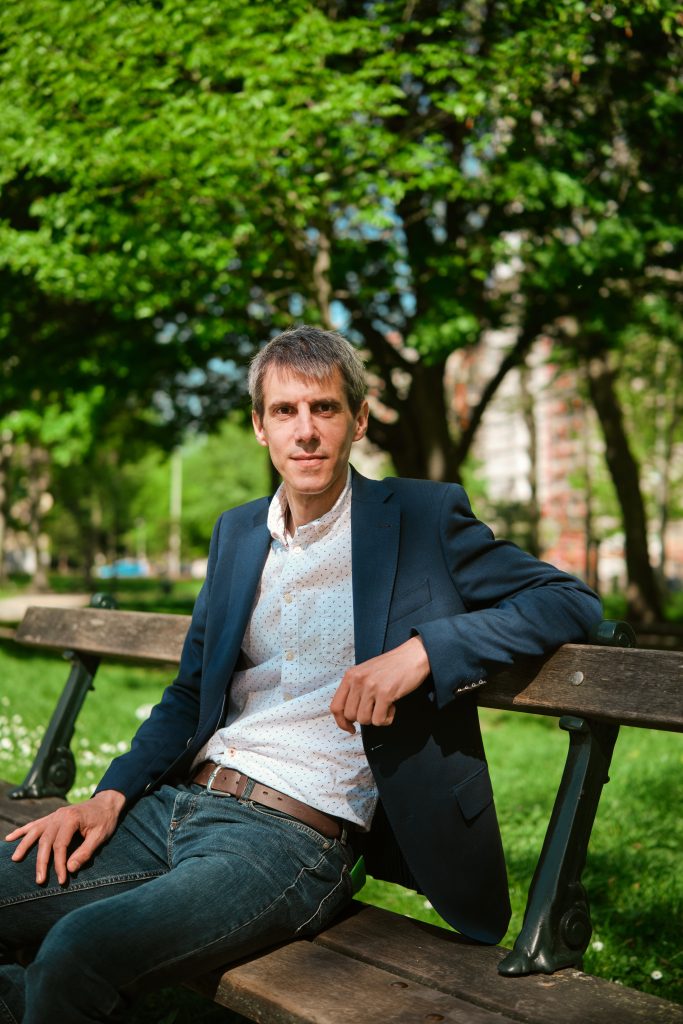
As part of the #MakingHeatSafe campaign, we spoke with Vincent Vandernoot from Brussels Environment about the people, partnerships, and ambitions behind the project.
What is your role, and how do you contribute to Brussels’ heat decarbonisation efforts?
Brussels Environment is the public administration responsible for environment, climate and energy policy in the Brussels-Capital Region.
We are a member of the Energy 2050 Task Force, a working group bringing together Brussels Environment, Brugel and Sibelga to develop solutions for phasing out fossil fuels and decarbonising heating across the region.
Together, we have developed a “zoned vision” for the heat transition, mapping the decarbonisation potential of different neighbourhoods and identifying the most appropriate solutions for each area. These include district heating networks, geothermal energy, riothermal energy, heat pumps, biomass and biogas. This work will feed into the future Regional Heat and Cooling Plan and the broader Air, Climate and Energy Plan.
One of the most practical ways Brussels Environment contributes to this transition is through the development and implementation of Be.SHARE. The project allows us to move from strategy to action by testing innovative solutions in a real urban environment while involving local communities directly in the process.
Who are the different people involved in making this project happen, and how do you work together?
Within Brussels Environment, several teams are contributing to the project, particularly the Territorial Transition Division (TRAMO), the Air, Climate and Energy Division, and the Authorisations Division.
The project is coordinated by the “Territories in Transition” team within TRAMO and brings together a wide range of partners. Brussels Environment leads the initiative in collaboration with the public utility companies Sibelgaand VIVAQUA, the private company KARNO, the Vrije Universiteit Brussel (VUB), and the non-profit organisation Convivence.
Beyond the core consortium, the project also relies on close cooperation with a number of key stakeholders, including the City of Brussels, Brussels Mobility, Foyer Laekenois, Whitewood and Befimmo.
This broad partnership is essential because each organisation brings different expertise—from energy infrastructure and technical innovation to academic research, urban planning, and community engagement. The European Urban Initiative programme also places a strong emphasis on knowledge transfer, ensuring that lessons learned in Brussels can benefit other European cities (Manresa (ESP), Jablonec Nad Nisou (CZ) and Leeuwarden (NL) being the three transfer cities of the project).
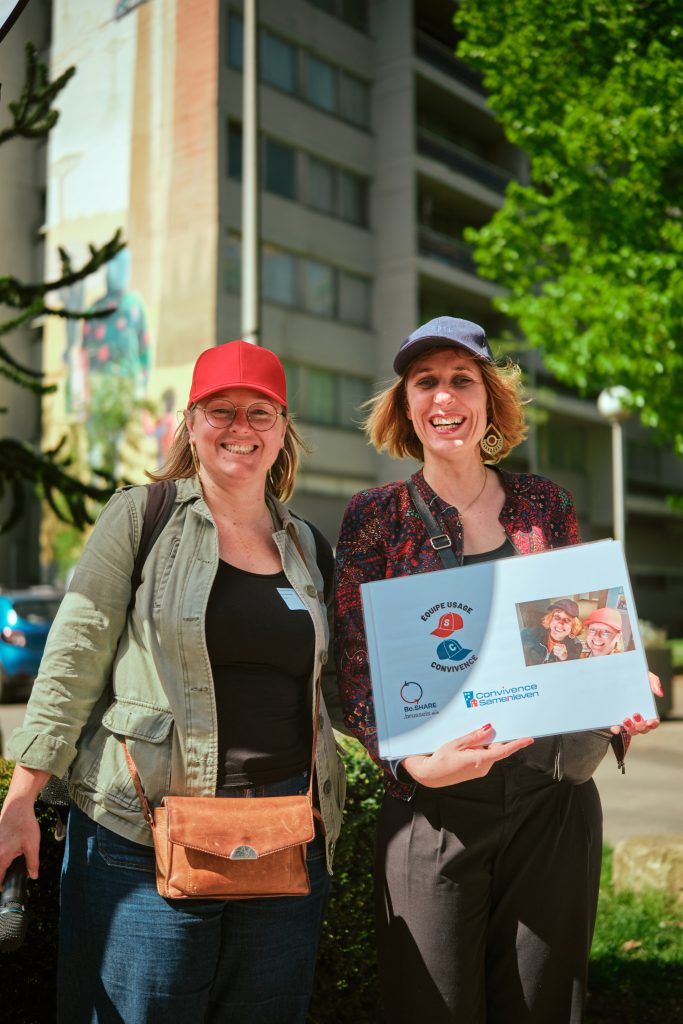
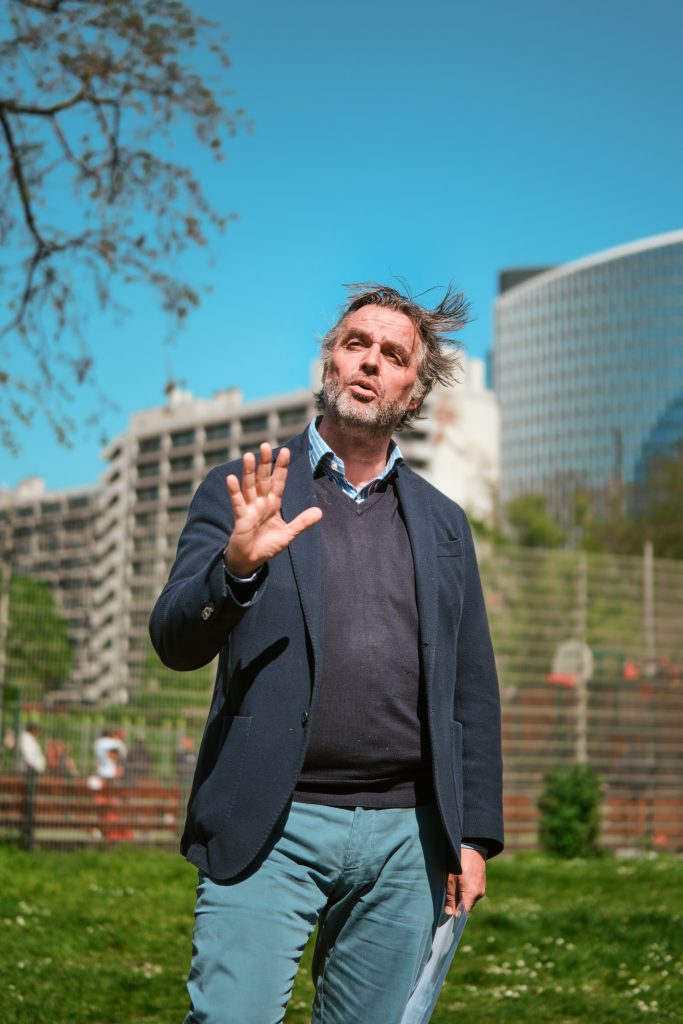

From left to right: Convivence, working to engage residents in social housing; Karno, a private company developing the district heating network; and Sibelga, the distribution system operator for electricity and gas networks.
What is the most important aspect of this work for you personally? What gives you hope and motivation to keep pushing the transition forward?
What motivates us most is helping the Brussels-Capital Region meet its decarbonisation objectives through concrete action.
Be.SHARE demonstrates that innovative technologies such as fifth-generation district heating and cooling networks can provide practical solutions for dense urban environments where the energy transition is often more challenging.
Another source of motivation is the partnership itself. The project brings together public authorities, private companies, researchers and citizens in what is often called a “quadruple helix” approach. This diversity of perspectives helps ensure that the transition is both technically robust and socially inclusive.
Finally, being part of a European programme creates opportunities to exchange ideas and inspire similar projects elsewhere. We hope that the innovations tested through Be.SHARE will help shape future legal frameworks, business models and policies that make it easier to deploy clean heating and cooling systems across Europe.
How is the project ensuring the heat transition is fair and inclusive, especially for households facing rising energy costs?
Be.SHARE is much more than a technology project. It has a strong social ambition alongside its innovation and decarbonisation goals.
The network will provide decarbonised heating to a range of users, including around 200 social housing households managed by Foyer Laekenois. These residents will not simply be end users; they will be actively involved throughout the project through participatory workshops and engagement activities.
The objective is to help residents better understand the system, empower them to take part in their own energy transition, and ensure that the project is designed with their needs in mind.
We know there can be no genuine transition without the involvement of all groups in society, including the most vulnerable. That is why Be.SHARE is built around an innovative governance model that brings together public authorities, private actors, researchers, and citizens throughout the process. The goal is clear: to create a project both for and by the people who live and work in the neighbourhood.
The project also aims to deliver affordable, reliable, and clean energy. By pooling resources through a district heating network, the system can provide decarbonised energy at a competitive cost—estimated to be around 10% lower than comparable individual solutions.
Because the network relies on local renewable energy sources, it also offers greater price stability and energy independence. Furthermore, the heat supplied through the network will be covered by Belgium’s social energy tariff, meaning eligible households—including social housing tenants—can continue to access energy at affordable rates.
What would you like people to understand about the effort happening behind the scenes?
Perhaps the most important thing is the amount of coordination required to make a project like this happen.
Success depends on having a clear shared direction and ensuring that all partners continue moving towards the same objective. That requires constant communication, alignment and trust.
There is also a need to balance technical and social dimensions. Building infrastructure is only one part of the challenge; understanding local needs, engaging residents and creating social ownership are equally important.
At the same time, projects like Be.SHARE require agility. We are effectively creating a living laboratory where we learn by doing, adapt as we go, and continuously build on new experiences and lessons learned.
If you had a “magic wand” and could change one thing—politically, financially, or practically—to make your work easier, what would it be?
If we had a magic wand, we would make it easier to work around the spatial and regulatory constraints that come with building infrastructure in a dense urban environment.
Sometimes that might mean moving a pipe that happens to be in the wrong place underground. Of course, these constraints are part of the reality of working in an existing city, and overcoming them is one of the challenges that makes the project innovative.
On a broader level, more flexible framework would help accelerate the transition. We often say it would be useful to have a kind of “visa” allowing temporary regulatory flexibility for innovative projects, helping cities test and deploy solutions more quickly. These pilot projects then enable the framework to evolve in the right direction.
How do you imagine heating in Brussels in ten years?
We hope to see district heating and cooling networks deployed across the region at a much larger scale, building on the lessons learned through Be.SHARE.
By then, renewable energy sources available in the public domain should be widely mobilised, helping to reduce dependence on fossil fuels while strengthening local energy resilience.
We also want to ensure that nobody is left behind. The expansion of renewable heating and cooling must go hand in hand with a just and inclusive transition.
At the same time, reducing energy demand will remain essential. Large-scale building renovation and insulation programmes must complement the deployment of heating and cooling networks so that we can meet the needs of as many people as possible while reducing overall consumption.
Finally, we believe cooling must become a much more central part of the conversation. As climate change increases the frequency and intensity of heatwaves, cities will need to develop renewable cooling solutions alongside clean heating systems to adapt to a warmer future.
Watch our interview with Vincent on YouTube to find out more.
In addition to this interview, explore Brussels Capital Region’s strategy in our case study below.
Pictures: Sam Glazier