It’s not just about installing underground pipes: better neighbourhoods through district heating and cooling
Frederik Ceulemans, Deputy Mayor, City of Brussels
 Fossil-free cities

Cities across Europe are rethinking how they heat and cool their buildings better. As fossil energy becomes more expensive and emissions threaten our quality of life, there is a big shift to more collective and fossil-free systems. Especially district heating and cooling still is a new approach for many local governments. And it’s not just about installing underground pipes. It’s a whole new design of urban space and infrastructure and it requires big investments, big works, coordination with multiple actors.
That’s why we wanted to hear from Frederik Ceulemans from the City of Brussels how they deal with that big challenge. As Deputy Mayor, Frederik has a large portfolio spanning from Urban Renovation and Climate, to Citizen Participation and Dutch-speaking culture. In this episode he told us how they started planning and implementing district heating and cooling in a socially very diverse neighbourhood of Brussels. If you wonder how to design a network that is free of gas, profitable and still affordable, this episode is for you.
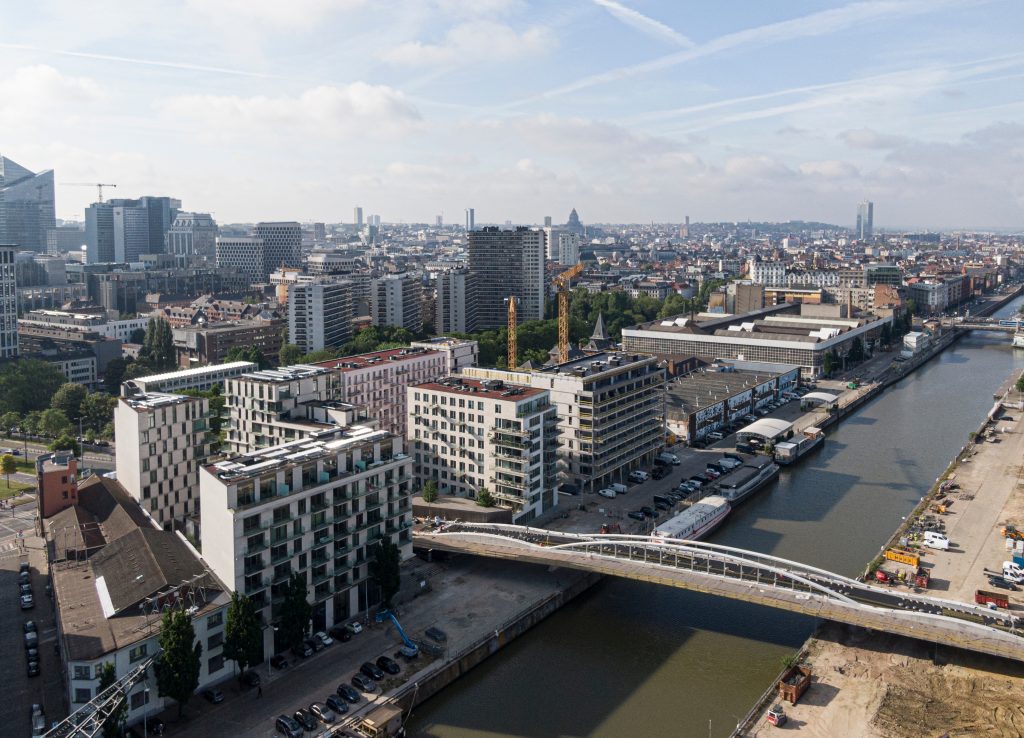
What we took away from this conversation is that the City of Brussels has a clear strategy and vision for phasing out gas. And they are already actively involved in various projects. They did not take the easy way: Frederik, his team and many public and private partners are experimenting district heating and cooling in two projects. One of them is implemented in a Northern neighbourhood with a high social percentage of social housing, but also offices, public buildings and a huge urban park. This 1 km of pipes comes with a much bigger urban transformation. It is not only a technical shift, but it’s a social shift to shield local communities from climate, price risks and dangerous emissions. Thumbs up for this very important pilot ! It’s a neighbourhood transformation that, when finished in 2028, may inspire other European cities.
We also asked Frederik about his take on the very recent Electrification Action Plan from the EU. Europe is finally taking concrete steps to help finance local heating and cooling plans. Specifically, it plans to provide financial support in developing investment concepts for local heating and cooling plans, mandated by law under EU legislation. Is that enough to meet local government needs? What else is missing?
More on DH&C:
- Brussels’ page dedicated to DH networks: www.brussels.be/district-heating-networks
- Watch our video on Brussels’ heating & cooling projects
- Explore our EU tracker on local heating and cooling: https://energy-cities.eu/local-heating-and-cooling-plan/