Amplifying mayors’ voices: new opportunities for local leaders to share and connect
Energy Cities launches activities for local elected representatives to exchange ideas, discuss challenges and share achievements
2025 marks Energy Cities’ 35th anniversary: 35 years inspiring transition journeys, creating partnerships, sharing ideas, and so much more. As part of this milestone, we’re launching two new activities – exclusive to our members – aiming to place local leaders at the heart of the conversation.
In a time when amplifying the voices of local leaders is more important than ever to counter false and hostile narratives, our new ‘Mayors Voice’ activities provide a vital space for local elected representatives to draw inspiration, exchange ideas and find strength amongst peers.
Are you ready to mingle in 2025? Join our Mayors Clubs and 15-15 Mayors Energy Talks!
Mayors Clubs: a space for meaningful dialogue
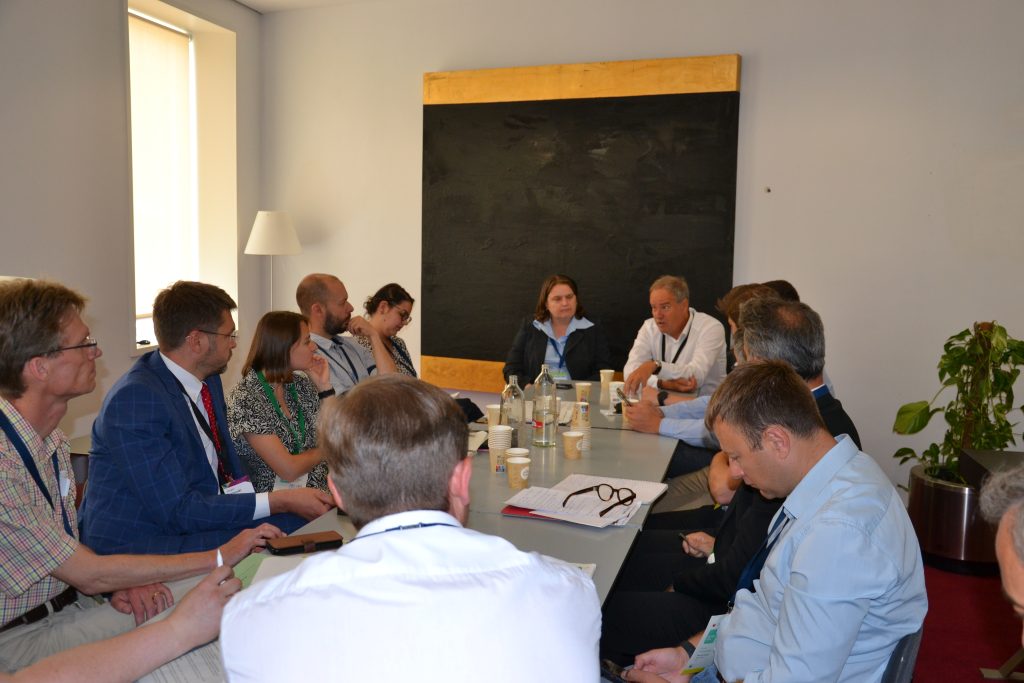
First and foremost, we are excited to introduce our new Mayors Clubs, bringing together small groups of likeminded mayors, deputy mayors and local councillors to deep dive into specific topics across Energy Cities’ five thematic hubs. These gatherings, held both in-person and online, aim to create a safe space for local elected representatives to have sincere, open exchanges on their experiences and the challenges they face in different areas.
Each club will be hosted by a mayor from Energy Cities network. As close-door meetings, the content of the discussions is not publicly disseminated. However, as part of our mission to influence EU policy based on mayors’ experiences, the clubs’ discussions will directly inform Energy Cities’ advocacy, shaping our positions and recommendations on key EU legislation and instruments. The clubs will also offer opportunities for mayors to connect with EU policymakers and media to make their voices heard.
2025 Mayors Club Agenda
This year, we will have three Mayors Clubs. These clubs will kick off with in-person sessions at our Annual Forum in Besançon on April 10th, 2025, followed by virtual gatherings later in the year.
Mayors club: Inclusive renewable energy solutions
Local energy ownership is key for climate action and democracy. It combats energy poverty, fosters community cohesion, and empowers municipalities to lead. But how can we promote citizen-based renewable energy?
Join this 2025 club to exchange insights with fellow mayors on advancing inclusive renewable energy. This session will contribute to shaping Energy Cities’ stance on the EU Citizen Energy Package.
Mayors Club: Engaging local Communities in Clean Heating
The transition to clean heating is vital for decarbonisation, but it comes with challenges. How can municipalities effectively communicate about this shift? How can we build alliances with citizens, businesses, and local stakeholders? And how do we respond to setbacks?
This club will explore strategies for engaging communities in clean heating initiatives. It will also contribute to shaping Energy Cities’ position on the EU Heating and Cooling Strategy.
Mayors club: Resource-wise urban planning
Urban planning is a powerful tool for creating liveable cities, ensuring affordable housing, and reducing resource (land, water, material) and energy use. This club offers mayors a space to share experiences, and practical examples, and address challenges they face.
This club will help shape Energy Cities’ perspective on the EU Sustainable and Affordable Housing Plan.
15-15 Mayors Energy Talks: a space to shine
Our second new initiative for 2025, the 15-15 Mayors Energy Talks, is designed to shine a spotlight on mayors’ achievements. These talks provide a platform for local elected representatives to share their successes and inspire others through concise, impactful discussions. Each session features a 15-minute story from a mayor, deputy mayor or local councillor, followed by a 15-minute discussion with the audience.
These brief, 30-minute talks are an excellent way for mayors to spark inspiration by sharing achievements they are proud of. For the audience, it’s a great way to quickly tune in to learn from others’ successes, challenges, and creative solutions—all without taking too much time out of their day.
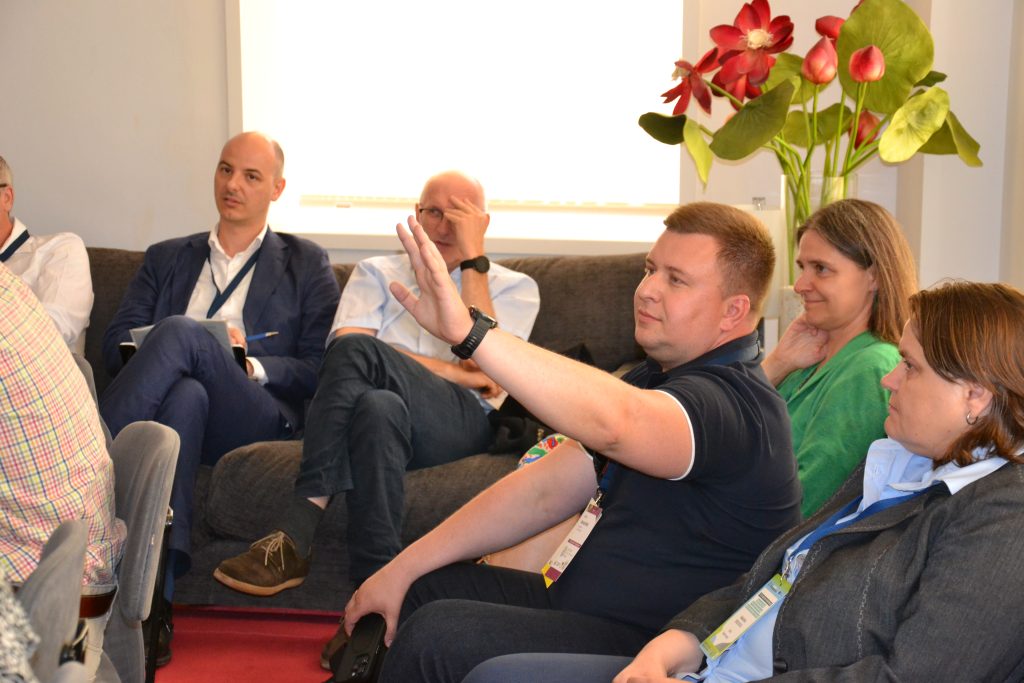
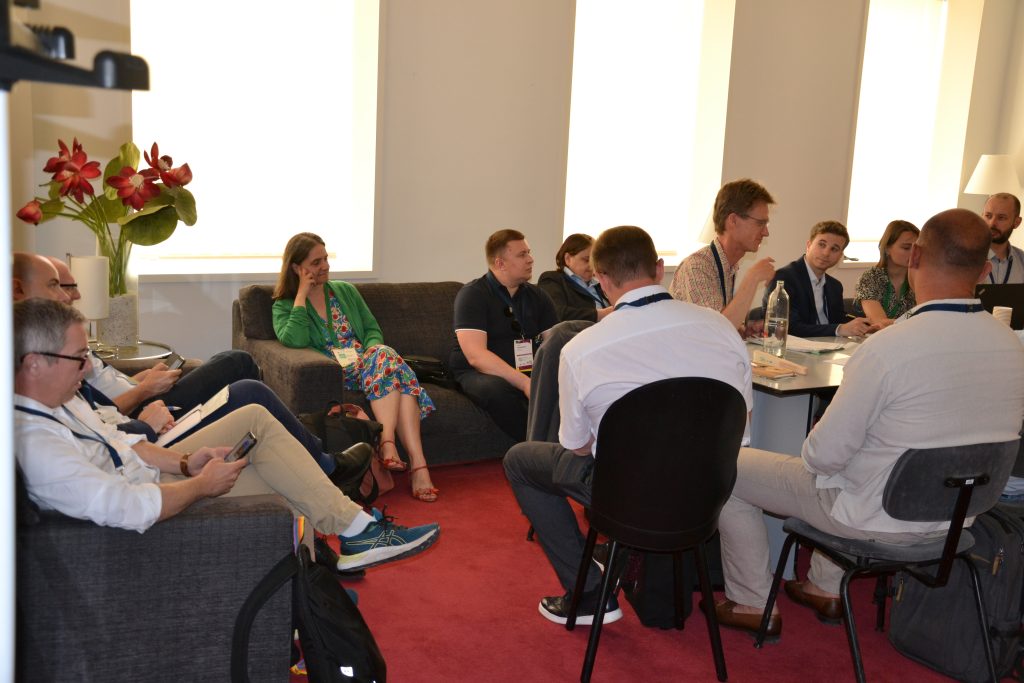
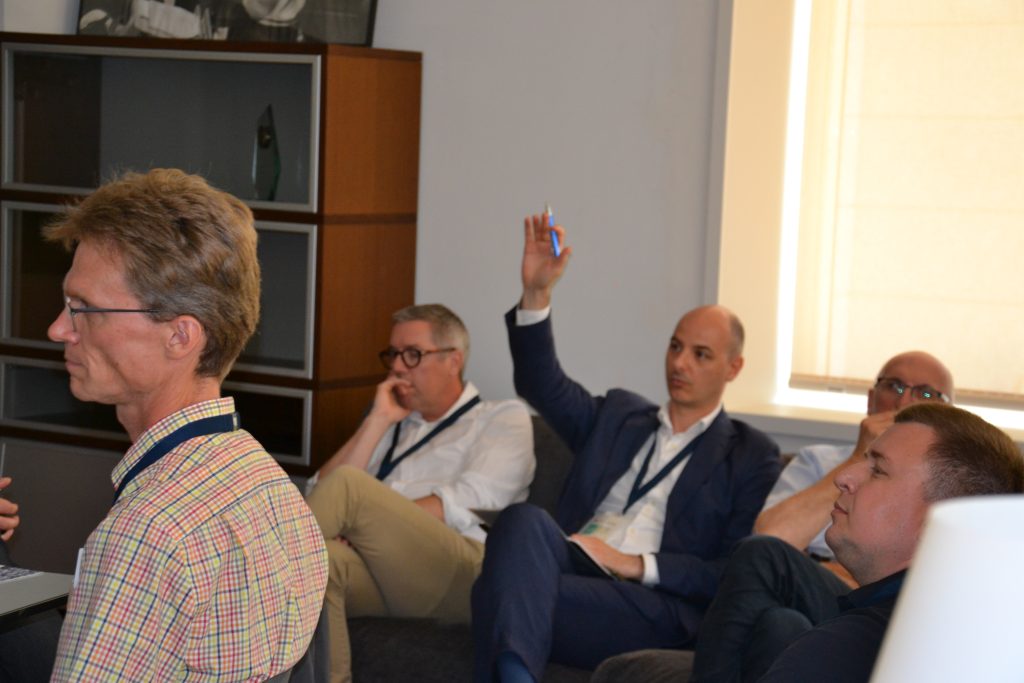
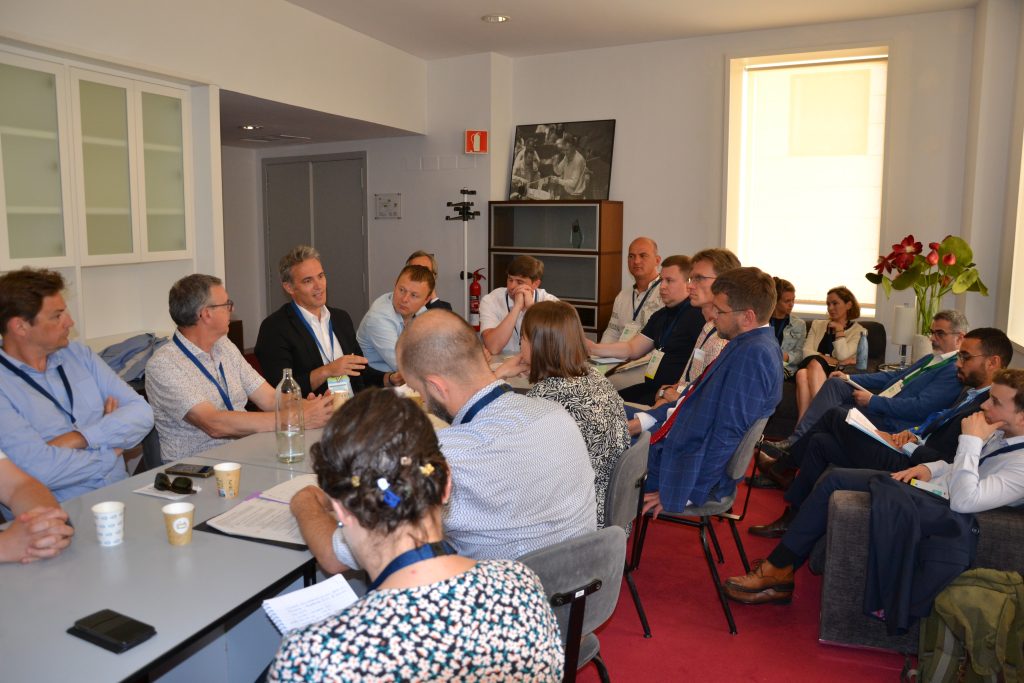
About Mayors Voice
Exclusive to our members, Energy Cities’ Mayors Voice activities offer spaces for local elected representatives to come together and discuss amongst peers, explore solutions to similar challenges, share success stories, and together chart a way forward.
Better policies for healthy homes: sign up to the manifesto of local governments
Join the pledge for municipal action combining health and energy poverty interventions
The WELLBASED Healthy Homes campaign wants to raise awareness amongst local leaders, councils, and communities about the impact that fuel poverty has on people’s health. The European Commission defines fuel poverty as ‘when energy bills represent a high percentage of consumers income, affecting their capacity to cover other expenses, or when consumers are forced to reduce their energy consumption with an impact on their physical or mental well-being’.
In the winter of 2022-23, the WELLBASED team surveyed 356 households across 5 nations, about their experience of energy poverty and their health status. In the sample of 356 respondents 59% earn less than €750 per month and only attended lower secondary education. In this sample, the incidence of energy poverty was considerably higher than that reported in the EU energy poverty statistics for 2021. Nearly 65% of participants reported poor mental health, while 30% had a lung condition.
By signing this manifesto a city council commits to:
- Demonstrating a fair and inclusive approach to Net Zero transition.
- Improving health and energy efficiency activities that enable people to better cope with environmental changes.
- Reducing fuel poverty and understanding the link to health inequalities and the impact this has on the wider health and care system.
Each signatory will get the chance to:
- Collaborate with a network of committed cities to exchange on fuel poverty related health issues.
- Access first-hand research results and best practices from practitioners
- Attend the End Energy Poverty Forum in July in Brussels and Final WELLBASED event in Valencia in 2025
By signing this manifesto, your council shows its determination to reduce fuel poverty-related ill-health. Through this campaign, incremental small changes in every city will deliver improved outcomes with long-lasting effects.
Please confirm by email before 28 June 2024 the latest that your city joins the campaign. We will then add your city logo to the list of signatories and provide visibility and networking opportunities to all of you!
This campaign is an initiative by the European WELLBASED team, composed of city practitioners, researchers and NGOs: www.wellbased.eu
Lasting renewable and fair solutions
Mapping invisible people and unknown spaces at our Annual Conference in Modena
As part of Energy Cities’ inspirational day in Modena, on 18th October, we gathered a bunch of renewable experts and activists in the fictional city of Andria. For one day, this was our place to discuss the challenges of bringing (renewable) energy access and energy justice to all. People did not need a GPS to navigate through Andria and its lively workshops. They let empathy and foresightedness be their guide.
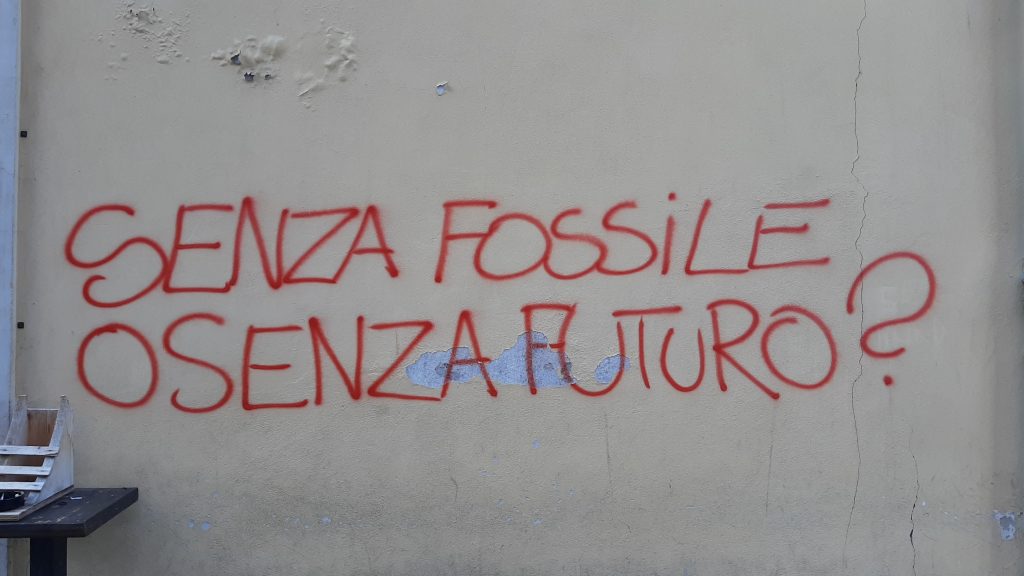
Take-away 1: We must give space to the invisible citizens if we want the energy transition to be fair and effective. They bring the power we all need!
We discussed energy poverty and how we can give space and visibility to those who are usually standing and living in the blind spot of policies. How can we give space in decision-making and involve them fully in the energy transition? And what can we actually learn from them? And why do we call “vulnerable” those who show most strength and resilience?
Big inspiration came from Jan de Pauw, project engineer at the citizen energy cooperative Ecopower and energy advisor for the city of Eeklo (Belgium). He presented the outstanding energy poverty support program which was initiated by the City of Eeklo together with Ecopower: This scheme, which has been developed and launched in the framework of the POWER UP project, will enable low-income households to become members of an energy cooperative. How? The city pre-finances cooperative shares and lends these to people who would not be able to pay this upfront cost on their own. Over several years, these beneficiaries will then pay the share back through a small monthly fee. As of day one, though, the shareholders will be full members of the Ecopower cooperative including all rights that come with it such as getting renewable energy at a fair price or having a voice at Ecopower’s decision-making. This rolling fund of pre-financed social energy shares makes local renewable energy accessible for all. It is a first of its kind in Europe and has great potential to be implemented in other local governments wanting to help people in energy poverty.
Take-away 2: Legal stumbling blocks require patience, but they aren’t a reason to stand still
Italy’s national decree on energy communities was meant to be published many months ago. While impatiently waiting for it, we organised together with Confcooperative a training session on energy communities for Italian civil servants as part of the SCCALE 203050 capacity-building series. Despite a complicated and lengthy adoption of the legal framework, local authorities do take action to deploy renewables and to put them in citizens’ hands. They are keen on getting the right skills and they wish to level up their city-citizen collaborations around renewable energy projects! We provided participants with success stories and guidance from Italian peers about the very practical steps to create an energy community.
Take-away 3: Municipal space needs to be clearly identified and made available to the community
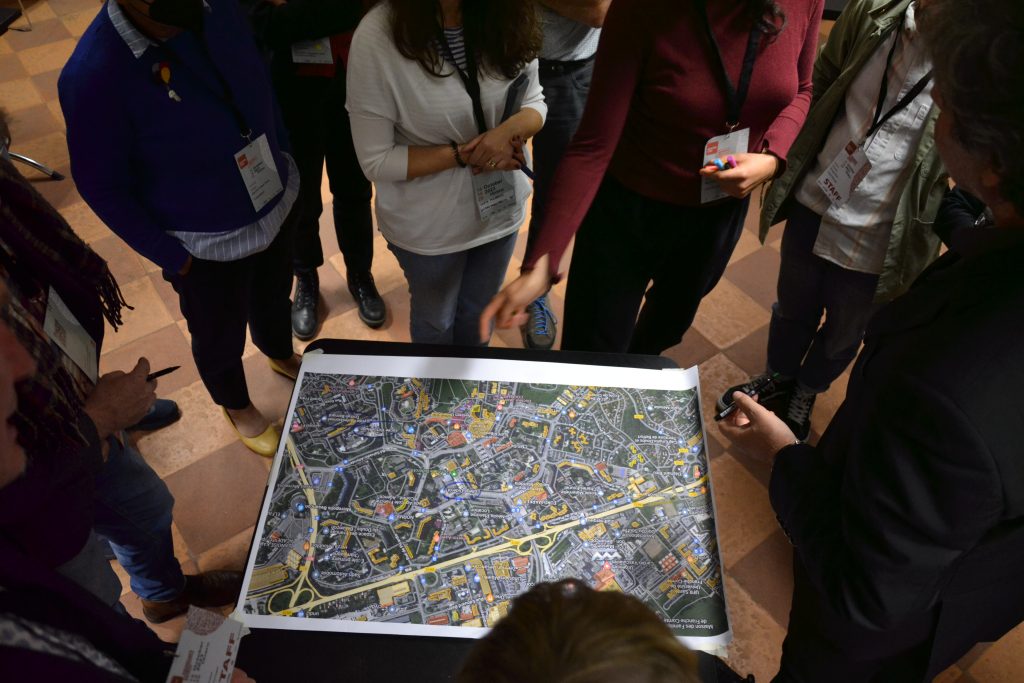
The afternoon workshop put public assets for local community energy on the spot. We’ve explored all those different spots in which renewable energy can find a place in a city: roofs and façades, parking lots, water reservoirs, brownfields – even cemeteries! Much of it still remains pretty much untapped as neither local governments nor other players in town do know what they could use to produce or consume locally produced energy.
After an introduction to the workshop, Anik Lehman-Tron from the Energy Department of the City of Besançon (France) presented the approach by the City of Besançon. She talked about their strategy to quantify available renewable energy, to map suitable space and to identify consumers and producers in their Planoise district. Planoise is a low-income area with high social mixity. Annick’s presentation was first followed by a Q&A session with the audience. All participants were then brought to an XXL-format map of the Planoise neighbourhood to do a joint spatial analysis and exercise around renewable offer and demand.
Next we had a presentation by Anna Francis from Energy Cities on the LIFE LOOP asset match-making tool. When released in December, this will be the very first European-wide platform allowing cities to show their local people that they care for the development of renewables and that they offer space for those who want to invest in it!
We ended with the success story of Balkan Solar Roofs in Porec, Croatia. Their ambitious local policy, made visible through the Sunny Office, first one-stop-shop in the area, has brought renewable development to another level.
We could have continued the conversation, talking about land constraints for urban renewable energy, data or modelling challenges, participation and how we make all this work for vulnerable people…but the sun started sinking into the narrow streets of Andria.
Mapping and mobilising the invisible
Join our sessions in Modena for insights on energy communities, energy poverty and anything in between
You think our articles and newsletters are fantastic, but you’d love to engage face-to-face with other city representatives and experts on local renewables energy perspectives? Our next Annual forum in the lovely historic city center of Modena is the chance to dive deep into decentralized and people-powered energy.
Here’s a sneak preview of what we have designed for you! Make sure you register as soon as possible, selecting the Hub 3 sessions of Energy Cities’ inspirational day on Wednesday, October 18th!
Wednesday 18 October 2023
9:30-12:00 Energy for the invisible citizen: in search for lasting & fair solutions.
In a less conventional format, we will bring together all those who are fighting energy poverty in their everyday work. You’ll have the chance to navigate with other city-makers through questions related to housing and health, renewable energy access, summer energy poverty, and gender. This first workshop with social impact hacker, will be followed by a fruitful flopcast: Together we will explore the mistakes and the respective lessons learned in the different EU initiatives and projects. Throughout the session, we’ll unashamedly suck knowledge from innovative EU-funded projects (POWER UP, WELLBASED, Cooltorise, Shape EU) on how to bring systemic changes to end energy poverty. (view detailed program)
9:30 – 12:30 Developing energy communities in Italy by promoting collaborations between municipalities, citizens, SMEs – part 1
Capacity building on community energy for Italian municipalities, organised together with Confcooperative as part of SCCALE 203050 capacity-building series for Italian civil servants
This is a training upon invitation dedicated to Italian local governments who wish to level up their city-citizen collaborations around renewable energy projects! We will provide participants with experiences, guidance, and proposals for the creation of new energy communities. We will explore different ways to share renewable energy produced locally by promoting the active role of consumers, citizens and businesses in collaboration with municipalities.
14:00 – 15:30 Developing energy communities in Italy by promoting collaborations between municipalities, citizens, SMEs – part 2
Community building on community energy for Italian municipalities, organised together with the Municipality of Magliano Alpi.
How did the city of Magliano Alpi develop its energy community? What challenges did its team encounter and how did it overcome them? Join this experience sharing session and benefit from the city’s experience and advice.
16:00-17:30 The Map it Show! Treasure hunting renewable energy in our cities.
For anyone who enjoyed geography at school and in particular working with maps, this session is for you. Anik Lehman-Tron from the Energy Management department of the City of Besançon will be using a huge map of the Planoise neighbourhood to illustrate the solar potential analysis they recently carried out with the French PV association HESPUL. You will learn how they are using the results to set up a self-consumption project with the ambition of transforming Planoise into an eco-district. This map will then be used for a generic exercise with all participants: you will identify as many possible potential public owned assets that could be linked to future community projects in a city. Anna Francis from Energy Cities will then talk about her experience of working for Frome municipality in the UK. How did they identify solar-fit public sites and involve a local cooperative in renewable energy projects? Anna will then conclude by introducing the asset-matchmaking tool that is being developed within the LIFE LOOP project. (detailed program soon)
Ready to go?
Register now for Energy Cities’ inspirational day at our Forum in Modena!
You want to get a glimpse of what the other Energy Cities’ sessions will be covering? Discover the full programme of Energy Cities’ Day in Modena.
Don’t forget to sign up for all the other engaging and inspiring activities we have in store for you during the rest of the Forum: plenary sessions, networking opportunities, engaging tours of Modena, and even the train ride just for Energy Cities’ members!
You may also be interested in attending Climate Alliance’s Workshop the next day: Municipal solutions for energy poverty – 19 October, 15:00 – 17:00 | Camera di Commercio Modena (English) Energy poverty is increasingly in the spotlight, but what can cities and towns do about it? Involving energy-poor citizens and enabling municipal staff on the road to a socially just energy transition is of the essence. Join the discussion and get inspired by real > Agenda
“No Nature, No Food”
We must not be afraid to state the obvious
In recent weeks, part of the European Parliament has chosen to boycott discussions on the draft regulation for “nature restoration”.
This is quite unprecedented, as debates usually get bogged down and, rather than facing outright refusal, many texts are drained of their substance through endless negotiations. But what’s at stake here is a pre-election battle (already!). And it doesn’t bode well: those who are trying to convince us that we can’t ensure our food security without continuing to destroy the soil, water and forests are the same people who have caused setbacks to the European Green Deal. The European Commission has already suggested revising its proposals so as not to include obligations to achieve results, but only to make a reasonable effort. Not even an obligation of means…
Meanwhile, the European Central Bank has just published an analysis of the risks posed to the banking system by the decline in biodiversity: “Nearly 75 per cent of all bank loans in the euro area are to companies that are highly dependent on at least one ecosystem service. […] If nature degradation continues as now, these companies will suffer and banks’ credit portfolios will become riskier,” writes Franck Elderson, member of the Executive Board of the Frankfurt institution, in an article published on 8 June on the BCE blog.
The Commission is proposing practical measures to protect nature in the city.
Member States should achieve 10% green and blue spaces in urban areas by 2040, and at least 15% by 2050. Most of these spaces should be legally protected. Cities are already very active and more ambitious, and nature within the city ensures a better quality of life and the resilience of urban spaces, a necessary solution for combating heat islands and improving food security…
It is yet another directive that introduces specific obligations for towns and cities, without involving them in the governance of the policies that will make these goals possible. The Commission needs to work hand in hand with local authorities. They are the ones who can build alliances with businesses that depend on healthy ecosystems, and with vulnerable social groups who, without (at least!) municipal agricultural, energy and economic policies, will not have access to the basic necessities of living.
Backing down in the face of blackmail and fear is no longer an option
(Although it never should have been in any case…)
PS : on the 15th of June, Members of the Environment Committee of the European Parliament voted 44 against and 44 in favor of the continuation of the legislative process. The proposed regulation will be examined.
*”No nature, no food” is a Campaign slogan of the Greens/the European Free Alliance (EFA) – a European Parliamentary Group
Join a unique capacity-building programme on innovative financing!
H2020 PROSPECT+ is launching its third call for applications. Don’t miss the opportunity!
Would you like to explore new ways of financing your energy and climate measures? Would you like to learn about energy performance contracting, municipal green bonds, revolving funds or citizen financing? Would it be a plus for you if this knowledge was coming from your peers in other EU cities, from people who successfully implemented these financing instruments and could tell you if they fit your own projects in your own local context? Would you find it stimulating to learn in small groups, exchanging directly with other city practitioners facing the same challenges?
Then, don’t search further: the PROSPECT+ capacity-building programme on innovative financing is made for you!
PROSPECT+ offers mentoring and training in five thematic areas: public buildings, private buildings, public lighting, transport, and a cross-sectoral category. It gives attention to improving the decision-making of cities and regions on how to choose projects for financing, as well as how to assess and ensure that the projects are finance ready.
Participation in PROSPECT+ is free of charge and all local & regional public authorities and their energy agencies from Europe (EU27, UK and H2020 associated countries) are eligible to apply.
Since 2017, PROSPECT+ has already helped more than 250 cities and regions! Why not you?
How to apply?
In preparation of its third learning cycle that will start in August/September 2023, PROSPECT+ is opening a new call for mentees and mentors, with the following deadlines:
- Call for mentees: from the 2nd of March 2023 to the 14th of April 2023.
- Call for mentors: from the 22nd of May 2023 to the 7th of June 2023.
In addition, local and regional authorities from Poland, Italy and Ireland can apply for joining local learning groups where exchanges will be held in their own language.
For further information and links to the application forms, please visit https://www.h2020prospect.eu/get-involved
Join our LinkedIn page Capacity building for cities and regions | PROSPECT+!
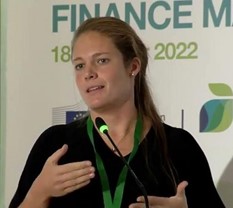
“The PROSPECT+ capacity building programme offers local authorities the opportunity to deepen their knowledge on innovative financing schemes to fund energy efficiency measures directly from their peers, those who already tested and implemented successful solutions when facing the same barriers. By providing different learning methodologies, we want to engage as many local authorities as possible, trying to cater for different needs, including limited time availability or lack of foreign language skills. PROSPECT+ is also a perfect opportunity to have a first direct experience with European projects and meet EU partners for those who are not yet familiar with the EU funding programmes.” Giulia Pizzini, Coordinator of the PROSPECT+ project, IEECP
Thermo Bello, more than community heat
Learn more about this district heating cooperative and join us in Culemborg for a study tour
While most energy communities are active in the production of electricity, heating is an area holding a lot of potential, even if it requires higher initial investment. The Netherlands hosts some great examples of community district heating. The Thermo Bello project in the Eva-Lanxmeer district of Culemborg is one of these examples, the firsts of this kind in the Country.
The topic of collective heating was already a priority for the Eva-Lanxmeer district in 2000, when a Heat Supply Framework Agreement was concluded between the water company Vitens, the Municipality of Culemborg and the residents’ association (BEL). This agreement defined the first elements for the development and operation of a collective heat supply that became fully operational in 2004. The heat station was part of Vitens’ drinking water pumping station. In 2006, when Vitens, decided to focus its services on the extraction and supply of drinking water, BEL was offered to take over the heat production and distribution.
The residents of Eva-Lanxmeer had always been very involved in public life: from landscape and public green spaces, to traffic safety, water management and food production. That is why eventually, after 2 years of research, they decided to set up their own citizen energy cooperative: Thermo Bello. The cooperative supplies low-temperature hot water to 222 homes and 7 commercial properties via an underground distribution network located in the district.
Culemborg municipality offered a guarantee so that the cooperative could obtain its first bank loan to finance the initial phase in 2008. In 2021, when it was time to upgrade the system, Thermo Bello financed those works via a mixture of bank loans, citizen capital and using their own capital. They got 350 000€ from the bank (via a 10-year loan at 2,7% rate), around 100 000€ from clients/citizens, and 100 000€ from their own saved capital, based on performance of the previous years. Now they have no debt anymore, which will make it easier for banks to finance future investments.
But Thermo Bello is not “only” about heat. The cooperative does not only manage heat supply and distribution, making sure it’s as energy efficient as possible. They also educate residents to reduce their consumption and on local energy production and are very keen in sharing their knowledge with other groups who might want to follow their steps.

Energy Cities’ Hub “Community-led energy for massive renewable production” provides you with tools to increase locally-owned renewable energy production. Join our community!
Wanted: Experts to support municipalities in their energy & climate investments
The European City Facility is looking for Country Experts and National Hubs
The European City Facility is looking for Country Experts and National Hubs to support local authorities in the following countries: Austria, Belgium, Bulgaria, Finland, Iceland, Luxembourg, Netherlands, Poland, Slovakia, Slovenia and Ukraine.
For each EU Member State, Iceland and Ukraine, the consortium will appoint:
- a Country Expert, whose role will be to support municipalities in their ‘LIFE EUCF journey’ and to support the Core Management Team for a smooth LIFE EUCF operation and monitoring. We will select Country Experts based on their proven technical and financial competences and working experience in the field of energy and climate investments at local / regional level, their existing relations and contacts with municipalities, and best value for money.
- a National Hub, whose role will be to involve municipalities in the Facility and support the deal-closing of their investment concepts. We will select National Hubs based on their proven wide outreach to municipalities and local authorities, their working experience in supporting local authorities, particularly on energy and climate investments, and best value for money.
Do you have what it takes? Please visit the website of EUCF for more information & apply by January 27th 2023 COB.
Any question? Contact mariangela.luceri@fedarene.org
Biggest crowdfunded solar power plant in Croatia ready to take off
A unique island energy community
“Today we are launching – as far as I know – the biggest collective investment by a local community for the energy transition in Croatia. Citizens, but also the business and public sectors from the Cres-Lošinj archipelago are very interested in it. Our solar PV project will be implemented if we obtain the necessary permits and consents from the competent public institutions”, said Dr. Ugo Toić, President of the assembly of the Croatian energy cooperative Aspyrtides in 2021,at the very start of this endeavour. One year later, the project is off to a good start.
The bigger picture
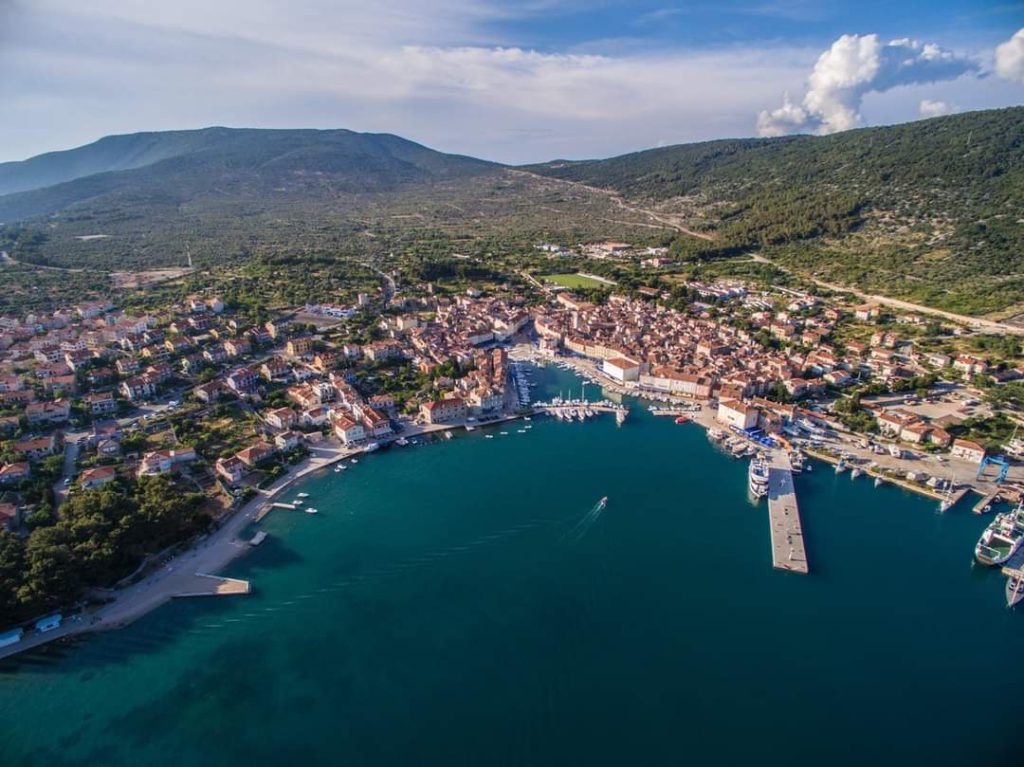
After several successful initial examples of community-financed solar power plants in Croatia (Križevci Municipality, Kaštel Lukšić, etc.), the energy community virus has now crossed the sea. Located in the scenic Cres-Lošinj archipelago surrounded by the Adriatic Sea, the Croatian energy cooperative Aspyrtides was founded last year, in 2021. With its wide diversity of members, it is very unique in Croatia: it includes two municipalities, the town of Cres (3080 inh.) and the town of Mali Lošinj (8200 inh.), public institutions, associations, entrepreneurs and companies, as well as citizens. In total, it numbers 29 founders, of which 20 are citizens and 9 are legal entities. The cooperative’s first projects are the Filozići solar power plant with a nominal power of 500kW, and an integrated solar power plant on the roof of a kindergarten in Cres.
Fisrt steps
During the first months, all the cooperative’s members were busy working on the necessary feasibility studies, preparing the initial documentation, and negotiating the purchase of land. One year later, in 2022, the assembly of cooperative members unanimously decided to purchase the chosen plot and to build the Filozići solar power plant on it.
The solar energy Filozići project in a nutshell:
- Installed power: up to 500 kW
- Annual production: 667 MWh
- Price of the land: about 65,000 euros
- Total estimated costs of the investment: 648,000 euros
- 30% of upfront costs will be collected from cooperative members and other investors through a crowdfunding campaign.
- 70% of upfront costs will be covered by a loan.
Fast fundraising through the crowd
The owner of the land, Anton Jedrječić, is himself a cooperative member and the initiator of the solar project. He decided to invest 20,000 euros as an additional cooperative share, making him the largest investor in this project so far. The cooperative assembly decided that the necessary funds needed for the land purchase would be collected from current and future cooperative members. The idea: encourage the local community to invest in it through a crowdfunding campaign that would last two months.
Instead of the anticipated two months, crowdfunding for the Filozići solar power plant lasted just three weeks raising more money than expected: The campaign aimed to collect 65,000 euros from the founders and new cooperative members in the first round. Due to the intense interest shown by residents of the Cres and Lošinj archipelago and several friends from the mainland, more than 100,000 euros of additional member contributions were collected in three weeks. During the campaign, 23 new members joined, increasing the total number of members to 58.
“We have been communicating for over a year about our idea of building a solar power plant in the north of the island. We always thought we’d finance it through a joint investment of citizens and island companies. Nonetheless, we were surprised by the speed of the reaction and the great interest to invest in the project”, said the cooperative manager Franjo Toić. He concluded that “citizens clearly want to become owners of at least part of the energy consumed on the island, and the energy cooperative is one ways they will be able to do so”.
As soon as all necessary funds were collected, the manager Toić and the land owner Jedrejčić signed a sale contract by which the cooperative became the new land owner. This was the first big step towards installing the solar panels.
Next steps
The road providing access to the construction site soon will be built. When precisely it will be depends above all on how fast the Croatian State issues the necessary permits. In the meantime, this public-civil partnership is a fantastic adventure for all the people and entities involved, demonstrating the power of bottom-up community engagement.
La « Nation écologique européenne »
Edito politique
Inspiré par Bruno Latour
En train de préparer mon édito sur l’agenda mouvant des politiques énergétiques européennes, une des dernières analyses du philosophe Bruno Latour, qui vient de nous quitter, résonnait sans cesse : « L’accumulation des crises actuelles permettent-elles à l’Europe de trouver enfin le sol qui correspond à cette formidable invention institutionnelle que l’on continue à présenter comme suspendue hors sol et sans peuple qui lui correspondrait ? » [1]. Sincèrement impossible à paraphraser, encore moins à synthétiser.
Pour Bruno Latour, l’Europe tient une opportunité unique de synchroniser son modèle, son mode de vie avec ses ressources propres.
En soit, ce n’est pas révolutionnaire, mais la traduction politique de cet objectif d’adéquation ressources / besoins (d’une Europe « doughnut » [2] qui resterait dans les limites de ses ressources) est révolutionnaire : c’est l’Europe en tant que Peuple, Nation et en tant que territoire, qui peut et doit surgir.
Aujourd’hui, nos dépendances sont en effet terriblement, douloureusement visibles.
C’est sur un territoire bien réel que notre quotidien est ancré. Et cette crise de l’énergie impacte chacune de nos actions quotidiennes. Comme l’écrit Geneviève Pruvost : « Sans politique du quotidien, sans reconstruction collective et radicale de notre subsistance, il n’y aura pas de société égalitaire ni écologique. » [3]
Semaine après semaine, on annonce des « Conseils européens de l’énergie d’urgence ».
Encore un cette semaine, un autre le 25 octobre, puis un nouveau en novembre… C’est totalement inédit. C’est toute la machine institutionnelle que cette crise transforme. Aucun des mécanismes de négociations classiques ne peut être opérant dans cette configuration inédite. Cela pose plusieurs questions : Est-ce que cette nouvelle donne permet aux politiques énergétiques d’être « ancrées » ? Y a-t-il une place pour les territoires ? Quelle place pour la politique du quotidien ? Comment donner du pouvoir d’agir à chacun pour rester maitre de notre destin d’européen·ne ?
Malheureusement, si les agendas semblent bouleversés par l’urgence, les politiques peinent encore à se saisir des questions pertinentes.
[1] https://geopolitique.eu/articles/le-sol-europeen-est-il-en-train-de-changer-sous-nos-pieds/
[2] https://doughnuteconomics.org/
[3] https://journals.openedition.org/lectures/51439
« La ville que nous voulons »
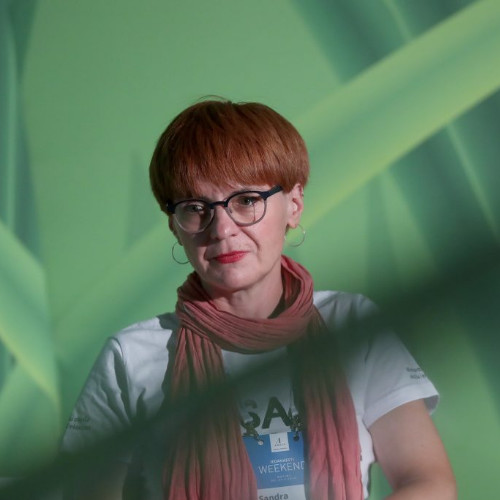
Tribune de Sandra Vlašić, rédactrice pour le PNUD, juillet 2022
Le Forum urbain mondial de l’ONU-Habitat, qui s’est tenu récemment dans la ville de Katowice, en Pologne, a montré qu’il reste beaucoup à faire pour atteindre l’objectif de développement durable 11 sur les « villes et communautés durables ».
Malgré de nombreux engagements politiques à l’échelle internationale et régionale, comme le Programme 2030 et le pacte vert pour l’Europe (ce dernier comptant deux missions visant à créer des villes durables, résilientes et climatiquement neutres), nous restons en retard sur le calendrier. « Les défis complexes auxquels notre communauté fait face ne peuvent pas être résolus uniquement par des solutions techniques », explique la ville arménienne de Charentsavan. Une phrase qui traduit bien la nature des problèmes auxquels les villes sont confrontées.
Un avant-goût douloureusement réaliste des urgences de demain ?
Les villes sont des écosystèmes complexes dans un monde complexe où des choses inimaginables se déroulent. En présentant le pacte vert pour l’Europe, la Présidente de la Commission européenne, Ursula von der Leyen, a comparé les missions de l’Union européenne aux premiers pas sur la Lune. Et en effet, la foule d’événements sans précédent qui nous ont touchés nous a donné le sentiment de nous retrouver dans une partie inexplorée de l’espace : pandémie de COVID-19 et confinements, inondations estivales en Allemagne, tornades en Europe centrale, records de chaleur, sécheresses et feux dans la région Méditerranéenne, guerre en Ukraine, hausse des prix du carburant, crises économiques… Je pourrais continuer longtemps. Nous devons à la fois faire face au présent et penser à l’avenir.Les missions doivent se poursuivre et nous devons adopter une nouvelle méthode, car les approches linéaires par projet ne fonctionnent plus.
112 villes européennes se sont engagées dans une mission en vue d’atteindre la neutralité carbone avant 2030, et pas très loin, chez nos voisins de l’est, un nombre trois fois plus élevé de villes et de municipalités ont entamé une mission similaire appelée Mayors for Economic Growth (Les maires pour le développement économique), ou dans sa version courte, #M4EG.
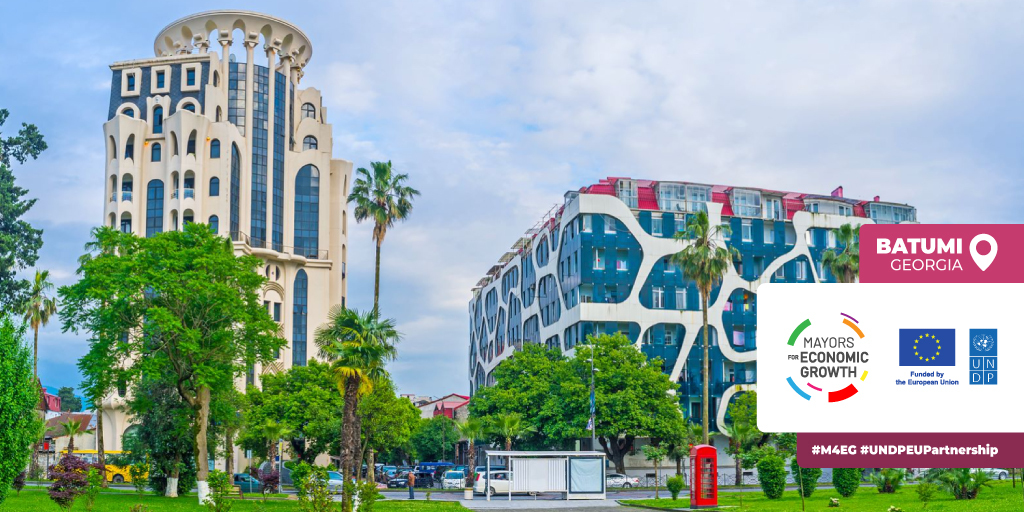
Qu’est-ce que #M4EG ?
« M4EG est une initiative conjointe de l’UE et du PNUD en matière de recherche et de développement qui vise à dépasser le schéma traditionnel donateur-bénéficiaire », explique Tina M. S. Stoum, cheffe de projet régionale pour Mayors for Economic Growth. « Elle est fondée sur un constat douloureux : la majorité des projets de développement entraînent des changements progressifs plutôt que les transformations radicales dont nos sociétés ont désespérément besoin. Cette initiative nous servira d’environnement de test pour essayer de nouveaux outils et de nouvelles approches. Cette nouvelle proposition de valeur repose sur des “portefeuilles”, une alternative à l’approche standard compartimentée par projet utilisée partout. »
M4EG n’est pas un projet traditionnel, c’est une invitation au changement. Les problèmes complexes exigent des réponses systémiques. Mariela Atanassova,spécialiste en innovation stratégique et chargée des villes pour la Chôra Foundation, explique pourquoi nous avons besoin d’une approche mixte de ce type : « L’idée est que nous faisons face à des systèmes complexes qui ne peuvent pas être changés en élaborant un plan parfait et en l’exécutant, car les systèmes ont des réactions imprévisibles. Il faut adopter des outils qui permettent d’identifier les transformations nécessaires. »
C’est ce que fait M4EG, et l’initiative devient peu à peu une plateforme qui soutient les villes et les municipalités des pays du Partenariat oriental dans leur transition écologique, inclusive et numérique, et leur développement économique local 2.0.
Actuellement, plus de 350 municipalités locales en Arménie, en Azerbaïdjan, en Moldavie, en Géorgie et en Ukraine ont rejoint ce programme afin de réinventer l’avenir des villes et de les rendre durables. En 2021, M4EG a entamé la deuxième phase de ses activités, qui s’inscrit dans la continuité de la phase précédente (2017-2020). L’initiative pourra-t-elle devenir une grande plateforme collaborative pour les villes sélectionnées et servir à toutes les villes de l’UE ainsi qu’à celles des pays voisins ?
Repenser les villes, mode d’emploi
Tina Stoum explique : « En travaillant directement avec les municipalités, nous nous intégrons au contexte local, voire hyperlocal, afin d’identifier ensemble des axes de transformations adaptés à l’écosystème de la ville ou de la municipalité, puis de les mettre en œuvre. C’est un travail ambitieux qui nous invite à sortir de notre zone de confort : nous ne sommes plus des fournisseurs de solutions, mais des apprenants. Cela suppose aussi de passer d’un schéma interdisciplinaire à un schéma multidisciplinaire, car les problèmes complexes, comme la transition vers les énergies renouvelables, les inégalités et la confiance dans les autorités locales, vont souvent de pair. »
Les villes de M4EG ont plusieurs outils à leur disposition, à savoir un ensemble de dispositifs de financement, d’apprentissage de la facilitation, de mentorat, de prise de contact et de création d’une communauté et pour finir, un espace pédagogique spécial. En tout, 13 villes ont été sélectionnées dans le cadre de l’appel à candidatures européen pour les appels de portefeuilles annuels, 18 villes font partie du programme « Urban Imaginaries » et 9 autres ont été retenues pour le programme « Portfolio Journey » (d’une durée de 2 ans et plus). Et ce n’est que le début. Dernier élément mais non des moindres, M4EG s’adapte afin d’appuyer les villes ukrainiennes et moldaves en première ligne des actions de réponse, de redressement et de renouvellement face à la crise.
Repenser les villes en pratique
La ville arménienne d’Areni étudie comment développer le tourisme durable, mettre en place et préserver un environnement écoresponsable pour les résidents, et comment l’utiliser comme levier de développement permettant d’attirer les financements pour le renouvellement des infrastructures. La ville de Batoumi, en Géorgie, rêve d’un écosystème de start-ups solide qui contribuera à transformer le marché du travail local afin d’oublier les anciens secteurs et de se concentrer sur les technologies et sur des compétences plus poussées. Ceadîr-Lunga, en Moldavie, imagine un système énergétique résilient où l’énergie est abordable et provient de sources renouvelables. Une autre ville géorgienne, Koutaïssi, souhaite devenir une ville écologique et intelligente à l’empreinte carbone neutre, utiliser les ressources naturelles durablement, développer l’économie circulaire, et investir dans des espaces verts publics et l’alimentation locale. Ces descriptions s’appliquent facilement à toutes les villes européennes. C’est pourquoi il est évidemment pertinent de leur permettre d’entrer en contact à travers un réseau international de leaders urbains sur la plateforme M4EG, afin que chaque ville puisse apprendre des autres.
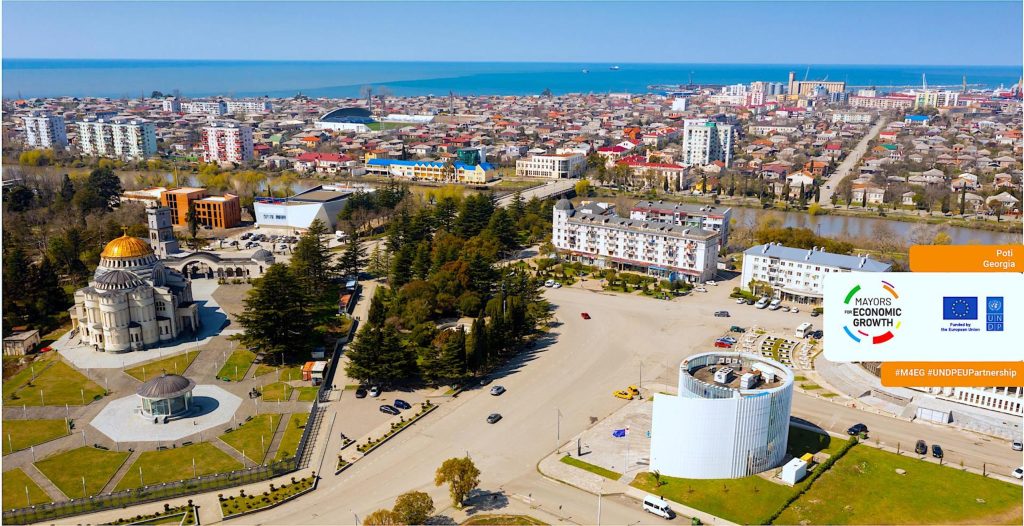
Qui est à l’origine de cette mission #M4EG pour les pays du Partenariat oriental ?
Personne ne peut aller loin seul, mais ensemble, nous pouvons atteindre nos objectifs. Cette mission rassemble des maires de plus de 350 municipalités locales de 5 pays, avec l’appui de la direction générale du voisinage et des négociations d’élargissement (DG-NEAR) et du PNUD. Les « partenaires compétents » sont des experts ou des pionniers expérimentés : Ove Arup, une entreprise d’ingénierie internationale de premier plan spécialiste du développement durable, qui crée des structures et des villes meilleures qui rendent les gens heureux ; EIT Climate-KIC, la plus grande communauté européenne d’innovation et de connaissances pour le climat, à la tête de la mission de l’UE pour des villes climatiquement neutres ; l’Université de technologie de Tallinn, ou TalTech, le fleuron de l’ingénierie et de l’enseignement technologique estoniens, également un centre de recherche ; le Centre for Public Impact, ou CPI, un partenaire d’apprentissage pour les gouvernements, les fonctionnaires et le réseau d’acteurs du changement, qui vise à repenser la gouvernance de sorte qu’elle convienne à toutes et tous ; et la CHÔRA Foundation, dont l’objectif est d’aider les personnes et les organisations à faire face à un monde de plus en plus complexe via une innovation stratégique et transformatrice.
Retrouvez-nous lors de l’événement « Show & Tell » et apprenez avec nous !
Pas besoin d’aller sur la Lune pour créer la ville que nous voulons. Les solutions, les connaissances et les ressources se trouvent dans nos communautés. La ville que nous voulons est un endroit agréable à vivre, durable, inclusif, sûr et sain, où tout le monde a un travail ou une source de revenus décente, le soutien nécessaire et un accès aux services de base. C’est un espace convivial fait pour les êtres humains, où vivre en harmonie avec la nature. Ensemble, faisons du monde un endroit plus agréable !
Rejoignez-nous lors de l’événement « M4EG Show & Tell » qui aura lieu en ligne le 28 juillet et découvrez en avant-première les nouvelles pistes de transformation urbaine : de la gestion des déchets à la restauration des lieux culturels, rencontrez le réseau M4EG et explorez les approches pilotes menées par des équipes municipales locales.
Consulter https://eum4eg.com
Sécurité énergétique et climat : les villes au secours de l’Europe
Les alertes estivales menacent les objectifs climatiques européens
L’été est là et tandis que les vacancier·ères préparent leurs bagages pour rejoindre leur destination, la saison des vacances fait naître chez les Européen·nes un sentiment de sécurité trompeur. La vérité, c’est qu’une guerre fait rage en Ukraine et que l’approvisionnement énergétique est menacé en Europe. Les Ukrainien·nes continuent d’être brutalement bombardé·es chaque jour et les dirigeant·es européen·nes se démènent pour savoir comment iels vont fournir de l’énergie aux populations et au secteur économique lorsque les mois d’hiver seront à notre porte.
Les prix de l’énergie ne cessent de grimper tandis que l’approvisionnement en gaz naturel se raréfie au fil des semaines. Les États membres européens ne reçoivent en effet plus que 40 à 60 % du flux qu’ils recevaient de Russie l’an passé. Et pendant que Gazprom refuse d’honorer ses obligations contractuelles, les installations européennes de stockage de gaz peinent à se remplir.
Hier, la Commission européenne a publié le paquet Des économies de gaz pour un hiver sûr, une stratégie qui vise à encourager les États membres à réduire leur consommation de gaz de 15 % entre août et mars, afin d’anticiper d’éventuelles nouvelles ruptures d’approvisionnement en provenance de Russie. Si le plan prévoit d’exploiter les potentiels d’économie de gaz dans les bâtiments, les centrales électriques et les industries, il encourage également les États membres à accroître les activités d’extraction au niveau national et à procéder à des changements de combustible en faveur d’énergies plus polluantes, ce qui est une terrible nouvelle pour les objectifs climatiques et les ambitions de réduction des émissions de gaz à effet de serre.
Les alertes estivales menacent les objectifs climatiques européens
Les Pays-Bas se préparent à augmenter la production du gisement de Groningue, la plus grande réserve de gaz naturel d’Europe continentale. Bien qu’elle ait été qualifiée de mesure de dernier recours, cette décision pourrait remettre en cause la stratégie de sortie progressive d’ici 2028, et replonger les communautés voisines dans la crainte de tremblements de terre d’origine anthropique provoqués par les activités d’extraction.
Nous assistons bel et bien à une “renaissance du charbon” : des centrales thermiques au charbon qui avaient cessé leurs activités ou étaient sur le point de le faire sont remises en service à plein régime afin d’équilibrer les réseaux électriques.
L’Allemagne et l’Italie illustrent parfaitement ce retour en arrière : les projets d’élimination progressive du charbon sont abandonnés afin d’économiser le plus de gaz possible et accélérer le remplissage des réservoirs de stockage. Berlin a ainsi remis en exploitation 16 centrales qui avaient été mises en sommeil, tout en prolongeant la durée de vie de 11 autres déjà en fonctionnement. Rome se prépare quant à elle à augmenter la capacité de production de 6 centrales.
En Autriche, le Ministère de l’action climatique et de l’énergie apporte un soutien financier aux industries et aux installations à forte consommation d’énergie pour qu’elles passent temporairement du gaz au pétrole, et une centrale thermique en Styrie a été réalimentée en charbon, alors le pays avait réussi à éliminer cette source d’énergie en 2020.
Ce sont de terribles nouvelles pour les objectifs climatiques de l’Union européenne, car ces initiatives nationales prises pour équilibrer un paysage énergétique instable renvoient le continent dix ans en arrière, lorsque la réduction de 55 % des émissions d’ici à 2030 et la neutralité climatique d’ici à 2050 n’étaient même pas concevables. À l’approche de l’hiver, ce sont plus de 100 milliards de mètres cubes de gaz naturel russe qui manquent à l’appel et le Kremlin est bien décidé à tirer profit de cette situation alarmante en représailles aux sanctions européennes. Face à cette menace, la diversification de nos approvisionnements et la substitution des combustibles ne nous mèneront pas bien loin.
La seule solution viable dont dispose l’Europe pour se préparer à l’hiver est d’éviter de consommer de l’énergie en premier lieu.
Les villes deviennent des piliers de la sécurité énergétique en Europe
La réduction de la consommation d’énergie peut offrir des alternatives concrètes à la récente réouverture en urgence des centrales au charbon décidée par les gouvernements nationaux. Depuis l’agression de l’Ukraine par la Russie, les villes européennes ont adopté une position ferme contre Poutine et son chantage à l’énergie, en se protégeant elles-mêmes contre la hausse vertigineuse des prix de l’énergie et en se rangeant aux côtés du peuple ukrainien. De nombreux·ses maires européen·nes ont ainsi choisi de ne pas financer la machine de guerre du Kremlin et refusé de se soumettre à une coûteuse dépendance aux combustibles fossiles russes en diminuant leur consommation d’énergie, tout en garantissant les services à leurs citoyen·nes et en préservant leurs ambitions climatiques.
Rappelant les mesures d’économie d’énergie prises en réaction à la crise pétrolière de 1973, les municipalités se sont serré la ceinture pour réduire leurs dépenses énergétiques, tout en maintenant des niveaux de confort compatibles avec le mode de vie de leurs habitant·es. Les collectivités locales ont déjà pu jouer un rôle proactif dans de nombreux domaines :
- Le CHAUFFAGE représente une part énorme de la consommation de gaz en milieu urbain et abaisser le thermostat de quelques degrés pourrait permettre de réaliser des économies substantielles. La capitale néerlandaise Amsterdam a ainsi baissé la température de son réseau de chauffage urbain de 21°C à 18°C, diminuant ainsi de 15 % la consommation municipale de gaz naturel.
- L’ÉCLAIRAGE DES VOIES PUBLIQUES est également un secteur qui peut participer à réduire considérablement la pression sur les réseaux électriques. La municipalité bulgare de Sredets, par exemple, a réduit la durée de l’éclairage public de 40 minutes la nuit, tout en diminuant l’intensité des ampoules.
- LA MOBILITÉ est fortement impactée par les marchés pétroliers, mais peu de réglementations urbaines peuvent alléger la pression des prix des carburants. La ville française de Lyon a limité la vitesse à 30 km/h sur 84 % de son réseau routier, permettant ainsi aux conducteur·rices de moins consommer de carburant tout en encourageant l’utilisation des transports publics pour se déplacer plus rapidement.
Ce ne sont là que quelques exemples qui montrent que les collectivités locales sont les mieux placées pour réduire la demande d’énergie face à d’éventuelles pénuries hivernales. Solidement ancrées dans leurs territoires, les municipalités peuvent exploiter un énorme potentiel d’économies d’énergie dont les gouvernements nationaux ont désespérément besoin. Un potentiel qui ne demande qu’à être activé par les populations désireuses de réduire leur consommation d’énergie, mais dont la réalisation nécessite de mener des campagnes locales et d’entretenir un lien de confiance avec les autorités locales.
A quoi faut-il attendre cet hiver ?

L’Europe est à la croisée des chemins. Une moindre disponibilité de l’énergie oblige les gouvernements nationaux à faire des choix qui compromettent les ambitions climatiques et nos aspirations à un avenir durable. Le charbon est un monstre du passé auquel nous devons définitivement tourner le dos ; et si nous nous tournons actuellement vers le gaz et le pétrole pour alimenter nos économies, accroître l’utilisation des combustibles fossiles disponibles pour combler les lacunes de notre approvisionnement énergétique est un choix terrible pour notre planète. Éviter de consommer l’énergie est la seule option durable qui permette à l’Europe de tenir une position ferme face à l’agresseur russe, d’accroître notre indépendance énergétique et de maintenir nos ambitions climatiques.
Les villes s’imposent de plus en plus comme les gardiennes de la sécurité énergétique en Europe, en prenant des engagements sans précédent dans un domaine qui était historiquement une prérogative exclusive des gouvernements nationaux. En réduisant leur consommation d’énergie, les collectivités locales contribuent à protéger les ambitions climatiques de l’UE et à empêcher une planification énergétique nationale irréfléchie.
Le Cities’ Energy Saving Sprint est un outil puissant pour encourager les collectivités locales à prendre des mesures d’économie d’énergie. Lancée par la Convention des Maires – Europe, en collaboration avec la Commission européenne et le Comité européen des régions, cette campagne vise à sensibiliser les collectivités locales aux options dont elles disposent pour protéger les citoyen·nes contre la hausse des prix de l’énergie et les risques de coupure.
Inscrivez votre ville au Sprint et contribuez à l’indépendance énergétique de l’Europe !
A technical assistance programme to boost energy communities’ activities across Europe
The EU's Energy Communities Repository has opened a call for technical assistance. Any energy community project, regardless of their development stage, can apply!
Energy communities find themselves at very different stages of development. Some are informal groups that have just started thinking about setting up an energy community, some are already established legal entities that only need a last bit of expert support to get their renewable energy project over the finish line.
Four technical assistance activities to match energy communities’ needs
With this in mind, the Energy Communities Repository has built up a technical assistance programme made of different forms of support to take into account the different needs of applicants.
Direct technical assistance
At least 25 energy communities will benefit from direct technical support from experts in the field.
Capacity building at national level
Workshops and webinars will be held in local language in the following countries: Bulgaria, Czech Republic, Croatia (extension towards Serbia, Montenegro, Albania, Bosnia & Herzegovina), Greece, Hungary, Italy, Latvia, Estonia, Poland, Portugal, Romania, Slovenia, Slovakia, targeting at least 80 communities.
Twinnings and peer-to-peer exchanges
On specific topics and issues faced by energy communities. Successful applicants will be matched with experienced energy communities and/or national experts based on the applicants’ needs and wherever possible, by language. The twinnings will be organised in 3 online sessions.
Capacity building at EU level
These activities will be complemented by EU-wide capacity-building webinars.
More information on the Technical Assistance offer

Visit the Energy Communities Repository website, discover how to apply and consult the FAQs, or watch the Technical Assistance Launch Webinar.
…and the Energy Communities Repository team, made of Energy Cities, REScoop.eu, FEDARENE, Florence School of Regulation, and Akarion, is there to help you! Send us an email at info [at] ec-repository.eu
“Cities Energy Saving Sprint”
Agissez dès maintenant pour sécuriser une énergie durable et abordable pour tou⸱te⸱s
#EUCitiesSaveEnergy #StandWithUkraine
Qu’est que le Cities Energy Saving Sprint?
Aujourd’hui, 19 mai, la Commission européenne, la Convention des Maires – Europe et le Comité des Régions lancent The Cities Energy Saving Sprint, une initiative conjointe qui encourage les villes à prendre des mesures pour réduire au plus vite la consommation locale d’énergie.
Le “Sprint” va durer 4 mois, jusqu’à la Semaine européenne de l’énergie durable (EUSEW) qui aura lieu du 26 au 30 septembre 2022, durant laquelle la Convention des Maires partagera les résultats préliminaires de la campagne.
D’ici là, les villes peuvent saisir l’opportunité offerte par les Sustainable Energy Days de l’Union européenne pour organiser des échanges avec leurs habitant⸱es, les équipes municipales et les parties-prenantes du territoire pour prendre des mesures urgentes d’économie d’énergie.
Que peuvent faire les villes dès maintenant ?
Dans le cadre de la campagne, le bureau de la Convention des Maires – Europe a conçu le Cities Energy Saving Toolkit, qui propose aux villes des mesures simples et rapides à prendre dans l’urgence de préparer le prochain hiver.
Les villes y trouveront également dans ce toolkit des exemples concrets : des témoignages de villes qui ont déjà pris toutes types de mesures, dans différents secteurs :
- Mobilité,
- Eclairage,
- Chauffage et refroidissement,
- Implication des citoyen⸱nes et autres parties prenants locales.
Vous pouvez agir dès maintenant pour sécuriser une énergie durable et abordable à tou⸱te⸱s. Rejoignez le Cities Energy Saving Sprint en vous inscrivant ici! La campagne est ouverte à toutes les collectivités locales de l’Union européenne et au-delà.
Utilisez le kit de communication du Cities Energy Saving Sprint pour promouvoir vos actions locales et prendre part à ce mouvement européen #EUCitiesSaveEnergy
Chaque gramme de gaz à effet de serre évité dans les mois à venir comptera, non seulement pour le climat, mais aussi comme acte de solidarité envers l’Ukraine. Nous avons un rôle essentiel à jouer, les villes ont un rôle essentiel à jouer. Rejoignez le Sprint!
Plus d’infos
Rendez-vous sur la page de la campagne ou envoyez un e-mail à energy-saving-sprint [ at ] eumayors.eu.
The Cities’ Energy Saving Sprint
Act now to secure sustainable, affordable energy to all
#EUCitiesSaveEnergy #StandWithUkraine
What is the Cities Energy Saving Sprint?
Today, 19th May, the European Commission, the Covenant of Mayors – Europe and the European Committee of the Regions are launching The Cities Energy Saving Sprint, a joint initiative that encourages cities to take measures that will immediately reduce their energy consumption.
The “Sprint” will last for 4 months, until the European Sustainable Energy Week (EUSEW) to be held from 26 to 30 September 2022, when the Covenant of Mayors Office will share preliminary results of the campaign.
In the meantime, cities can seize the opportunity of the EU Sustainable Energy Days to hold discussions with their residents, staff and local stakeholders to take emergency energy-saving measures.
What can cities do now?
As part of the campaign, the Covenant of Mayors – Europe Office has developped the Cities Energy Saving Toolkit, which gives cities simple and quick measures they can take in the emergency to prepare for the next winter.
To make those short-term initiatives practical, the toolkit includes City Reports: testimonies from cities that already took this kind of measures, sorted by sectors:
- transport
- lighting
- heating and cooling
- engaging citizens and local stakeholders.
You can act now to secure sustainable, affordable energy supplyt to all. Join the Cities Energy Saving Sprint by registering here! The campaign is open to all local governements across the EU and beyond.
Use the Cities Energy Saving Sprint’s communication kit to promote your local actions and be part of an EU-wide movement. #EUCitiesSaveEnergy
Every gram of GHG avoided in the coming months will be an important step, not only for the climate, but also as an act of solidarity with Ukraine. We have a crucial role to play, municipalities have a crucial role to play. Join the Sprint!
More information
Visit the Sprint page on the Covenant of Mayors – Europe website or send an email to energy-saving-sprint [ at ] eumayors.eu.
Déterminé·es
J’ai récemment découvert le manga « Radiant ». Il propose une description d’un monde… tellement proche du notre! Pour combattre “les méchants” (appellés « l’inquisition »), il faut se ressourcer dans la forêt (appellée « fantasia »). C’est la force de l’imaginaire et de la nature qui permet de contrer les forces « excavatrices » qui ont déjà transformé la planète en gruyère, il ne reste que des ilots de croûte terrestre…..
Nous vivons une période riche. Très intense, pas toujours positive, mais riche. Il y a l’urgence de la guerre, du changement climatique, de la pauvreté. Mais il y a aussi un terreau fertile de solutions qui ne demandent qu’à être reproduites et généralisées.
Les enjeux se clarifient, les stratégies sont détaillées, les étapes sont définies. Manquent la gouvernance, les mécanismes institutionnels, les formations aux changements de comportements, aux nouvelles méthodes, aux nouvelles solutions techniques. Manquent les dates précises de chaque étape, et la cohérence d’ensemble de nos systèmes juridiques, fiscaux, budgétaires, de nos politiques d’emploi, de santé. Manque le temps de réfléchir pour mettre en musique toutes ces transformations.
La Commission européenne a annoncé ce mois-ci les 100 villes qui font partie de la mission climatiquement neutres en 2030. Ces villes ont pour mission de prouver que la neutralité climatique est possible en apprenant les unes des autres, de leurs trajectoires et de leurs difficultés, et de constituer une communauté pour avancer ensemble.
Echanger, inspirer, apprendre, c’est aussi le cœur des Assises européennes de la transition énergétique qui auront lieu à Genève, ou du festival « New European Bauhaus » qui se tiendra à Bruxelles au mois de juin. Ou encore du URBACT City Festival. Il faut saisir ces occasions de puiser dans ces sources vives d’inspiration, elles donnent l’énergie pour avancer ! Pour moi, c’est un carburant inépuisable et une énergie vitale nécessaire !
C’est aussi notre mission ! Et c’est pour accompagner au mieux cette nouvelle phase de l’action climat et énergie dans les villes et son intensification, que nous lançons nos Hubs. Ce sont de véritables espaces de discussion, d’inspiration, d’apprentissage, de débat autour des axes de transformations des territoires, pour capitaliser sur les échanges, et créer communauté. Pour faire le plein de carburant !
J’ai toujours été impressionnée par la vitalité des membres de notre réseau. Et je note un changement de ton. Aujourd’hui, ce que je vois, c’est la détermination de nos élu⸱es, des équipes municipales. Détermination et action, ce sont les mots qui me viennent après les échanges intenses de mes derniers voyages à Bruxelles, Valencia, Vienna, Metz…
Et c’est enthousiasmant !
PS : Pour nous retrouver aux assises, nous vous donnons rendez-vous le mardi 31 mai à 14h00, lors de l’atelier “Les entreprises locales de distribution d’électricité en Europe : outil de la transition pour les citoyens et les collectivités” (atelier 105)
Viser le “zéro”: comment éradiquer la précarité énergétique à niveau local
Lancement d'un nouveau mécanisme de soutien par la Convention des maires
Voir grand, commencer petit, apprendre vite : C’est probablement la meilleure façon de décrire l’approche du gouvernement local de Barcelone pour s’attaquer à l’immense problème croissant de la précarité énergétique. Poussée par l’objectif ambitieux de parvenir à 0% (oui, zéro!) de précarité énergétique d’ici 2030, la ville a mis en place un service citoyen dédié à ce phénomène. Comment répliquer rapidement ce que Barcelone à su mettre en place ces dernières années?
Chaque habitant de la ville peut obtenir un soutien et des conseils auprès du bureau, un guichet unique pour les personnes vulnérables. Comme l’explique Julia Linares du conseil municipal de Barcelone, ce point-info est à la fois un centre d’aide (sociale, juridique, économique), une opportunité d’emploi (beaucoup des conseillers ont été formés après un chômage longue durée) et le point de départ d’un travail dans les quartiers pour détecter et réduire la précarité.
Pour aider d’autres villes à se préparer à la mise en place de mécanismes de soutien similaires, la Convention européenne des maires vient de lancer son pilier sur la pauvreté énergétique. En complément à l’atténuation et l’adaptation, ce troisième pilier devrait aider les signataires à définir des objectifs et des mesures liés aux impacts sociaux négatifs de la hausse des prix de l’énergie, aux mauvaises conditions de logement ou même à la décarbonisation de nos modes de production et de consommation.
La Convention des Maires et l’Energy Poverty Advisory Hub (EPAH) ont uni leurs forces et développé une méthodologie pour
1) diagnostiquer
2) planifier, et
3) mettre en oeuvre des actions contre la précarité énergétique.
Energy Cities apporte un soutien très concret aux villes à travers deux de ses projets phares sociaux :
La précarité énergétique nous rend malade
La santé est une dimension souvent négligée quand on parle de précarité énergétique. WELLBASED, un projet de recherche (Horizon 2020), s’intéresse à la détresse physique et psychologique dont souffrent les personnes touchées. Les six villes pilotes Valence (Espagne), Heerlen (Pays-Bas), Leeds (Royaume-Uni), Edirne (Turquie), Obuda (Hongrie) et Jelgava (Lettonie) conçoivent et mettent actuellement en œuvre six programmes pilotes visant particulièrement à améliorer la santé, le bien-être et l’égalité des personnes touchées par la pauvreté énergétique. Sur la base de ces expériences, les pilotes et leurs partenaires universitaires et à but non lucratif proposeront aux décideurs politiques et aux praticiens des villes des solutions reproductibles à l’échelle européenne.
Des modèles commerciaux créés avec et pour des clients vulnérables
Les services énergétiques sont rarement conçus avec le consommateur et rarement pour les personnes qui ont du mal à payer leur facture. Les six projets pilotes du projet POWER UP serviront de “laboratoires vivants” car ils exploreront, avec les ménages touchés par la pauvreté énergétique, les modèles commerciaux qui peuvent être financièrement et socialement viables. Les professionnels les plus en contacts avec les personnes en situation précaire, notamment le personnel du care ou dans le département social de la ville, serviront d’intermédiaire pour ces activités de co-conception.
Le rapport du GIEC confirme que les politiques actuelles ne vont pas assez loin
Les solutions locales sont la clé de la lutte contre le changement climatique
Le 6 avril, le 3ème groupe d’experts du GIEC a publié son dernier rapport, consacré à la lutte contre le changement climatique. Leurs conclusions ne sont pas surprenantes et comme l’a dit le secrétaire général des Nations unies, António Guterres : « [Ce rapport] est une litanie de promesses non tenues ». Nous ne sommes pas sur la bonne voie pour limiter le réchauffement climatique à 1,5°C d’ici à 2050. Même si l’augmentation des émissions de gaz à effet de serre (GES) entre 2010 et 2019 n’a pas été aussi importante qu’entre 2000 et 2010, nous avons atteint un pic sans précédent en 2019. Nos émissions doivent atteindre un plafond avant 2025 et être réduites de 43 % d’ici 2030 si nous voulons atteindre des émissions nettes de CO2 nulles d’ici 2050 et limiter le réchauffement climatique à 1,5 °C.
Beaucoup reste à faire, mais les solutions sont à notre portée ! Nous avons été heureux de constater que le GIEC a mis en avant certaines des recommandations qu’Energy Cities promeut depuis un certain temps déjà :
Des responsables politiques plus ambitieux
Les politiques et les lois sur le climat se sont multipliées ces dernières années, mais cela ne suffit pas. Nous avons la science, nous avons les technologies, mais les responsables politiques détiennent la clé d’une atténuation efficace du changement climatique.
Un arrêt immédiat des investissements dans les énergies fossiles
Les investissements publics et privés restent plus importants pour les énergies fossiles que pour l’adaptation et la lutte contre le changement climatique. Il n’y a pas d’autre choix que de se désengager des énergies fossiles pour réorienter les fonds vers des mesures climatiques et la production d’énergies renouvelables.
Des petites installations aux grands potentiels
Les petites unités de production d’énergie à faible émission de GES sont très prometteuses. Le GIEC s’accorde à dire qu’elles sont moins onéreuses et ont un potentiel de perfectionnement plus élevé que leurs homologues à grand échelle, ce qui en fait un excellent outil de lutte contre le changement climatique. Nous pensons que le succès des communautés d’énergie renouvelable au cours des dernières années le prouve – ce modèle fonctionne et devrait être reproduit et étendu dans le monde entier.
Cliquez ici pour accéder à notre guide étape par étape pour créer des communautés énergétiques
Qui sont les véritables radicaux ?
Le Secrétaire général de l’ONU a, une fois de plus, mis le doigt sur le problème lorsqu’il a déclaré que « Les militants du climat sont parfois décrits comme de dangereux radicaux. Mais les radicaux vraiment dangereux sont les pays qui augmentent la production de combustibles fossiles. Investir dans de nouvelles infrastructures d’exploitation des énergies fossiles est une folie morale et économique. »
Vous voulez en savoir plus ?
Le rapport complet est disponible ici . Un résumé pour les législateurs et une synthèse technique du rapport sont également disponibles !
Nous croyons en l’Europe plus que jamais #StandWithUkraine
La guerre en Ukraine fait rage et nous avons plusieurs villes membres dans ce pays. Ces derniers jours, nous avons pris des nouvelles de nos partenaires. Passé le choc, c’est la colère et la détermination que nous entendons dans leurs témoignages. Le Conseil d’Administration d’Energy Cities a, dès jeudi dernier, envoyé un message de soutien à ses pairs.
Nombre de nos villes membres nous ont demandé comment aider.
[cette section est régulièrement mise à jour afin d’inclure d’autres façons dont les villes peuvent aider].
Les besoins les plus pressants qui nous ont été exprimés sont des équipements de protection (casques, gilets) qu’il est déjà difficile de se procurer en nombre. Nous avons demandé à nos partenaires quelles associations fiables il est possible de soutenir. En voici une liste non exhaustive :[cette section est régulièrement mise à jour afin d’inclure d’autres façons dont les villes peuvent aider].Les besoins les plus pressants qui nous ont été exprimés sont des équipements de protection (casques, gilets) qu’il est déjà difficile de se procurer en nombre. Nous avons demandé à nos partenaires quelles associations fiables il est possible de soutenir. En voici une liste non exhaustive :
- La Croix Rouge : https://www.icrc.org/en/donate/ukraine
- MitOst : https://www.mitost.org/ : association européenne qui se concentre sur les échanges culturels et la citoyenneté active dans cette zone géographique. L’association organise déjà des actions pour l’accueil des réfugié·es.
- La Banque Nationale de l’Ukraine a ouvert un compte dédié au soutien des forces armées du pays : https://bank.gov.ua/en/news/all/natsionalniy-bank-vidkriv-spetsrahunok-dlya-zboru-koshtiv-na-potrebi-armiyi
Nous savons aussi que plusieurs des villes membres du réseau participent déjà à cet élan de solidarité et organisent des collectes, notamment de médicaments et matériel de protection.
Le Centre d’Information et de Soutien pour les régions et les villes du Comité Européen des Régions offre des informations sur les droits et les fonds, ainsi que sur les possibilités de soutien et de défense des intérêts. Ils ont lancé une initiative visant à faire correspondre les besoins aux offres de soutien des autorités locales et régionales. En particulier, grâce à cette enquête, les villes de l’UE peuvent dire ce qu’elles peuvent faire pour aider, notamment accueillir les réfugiés.
Nous porterons la voix des villes ukrainiennes et des villes limitrophes qui accueillent les réfugié·es.
Nous mettons en contact les villes avec des journalistes. Des interviews sont déjà prévues. Nous mettons tout en œuvre pour porter leurs voix à travers les moyens de notre réseau !
Voici un message de notre ville membre Mariupol, qui subit actuellement une catastrophe humanitaire [traduction par Energy Cities].
« La ville de Mariupol a besoin d’aide de toute urgence.
En résultat de l’agression militaire de la Russie le 24 février à 5 heures du matin, les villes, villages et petites communautés ukrainiennes sont sous le feu constant de l’artillerie et des frappes aériennes des troupes militaires russes.
Mariupol, une ville ukrainienne paisible de 550 000 habitant(e)s, déjà victime de bombardements par l’armée russe en 2015 qui ont tué 30 civils, endure à nouveau 7 ans après les pilonnages et bombardements des mêmes troupes du même pays. Des dizaines de civils ont été tués, dont des enfants. Des milliers d’habitant(e)s de la ville et de ses environs ont été évacué(e)s.
Nous avons besoin de votre aide.
La municipalité de Mariupol a ouvert des comptes dédiés à la collecte de dons pour les besoins humanitaires urgents des victimes de cette agression russe.
Les informations sur la collecte et l’utilisation des fonds seront fournies sur la chaîne Telegram officielle de la ville : https://t.me/mariupolrada.
Le Maire de la Ville va personnellement contrôler l’utilisation des dons. »
La réponse de l’Union européenne est sans appel
Pour la première fois, l’UE va fournir des armes à un pays en guerre et a d’ores et déjà activé de nombreuses sanctions économiques.
Nous sommes déterminé·es à continuer de faire vivre la démocratie et la coopération décentralisée, grâce aux membres de notre réseau. Nous sommes solidaires de l’Ukraine. Nous croyons en l’Europe plus que jamais.
Claire, et toute l’équipe d’Energy Cities.
European funding opportunities for cities in transition
Find them in our new briefing!
Cities are on the front line of the fight against climate change and they are the ones that will implement the systemic changes and measures to deliver a fair transition. However, the issue of resources is crucial to the success of their action.
The European landscape of project funding opportunities is currently undergoing significant change, mainly because of the post-COVID recovery programme and new European priorities. Energy Cities published a new briefing to guide cities through this landscape of financial support and opportunities at the EU level.
The EU has many different funding sources and initiatives available to cities. They have their own focus, operational guidelines and requirement. Our briefing presents the following programmes to help cities access the help they need in building a decarbonised, decentralised and democratised future:
Traditional research programmes
- Horizon Europe & the mission the climate-neutral and smart cities
- Circular Cities and Regions Initiative
- LIFE programme
The traditional regional cohesion and development programmes
- Cohesion Policy (REACT-EU Package)
- EU Urban initiative (URBACT, JPI Urban Europe, UIA)
- INTERREG programme
- Just transition mechanism
The initiatives to raise your profile but with no financial support
We are also monitoring the following initiatives – keep an eye on them, new funding opportunities might come in the future!
In the briefing, we also analysed how local authorities can benefit from the recovery package, presenting the Italian and Greek examples, and which opportunities are or will be available for green local investments.
Stay tuned, Energy Cities will provide more content on the national recovery plans in the coming months!
Energy Cities’ Annual Forum 2026 programme unveiled: nurturing the roots for a better future
Discover what this new edition of Grafting Cities will offer
The third edition of Grafting Cities is approaching, and the programme has been unveiled. In a time when democracy is at risk, it offers the opportunity to connect and network to discuss today’s challenges and build resilient democratic roots to ensure a fair and sustainable future.
The forum is more than a conference, it is the place where municipalities, organisations and individuals can come together, share experiences and forge partnerships to keep advancing in the transition towards climate neutrality. This year it will be hosted by Guimarães, European Green Capital 2026.
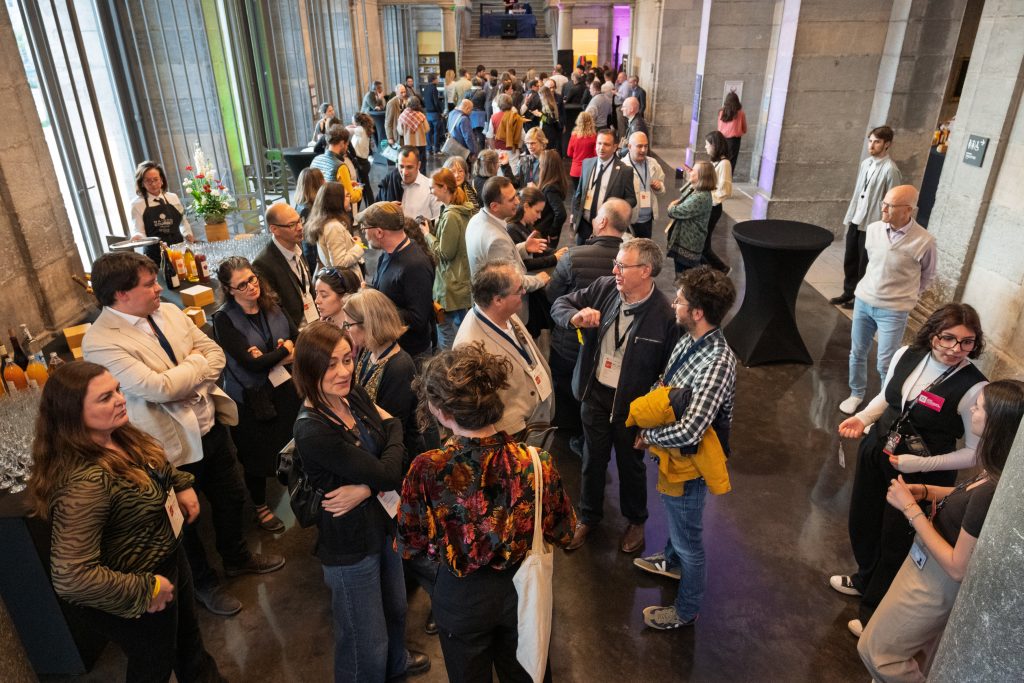
Three days to connect and get inspired
The forum will take place on the 28th, 29th and 30th of April. The first day will start with the welcome fair, which will offer a space for local initiatives to showcase their solutions. It will be followed by a networking cocktail where participants will come together and get ready for the next day. Participants available in the afternoon before the fair can join the European Affordable Housing Initiative seminar or join tourist visits organised by the municipality.
The second day will be devoted to the six thematic journeys focusing on local governance, fossil-free cities, community energy, affordable housing, circular economy and food security. They will be divided into two parts, an introduction of the topic and a site visit in the morning and a collective intelligence workshop in the afternoon:
- Journey 1: The seed: building climate governance from the ground up. It will offer a walk through Bairro C – Compromisso Carbono Zero (District C- Zero Carbon Commitment), a model of cultural production and urban innovation.
- Journey 2: The habitat: scaling affordable housing through procurement and partnerships. It will include a visit to an affordable social housing project for student linked to Universidade do Minho, showcasing an ambitious Nearly Zero-Energy Building (NZEB20+) approach.
- Journey 3: The leaf: communities driving the shift to fossil-free heating and cooling. It will include a visit to GUIMAGYM, a newly built public sports facility that has fully decarbonised its heating and cooling systems by using renewable sources.
- Journey 4: The pollinator: cities and citizens enabling a fair energy transition for all. It will show Guimarães’ first energy community, which is municipality-owned.
- Journey 5: The fruit: cultivating food autonomy & security in times of crisis. It will offer a visit to Horta Pedagógica de Guimarães, a 10-hectare community garden located in the city’s peri-urban wetland area.
- Journey 6: The canopy: tackling textiles and boosting sufficiency. It will showcase circular and sustainable textile manufacturing facilities.
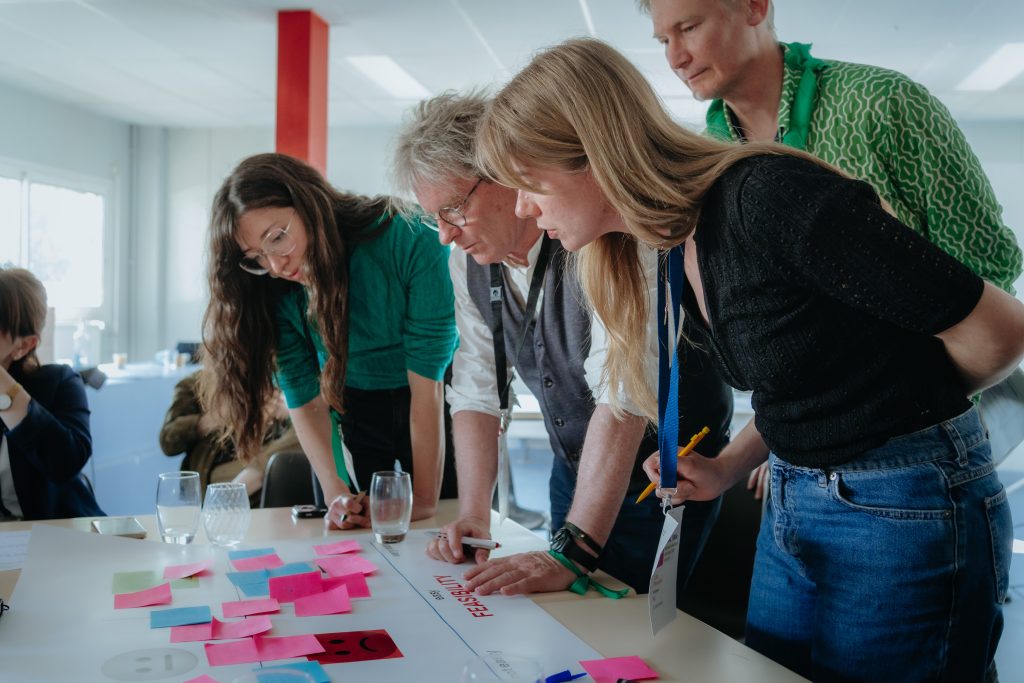
The day will end with a convivial moment for all participants, followed by Energy Cities General Assembly, reserved to Energy Cities members. In the evening, the gala dinner, which will take will be a special moment to come together and celebrate the strong connections we are building to defend Europe’s democracy and green transition.
The third day will also offer inspiring moments; the session City’s stories will showcase the wins and the challenges cities are experiencing in their transformation to becoming fairer and more sustainable. In parallel, the Mayor’s Club session, reserved to elected representatives, will offer a space for a closed-door discussion on the key role of decentralised energy production to democracies and resilience. The day will end with a matchmaking session for Energy Cities’ members and a touristic visit to the city for non-members and a common lunch to share reflections on the learnings from three amazing days together.
Get ready for Guimarães
Registrations are open so you can secure your spot and start preparing your trip to Guimarães. We have gathered all the information about transport to get to the city and different accommodation options on the infopack. If you would like to prologue your stay after the forum, you will find also find information about Guimarães’ history and culture and its must-sees.
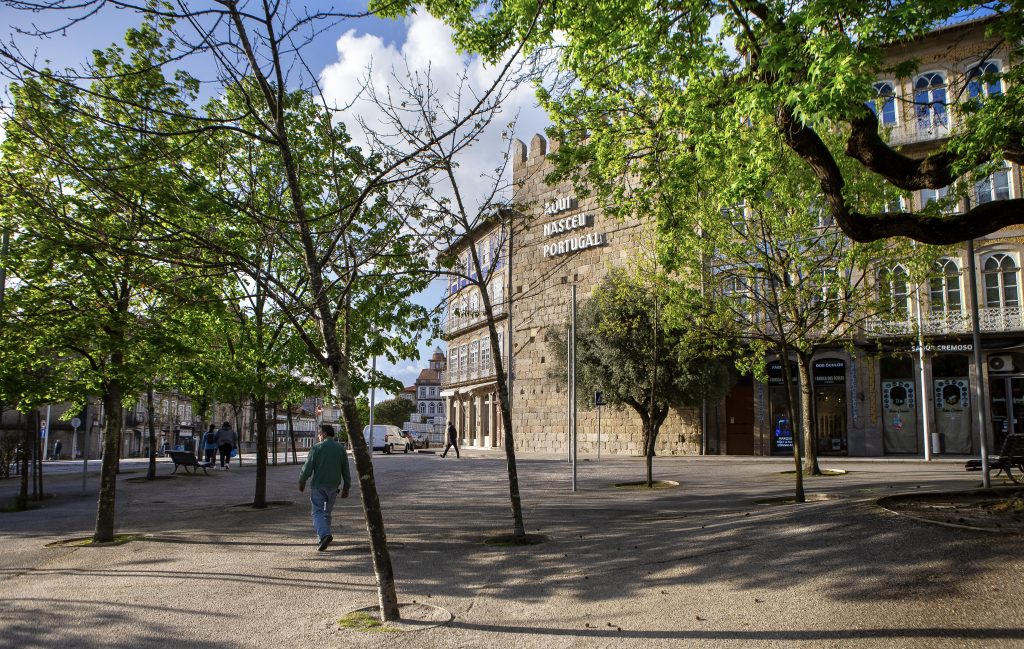
If you would like to contribute to the forum and show your commitment to the green transition, you can join as a sponsor. Our packages will allow you to showcase your organisation’s vision and work.
We look forward to seeing you in Guimarães! Register and secure your spot on one of the journeys, the number of places available is limited!
“Since our services are free of charge, the funding from the region and local governments is crucial.”
Interview with Didier van Severen, General Manager of Homegrade - the One-Stop Shop of Brussels-Capital Region
In European cities, residential buildings account for about 31% of total GHG emissions (according to the 2023 Covenant of Mayors assessment). The sector represents a huge potential for energy and CO2 savings. Since the European Union aims at a Zero-emission building stock by 2050, homeowners will have to energy renovate. The problem is that for homeowners energy renovation is not a priority. In general, it costs lots of money and it’s a hassle. When they start to seriously think about it, they get lost in the jungle of complex technical measures, quotes from suppliers and ever-changing subsidy programmes. Many homeowners simply do not have sufficient funds to (pre)finance energy renovation works nor have they access to a bank loan.
A growing number of European cities and regions open local One-Stop Shops for home energy renovation which give access to ambitious, high quality, safe and simple energy renovation to all their citizens. Under one roof, One-Stop Shop offer a large palette of services – from the initial advice, energy audit and project design, through the selection of companies and financing solutions to the coordination of renovation works and monitoring. A complex and risky project becomes simple and safe.
Moreover, opening a One-Stop Shop has become mandatory since the adoption of the latest EU Energy Efficiency Directive and Energy Performance for Buildings Directive: “Member States shall establish at least one one-stop shop for the energy performance of buildings per 80 000 inhabitants or one per region or in a location that can be reached within less than 90 minutes of average travel time.” (for more details, refer to Article 18 of the Energy Performance of Buildings Directive).
In Brussels-Capital Region, several organisations have been providing advice and support on home energy renovation for more than 30 years. In 2017, they merged into one single organisation: Homegrade – the regional One-Stop Shop. In the framework of the European EU Peers campaign, Energy Cities interviewed Didier van Severen, General Manager of Homegrade, who told us the story of his One-Stop Shop and the role the region and local governments have been playing in setting and running it.
Tell us about your One-Stop Shop
Homegrade is a nonprofit organisation, 100% funded by the Brussels region and its local governments. We provide free of charge information and support services to private households in Brussels region (more than 1 million inhabitants). We primarily focus on energy renovation, but we can cover all aspects related to housing. We have experts on heritage buildings, urban planning, co-property, acoustics and other technical issues. This transversality is crucial for homeowners. For example, you cannot insulate if you don’t ventilate, you cannot do whatever you want if your house is classified as a heritage building.
Our objective is to help removing barriers the private households face when they stand in front of the complex renovation process. Because we are 100% funded by local governments, we do not want to compete with the private sector – we do not provide support during renovation works and we do not substitute to an architect. We give tailor-made advice and support homeowners at the start of their renovation process (which is already very time consuming) and we remain neutral in our advice, thereby creating trust of homeowners. The disadvantage is that we cannot accompany them until the end of their renovation journey.
What is the role of the Brussels-Capital Region in the creation of your OSS?
Since our services are free of charge, the funding from the Brussels-Capital Region and local governments is crucial. Our Board of Directors is composed of the representatives of different political parties and public administrations. They guarantee the cross functionality of our housing services.
We act as a first line buffer for political decisions and provide valuable feedback from the field to the public administration.
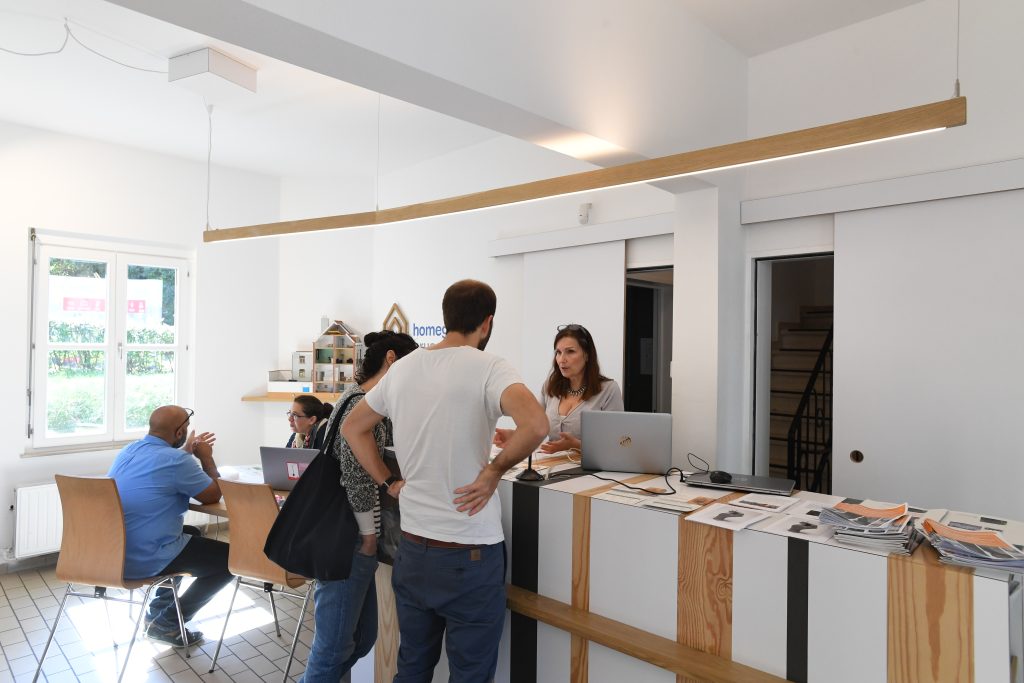
Do you have any message for your local, national or European policy makers?
We are highly dependent on local governments’ policies and communication. The continuity and consistency of government policies is crucial to create trust amongst private owners. The grant system cannot simply stop from one day to another as it happened in 2024 when the government realised that it had largely exceeded the grant scheme budget. This creates distrust in public support and incentives. If we want to achieve our environment targets, we need long-term planning of energy renovation policies and tools, such as our One-Stop Shop…
Continue reading the full interview here.
Discover more about the Brussels-Capital Region’s “Renolution” – a revolution in renovation of public and private buildings.
Develop winning business plans for your energy community
A new free e-learning course is now available to support energy communities across Europe in developing fundable business plans
How to turn your energy community’s vision into a structured, investment-ready project?
How to navigate legal frameworks, engage stakeholders, and demonstrate impact?
Hosted on the Local Transitions Learning Centre, the new, free e-learning course Develop Your Energy Community Business Plan is designed specifically for energy community practitioners ready to take their projects to the next level. Expert guidance, practical tools, and inspiring European case studies will help you build a comprehensive business plan for your energy community.
A practical, flexible course for energy community practitioners
Develop Your Energy Community Business Plan is a self-paced course combining short videos, detailed reading materials, interactive activities, and guidance. It consists of 5 modules with 23 lessons, each requiring approximately 30 minutes to complete.
If Module 1 is ideal for newcomers to community energy or those who want to refresh the basics, as it covers energy community fundamentals and readiness assessment, as well as business plan’s strategic role, the other modules guide you through the complete business plan development process:
- Module 2: Defining your project scope – assessing local needs, exploring technical options, and identifying your community’s added value
- Module 3: Organisation, governance and stakeholders – structuring your community and building effective partnerships
- Module 4: Building the business plan – conducting market, legal, technical, and financial analysis
- Module 5: Implementation planning – creating roadmaps, assigning responsibilities, and setting up monitoring systems
Learn in your own language
The course is available in English and is automatically translated into the 24 official EU languages and more , ensuring accessibility for energy communities across all over the Europe: Albanian, Bulgarian, Croatian, Czech, Danish, Dutch, Estonian, Finnish, French, German, Greek, Hungarian, Icelandic, Irish, Italian, Latvian, Lithuanian, Maltese, Norwegian, Polish, Portuguese, Romanian, Slovak, Slovenian, Spanish, Swedish, Ukrainian.
Start learning today to develop an efficient, well-structured energy community in your city!
Develop Your Energy Community Business Plan is a capacity-building programme produced by the EU LIFE-funded European Energy Communities (ENERCOM) Facility. The project aims to support at least 140 energy communities in developing viable business plans by 2028.
Although anyone can enrol, completing Modules 2–5 is mandatory for ENERCOM Facility beneficiaries. After completing the course, they will receive a certificate allowing them to submit their business plan via the European Energy Communities Facility beneficiaries’ portal.
SPARKLE Calenzano School – Resource-wise and socially just local economies
When circular economy meets local climate strategies
How can local and regional authorities translate circular economy principles into concrete climate and urban regeneration policies?
Cities and regions are increasingly confronted with the need to rethink how land, materials and resources are used, while ensuring social inclusion and climate resilience. The SPARKLE School When circular economy meets local climate strategies, hosted in Calenzano (Italy) on 5–6 May 2026, is designed for local and regional authorities like you seeking practical approaches to integrate circularity into urban regeneration, construction and planning policies.
Connecting circularity and climate action at the local level
The programme combines expert presentations with policy case studies, participatory methodologies and peer-to-peer exchange. Throughout this 2-day capacity building event, you will explore how resource-wise planning, circular construction, soil protection and sufficiency measures can support local climate strategies while responding to challenges such as land scarcity, affordability and social equity.
The school aims to support you in co-creating locally adapted solutions at the intersection of circular economy and climate strategies, while fostering more inclusive and sustainable planning processes.
Day 1 – Policy frameworks, tools and governance approaches
The first day sets the scene by addressing the systemic changes needed to transform the built environment. We will explore how circular economy principles can be embedded in urban regeneration projects, starting from the analysis of local compensation mechanisms such as Calenzano’s crediti edilizi approach, reaching examples of sufficiency measures for more affordable and inclusive cities.
You will also dive into the role of circular construction and resource-wise planning in addressing spatial constraints and reducing climate impacts, supported by examples from the Flanders Region (Belgium). A dedicated session on urban soils will highlight why soil health, de-sealing and urban agriculture are increasingly recognised as key components of climate resilience in cities.
Beyond technical solutions, we will emphasise participatory governance for inclusive planning, with a particular focus on storytelling as a tool for co-creation and shared ownership in local climate and circular economy strategies.
| ACTIVITY | MODERATOR/SPEAKER |
| INTRODUCTION | 9:00 – 10:00 | |
| Agenda and objectives | Serena Lisai (ACR+) |
| Transforming the built environment with a systemic change | Aimée Aguilar Jaber (Hot or Cool) – online |
| LOCAL POLICIES TO PROMOTE A RESOURCE-WISE APPROACH IN URBAN REGENERATION PROJECTS | 10:00 – 13:00 | |
| The crediti edilizi method in Calenzano: a compensation approach for urbanisation with challenges and limitations | Maurizio Bresci (City of Calenzano) |
| Sufficiency measures applied to the built environment to create more sustainable, affordable and inclusive cities | Laetitia Aumont (European Environmental Bureau) – online |
| How circular construction and resource-wise planning can reply to the lack of space and to fight climate change | Elmar Willems (Circular Flanders) |
| Q&A | |
| Coffee break @Altana del Castello | |
| Importance of healthy soils for climate resilience in cities: de- sealing and urban agriculture practices. | Beray Cayli (ACR+) |
| Local governance for soil health: participatory processes to co-create territorial management agreements | Annalaura Vannucci (ANCI Toscana) – HUMUS project |
| Q&A | |
| Lunch @Altana del Castello | |
| FROM THEORY TO PRACTICE | 14 :30 – 16 :00 | |
| Visit to the laboratories of the Design Campus – UNIFI: Recycled materials Biobased circular materials | DIDA, Design Campus – Università degli Studi di Firenze |
| PARTICIPATORY GOVERNANCE FOR INCLUSIVE, FAIR AND SUSTAINABLE PLANNING | 16:00 – 17:30 | |
| Co-creating more inclusive and fair planning through participatory approaches: an overview of participatory methodologies with a focus on Storytelling | Samir Amin (Institute for Urban Excellence) |
| DINNER | 20 :00 |
Day 2- From theory to practice: learning on the ground
On the second day, we will translate learning into action through a study visit to Nuove Ca.Se., a new public housing project part of the Programma Innovativo Nazionale per la Qualità dell’Abitare (PINQUA) and funded by NextGeneration EU. Here, you will explore how quality of living, regeneration and sustainability objectives are being addressed locally, and how circular approaches can be further integrated.
Building on the visit, you will take part in hands-on group work, imagining a circular future for the regeneration plan of Calenzano. Working in small groups, we will develop policy ideas and actions inspired by the concepts discussed during the first day.
| ACTIVITY | MODERATOR/SPEAKER |
| FROM THEORY TO PRACTICE | 9 :00 – 12 :30 | |
| Study visit at the Nuove Ca.Se. project | Municipality of Calenzano |
| Coffee break @Altana del Castello | |
| Group work: Imagining a circular future for r the regeneration of Calenzano | Moderated by ACR+ with the support of the students from DIDA |
| CLOSING | 12 :30 – 13 :00 | |
| LUNCH AND GOODBYE @Altana del Castello | |
How to apply
To join us, you need to apply by 25 February 2026. You can either join as a self-funded participant, or – if you are a local/regional authority that meets all the eligibility criteria – we will cover your travel expenses up to € 1.400. To apply for the fully funded programme, you need to:
- Complete the SPARKLE free e-learning Integrated energy and climate transition planning course and at least one among Data for a clean energy transition and Transition management.
- Fill out the application form and indicate the school (first and second choice) you would like to attend.
- Provide a Letter of Commitment demonstrating your municipality’s ambition to develop or improve a SECAP or similar plans and to participate in the chosen SPARKLE school.
- Indicate 2 representatives (one technical and one political delegate) to join the selected school.
Selected participants will be notified by 23 March 2026.
Click on the button below to discover the selection process and learn more about the other schools!
New Year
Policy Op-ed
The expression “new year” seems to carry more meaning than ever. Everything is new: a new world (dis)order, new risks, new democratic (im)balances, new European priorities, a new (dis)organisation of international, European, national institutions…
This makes forecasting and planning still necessary, but also more difficult—and in some cases, impossible. It also makes new narratives and new imaginaries essential for visualising possible futures, for making them tangible and desirable.
It is in times like these, when we no longer know how to describe or analyse the present, that foresight takes on its full meaning.
Starting from a challenge and a medium-term horizon allows the practical resolution of potential conflicts of use and interest, and lets us discuss concretely what matters for a territory. Yet too few foresight exercises are carried out at the local level, and it is precisely this scale that should be prioritised, because it makes solutions tangible.
The European Commission will work on two proposals that could help municipalities plan for the future, in addition to other legislative texts expected this year: a revision of the governance of energy and climate policies, and a new framework for European resilience. In both cases, it is crucial to strengthen the local dimension and provide these texts with the tools to enable local authorities to prepare for and fulfil their role in shaping the future of Europe. May these new laws empower local authorities to shape their own future.
The 2026 events accelerating the path to climate neutrality
These events, organised by Energy Cities or partners, have been selected for their relevance to municipalities.
2026 sits between two major political moments: the changes linked to the current EU mandate in 2025 and upcoming elections in several Member States in 2027. But this year is key, with many decisions on important EU files expected (read our article on the EU’s expected decisions in 2026).
To help you navigate this year and pursue your climate neutrality journey, below are key events not to miss. Also, make sure to register to the Energy Cities’ Hubs to be informed about updates and detailed programmes.
In-person trainings to develop skills, exchange good practices and learnings
In the framework of SPARKLE, we are organising 5 in-person Schools on different key topics for municipalities to advance their transition:
- “From Renewables to Resilience: Building Stronger Communities and Cities – Thriving together” – 18-19 March in Poreč (Croatia)
- “A green transition for all: how to empower participatory governance for future-proof cities” – 28-29 April in Guimaraes (Portugal)
- “When circular economy meets local climate strategies” – 5-6 May in Calenzano (Italy)
- “Decarbonising buildings and energy districts for the benefit of all: how cities can drive the change” – 27-28 May in Vilnius (Lithuania)
- “Eat better, waste less, produce locally: developing sustainable food systems for resilient cities” – 11–12 June in Albertville (France).
Travel costs are covered up to €1400 for European local/regional authorities meeting the selection criteria.
Opening of capacity building programmes
- January: Opening of the new multilingual course Turn Behavioural Insights into Energy Savings, designed by the Energy Behaviour Forum to help public authorities apply behavioural science to real energy-efficiency challenges.
- February: Opening of the ENERCOM Facility e-learning course, designed to support European energy communities in developing and implementing strong, impactful business plans.
- 29 April: Opening of the Espresso Community Energy training on “Inclusive and equitable energy communities”, designed to support city representatives in reaching out to diverse stakeholders and fostering inclusive participation within energy communities.
Energy Cities annual forum – 28-30 April – Guimarães (Portugal)
This year’s edition focuses on “nurturing the roots,” placing local democracy at the centre of the forum.
The 2026 Green Capital Guimarães is hosting this year’s edition and will showcase its concrete achievements to all the participants. Over three days, participants will dive deep into one of six topics, which will be explored through site visits and workshops. Networking sessions, matchmaking, an inspiration fair will also be prominently featured.
A dedicated session for elected representatives will take place. The “Mayors’ Club” offers an opportunity to discuss with peers, learn from other cities, and share local challenges.
Registration opens in February
European Sustainability Week (EUSEW) – 9-11 June in Brussels and online
The 20th edition of the largest annual event organised by the European Commission—dedicated to clean energy and renewables—will focus on the theme “A clean, secure, and competitive Energy Union.” The agenda is still developing and during the week we hope to hold a session on financing heating and cooling strategies and leveraging EU funding opportunities, and another session on boosting security and resilience through energy communities.
Assises Européennes de la Transition Énergétique – 23-25 June, Dijon (France)
The most important event on the energy transition for French municipalities will be an occasion to showcase your actions, share projects and debate your ideas during one of the many workshops and panels organised in Dijon.
EU Covenant of Mayors Ceremony – October, Brussels (Belgium)
The Covenant of Mayors conference gathers local leaders and EU decision-makers in Brussels to discuss EU and local climate and energy policy.
European Week of Regions and Cities – October, Brussels (Belgium)
As every year, the EU Week of Regions and Cities will bring local government representatives from all over Europe to Brussels.
SPARKLE Guimarães School – Local Governance
A green transition for all: empowering participatory governance for future-proof cities
How can climate and energy planning become truly impactful in our cities?
Through citizen engagement, integrated planning, and multi-level governance, municipalities can support the design and implementation of effective, long-term climate strategies to build a secure and sustainable future.
Would you like to be inspired and exchange with pioneering cities that have put citizens at the heart of the energy transition? Then, don’t miss the opportunity to join the SPARKLE School A green transition for all: empowering participatory governance for future-proof cities, taking place on 28–29 April 2026 in Guimarães, Portugal, EU’s Green Capital 2026. Scroll down to discover the agenda and learn how to apply for the fully funded scholarship.
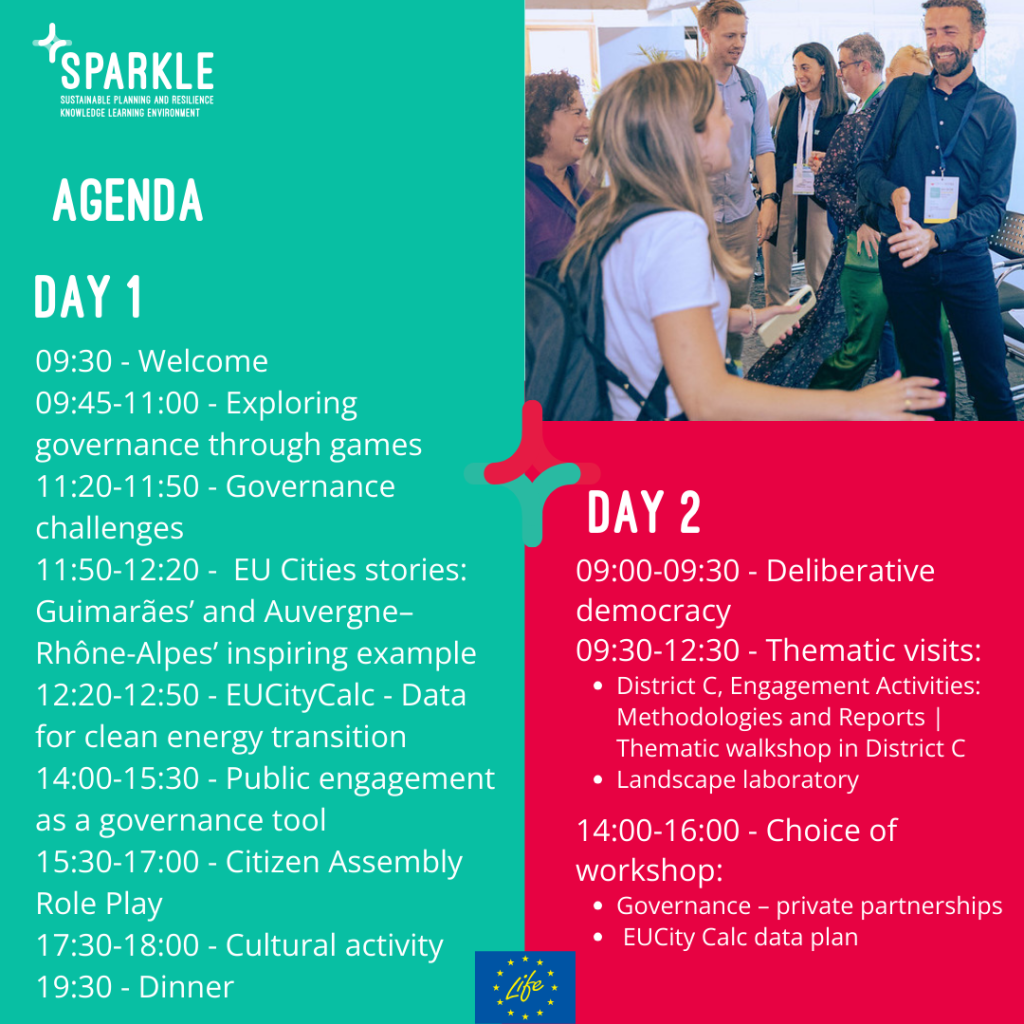
Day 1 – Public engagement as a governance tool
On 28 April, we will explore governance through interactive games, sharing challenges, and hearing from pioneering local and regional authorities, including Guimarães and Auvergne–Rhône-Alpes, on how they place citizens and SMEs at the heart of the transition.
Noora Firaq, Board Director of Westmill Wind Farm Co-operative and expert on Article 12 of the UN Paris Agreement on citizen engagement, will focus on citizens’ assemblies and public engagement initiatives from around the world.
Finally, we will examine how to collect and use city data as a governance tool for informed decision-making. SPARKLE’s technical partner Climact will support you in mapping a local transition pathway using EUCityCalc, linked to your city’s SECAP.
A cultural visit, a solution exhbition and a networking dinner will conclude this first day.
Day 2 – From theory to practice
On the second day, we will experience engagement first-hand by visiting Bairro C – Compromisso Carbono Zero (District C- Zero Carbon Commitment). This thematic walkshop will showcase Guimarães’ participatory approach, focused on involving both citizens and SMEs in setting sustainability priorities and designing solutions through citizen assemblies. We will also visit the Laboratório da Paisagem (Landscape Laboratory), a former industrial site transformed into a sustainability model where multiple stakeholders connect research, policy, education and community engagement.
After lunch, you will learn how to develop a shared vision for private sector engagement in local climate policies, clarifying the respective roles of cities and companies in this collaborative pathway. Alternatively, you may choose a parallel workshop to develop a detailed transition plan for their city using EUCityCalc modelling tool.
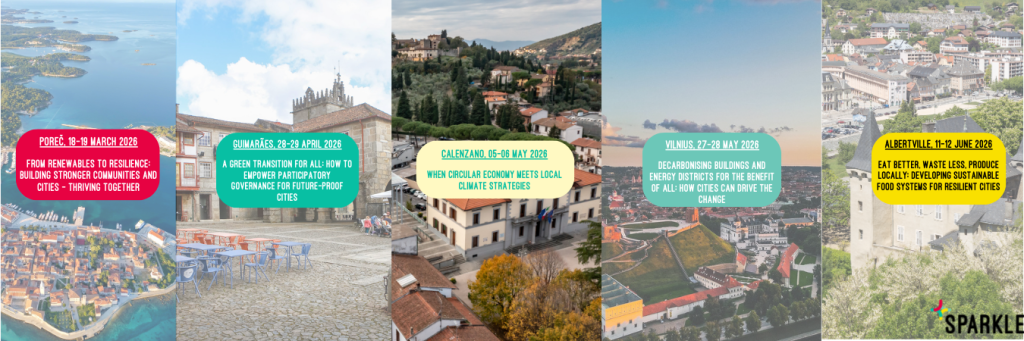
How to apply
To join us, you need to apply by 17 February 2026. You can either join as a self-funded participant, or – if you are a local/regional authority that meets all the eligibility criteria – we will cover your travel expenses up to € 1.400. To apply for the fully funded programme, you need to:
- Complete the SPARKLE free e-learning Integrated energy and climate transition planning course and at least one among Data for a clean energy transition and Transition management.
- Fill out the application form and indicate the school (first and second choice) you would like to attend.
- Provide a Letter of Commitment demonstrating your municipality’s ambition to develop or improve a SECAP or similar plans and to participate in the chosen SPARKLE school.
- Indicate 2 representatives (one technical and one political delegate) to join the selected school.
Selected participants will be notified by 17 March 2026.
Click on the button below to discover the selection process and learn more about the other schools!
Energy Cities’ Annual Forum – Nurturing roots
These study visits on the second day are part of Energy Cities’ Annual Forum, taking place in Guimarães from 28 to 30 April. This international event offers a valuable opportunity to network with peers while exploring key themes of the green transition relevant for public officers and energy professionals. Save the date: registrations and the full programme will be available from February!
France strengthens local heating and cooling planning: a new regulatory milestone for cities
The new year starts with good news from France.
Following the legal transposition of Article 25.6 of the Energy Efficiency Directive (EED) on local heating and cooling planning, the French government has adopted a new decree updating the Environmental Code (read our previous article).
The decree implements several provisions related to the assessment of energy efficiency and energy sufficiency for large-scale projects, plans and programmes, notably within the framework of environmental impact assessments. It specifies how heating and cooling action programmes must be integrated into Territorial Climate-Air-Energy Plans (PCAETs), sets out the procedures for conducting cost–benefit analyses, and clarifies expectations regarding the monitoring of the energy performance of data centres. The decree also includes measures concerning electricity and gas transport, distribution, consumption and production data, with the aim of facilitating their collection.
An updated approach to heating and cooling in local climate plans
The decree reinforces the heating and cooling component of Territorial Climate-Air-Energy Plans (PCAETs). Local authorities are now required to carry out a more comprehensive exercise, covering:
- a detailed territorial diagnosis,
- clearer strategic and operational objectives, and
- a strengthened programme of actions.
Importantly, the objectives of PCAETs are now explicitly focused on the reduction of final energy consumption, rather than the previous approach centred on energy demand “control” or relative stability. This shift marks a step forward in aligning local planning with national and EU climate objectives.
The new provisions will apply to PCAETs submitted for opinion to the regional prefect and the president of the regional council after 1 July 2026.
What exactly is required from municipalities?
Under the new framework, inter-municipalities (EPCI) with at least one municipality over 45,000 inhabitants must carry out a territorial heating and cooling diagnosis including the following elements:
1. A comprehensive territorial diagnosis
Local authorities must assess:
- the production and consumption of heating and cooling, supported by dedicated mapping;
- existing heating and cooling production and distribution systems, with particular attention to:
- buildings with low energy performance, and
- the needs of households experiencing energy poverty;
- a mapping of improvement potentials for heating and cooling supply solutions.
This mapping must identify, for each relevant part of the territory, the potential deployment of:
- renewable and waste heat sources, notably through improved recovery of waste heat;
- district heating and cooling networks, including low-temperature networks;
- high-efficiency cogeneration.
It must also provide a clear overview of the existing heating and cooling supply situation, across all energy vectors.
2. Clear strategic and operational objectives
The decree requires the integration of strategic and operational objectives, aiming in particular—at least for public bodies—at:
- replacing old and inefficient heating and cooling equipment with efficient solutions;
- supporting the progressive phase-out of fossil fuel-based heating and cooling systems.
3. A structured programme of actions and financing
Finally, the programme of actions must:
- identify the financial resources associated with the implementation of the local heating and cooling strategy;
- describe the financial support schemes enabling consumers to opt for renewable and efficient heating and cooling solutions.
Why this matters
With this decree, France moves beyond high-level planning principles and provides more concrete, operational guidance for cities on how to plan the transition of heating and cooling systems. By strengthening diagnostics, clarifying objectives, and linking strategies to financing, the new framework brings local heating and cooling planning closer to implementation—an essential step for decarbonising a sector that remains one of the largest sources of energy consumption and emissions. However, cities will need concrete support to be able to carry out the exercice, meaning stronger technical and financial support from national authorities. This is essential to turn the planning exercice into clean heating and cooling solutions.
Do you want to know more ? Check out our EU Tracker, mapping progress in all Member States.
Reclaiming Europe’s direction in 2026
What’s at stake in EU policy in 2026 and how Europe can reclaim its independence by going local
After a tumultuous 2025 that put Europe under severe strain, 2026 will be a decisive year to keep the continent’s ecological transition afloat and to ensure local actors are placed at its helm. More fundamentally, it will be a test of whether Europe can still project a vision for a better tomorrow, or whether it will recoil into itself, abandoning its core values and the audacity with which it once defined its future.
Here is where 2025 left us, what to expect in 2026, and how Energy Cities plans to help reset Europe on a course that delivers a better future for all – starting locally.
How 2025 narrowed Europe’s options
2025 was a year marked by growing geopolitical and economic pressure. Faced with war on its borders, an erratic Trump disrupting transnational relations, and the rise of nationalist politics across its Members States, the EU’s response has been to tighten its control. In its quest to project a “Stronger Europe” and to assert power in a volatile environment, the European Commission has moved to concentrate its power and “simplify”.
This has translated into a marked centralisation of decision-making across policy areas, from energy infrastructure – as seen in the Commission’s recently proposed Grids Package – to investment planning, as embodied by the proposed Multiannual Financial Framework for 2028–2034. The proposal, released in July last year, strengthens the Commission and Member States’ grip on the EU budget, while leaving local and regional governments largely dependent on national discretion.
Meanwhile, in this new context, the Green Deal as a political compass was traded out for geopolitical concerns. Climate action did not disappear, but it was reframed – subsumed under the banners of security, competitiveness and affordability. Green Deal advocates scrambled to defend climate policies by translating them into the language of European sovereignty and industrial strength, with mixed results.
While this reframing has kept parts of the Green Deal legally intact and moving into implementation, it has also widened the door to dilution and rollback. Recent omnibus initiatives – legislative acts that amend multiple existing EU laws at the same time with the aim of simplifying them – have already weakened corporate sustainability and nature protection rules.
For local governments, these shifts have pushed them into a tightening squeeze. Centralisation at EU and national level has coincided with shrinking budgets, rising social pressure and declining political trust. Municipalities are being asked to deliver more – on energy, housing, mobility and social cohesion – while receiving fewer resources and less strategic recognition.
In several countries, long-standing regional support programmes for local climate action are getting cut, eroding local capacity just as implementation demands are intensifying. Although many cities entered 2025 with plans, experience and momentum, the year left them navigating a more hostile environment, one where responsibility increasingly outpaces capacity.
What to expect in 2026 and why this year matters
At first glance, 2026 may appear as a transitional year, wedged between the upheavals of the current EU mandate in 2025 and a looming election cycle in several Member States in 2027. But this also makes it a critical year. Many of the EU’s most consequential decisions on energy, climate and investment will be negotiated or set in motion in 2026, determining not only the pace of the ecological transition, but also who gets to shape and deliver it.
Reasserting Europe’s Independence
Energy, in particular, remains at the heart of Europe’s political priorities. Security concerns, affordability pressures and the imperative to phase out Russian gas continue to dominate the agenda. This focus creates both risks and opportunities. If narrowly framed, Europe’s energy response could entrench new fossil dependencies and recentralised systems. If approached strategically, it can accelerate the deployment of homegrown and locally sourced renewables, energy efficiency, and flexibility.
In this context, Energy Cities will seize the opportunities ahead to advocate for a Europe that reclaims its independence by anchoring its transition – and, more broadly, its future – in local communities.
Negotiating a locally grounded EU budget
The negotiations on the next Multiannual Financial Framework (2028–2034) will dominate 2026. As the Commission seeks to conclude the bulk of the negotiations ahead of an electorally charged 2027 (marked by the dismal perspective of French presidential elections), the risk is that speed comes at the expense of territorial balance. Current proposals point to a highly centralised budget, with local and regional governments largely absent from the picture.
Energy Cities, together with seven other networks through the Local Alliance, will fight hard to secure a meaningful place for cities and regions in the next EU budget. This battle will take place both in Brussels and in Member States, where national positions will be decisive.
Here, it’s all hands on deck: advocacy efforts will also have to be carried nationally. Members can soon access our “mobilisation toolkit” and learn how to get involved by joining our next webinar on 12 February.
An Energy Security Package that delivers homegrown solutions
The Commission is expected to present an Energy Security Package in March 2026, including the long-awaited Heating and Cooling Strategy and an Electrification Act.
Energy Cities will advocate for an approach rooted in local planning capacity, energy efficiency and renewable heat. We will push for policies that empower municipalities to tackle grid congestion, deploy flexibility and storage, and scale up decentralised and community-driven renewables – making locally produced homegrown energy the backbone of Europe’s energy security and independence.
From Fit for 55 to Fit for 90: defending a robust Energy Union
The new 2040 climate target will trigger a revision of the EU’s climate and energy framework in the second half of the year. The transition from Fit for 55 to a Fit for 90 package will reopen key legislation, including on renewables, energy efficiency and buildings.
Energy Cities will work to defend the integrity of existing rules in the Renewable Energy Directive (RED), Energy Efficiency Directive (EED) and Energy Performance of Buildings Directive (EPBD), ensuring they continue to support local implementation and citizen-centred solutions. Weakening these frameworks would undermine the very actors expected to deliver the 2040 target.
Redefining climate governance around local planning
Alongside the Energy Union package, the biggest opportunity for direction-setting lies in the revision of the Governance Regulation, planned for the second half of 2026. If designed well, it could help unlock investment capacity at local level and better align national plans with territorial realities.
Energy Cities will advocate for governance mechanisms that align with local action, enabling cities to plan long-term transitions with capacity and resources, and for measures incentivising sufficiency policies.
Building resilience from the ground-up
As climate impacts intensify, 2026 will also be a pivotal year for Europe’s approach to adaptation and resilience. The EU is expected to advance work on an Integrated Climate Risk and Resilience Framework, with significant implications for how climate risks are assessed, prioritised and addressed across territories.
Energy Cities, working with the EU Covenant of Mayors and the Local Alliance, will seek to ensure that this framework is grounded in local realities and implementation capacity. Cities and regions are on the frontline of climate impacts; they must therefore be equipped with the resources, data and flexibility needed to anticipate risks and protect communities.
Defending local democracy
Finally, the current political context calls for a return to the roots. If we want to keep empowering cities to decide their own futures, we need to focus on defending what makes it all possible: local democracy. Faced with growing threats to democracy in Europe, the EU is intensifying its efforts to safeguard democracy, through initiatives such as the Democracy Shield and the design of the new Agora funding programme.
Energy Cities will work to position cities as essential guardians of European democracy, highlighting the links between local capacity, participatory governance and democratic resilience. By drawing on successful examples of innovative local governance, we will explore how these models can be scaled across Europe – and how EU policies and funding can support them.
European technocracy on the horizon?
Policy Op-ed
Brussels is still buzzing. After scoring points in the debate on the 2028–2034 Multi-annual Financial Framework (MFF), the European Parliament is now dragging its feet when it comes to appointing rapporteurs on the substantive issues.
Last July, by unveiling a radically new budgetary architecture and concentrating programmes around a limited number of priorities, the European Commission has shaken up long-standing institutional dynamics. Within the European Council, traditionally organised around sectoral negotiations, the consolidation of flagship policies such as agriculture and cohesion now compels Ministers — often unaccustomed to such cross-cutting cooperation — to work together. The entire machinery of technical negotiations between Member States, the well-rehearsed methods, and the familiar choreography that unfolds every seven years around this major issue — one that conditions all others — must now adapt. The Danish Presidency of the Council acknowledges that discussions are limited, for now, to requests for clarification addressed to the Commission.
A similar upheaval is underway in the European Parliament, compounded by the fragmentation of political groups and the resulting fragility of majorities. The manoeuvring is not over. While four political families (PPE, Renew, S&D, Greens) have agreed to work together and endorsed a distribution of dossiers between the different parliamentary committees, key appointments and timelines have yet to be defined.
Finally, for all institutional stakeholders — including the Committee of the Regions and the European Economic and Social Committee — this mega-negotiation represents a major challenge. How does one choose battles and forge alliances when everything is so tightly interlinked?
In effect, three institutions are engaged in this negotiation, two of which are wasting valuable time, even though the budget is supposed to be finalised by the end of 2026, with 2027 dedicated to preparing programmes set to launch in January 2028.
The result is a European Commission that emerges stronger than ever, increasingly resembling a “European technocratic ministry”. This trend was further illustrated on 10 December, when the Commission published its “Grid package “, a set of proposals aimed at accelerating the modernisation and deployment of Europe’s energy networks. In doing so, the Commission assumes the role of a network planner. While the need for better coordination is undeniable, who is best placed to put forward development scenarios? Who will challenge the assumptions underpinning these pathways? What governance framework will oversee such planning?
Is the Commission truly strengthening its position? Perhaps not. By seeking to coordinate ever more tightly at the highest level — while positioning itself as the sole integrator of markets and policies, the evaluator of national plans, and the guardian of economic stability — without offering robust and effective multi-level governance, is the Commission not, paradoxically, undermining its own authority by refusing to share it?